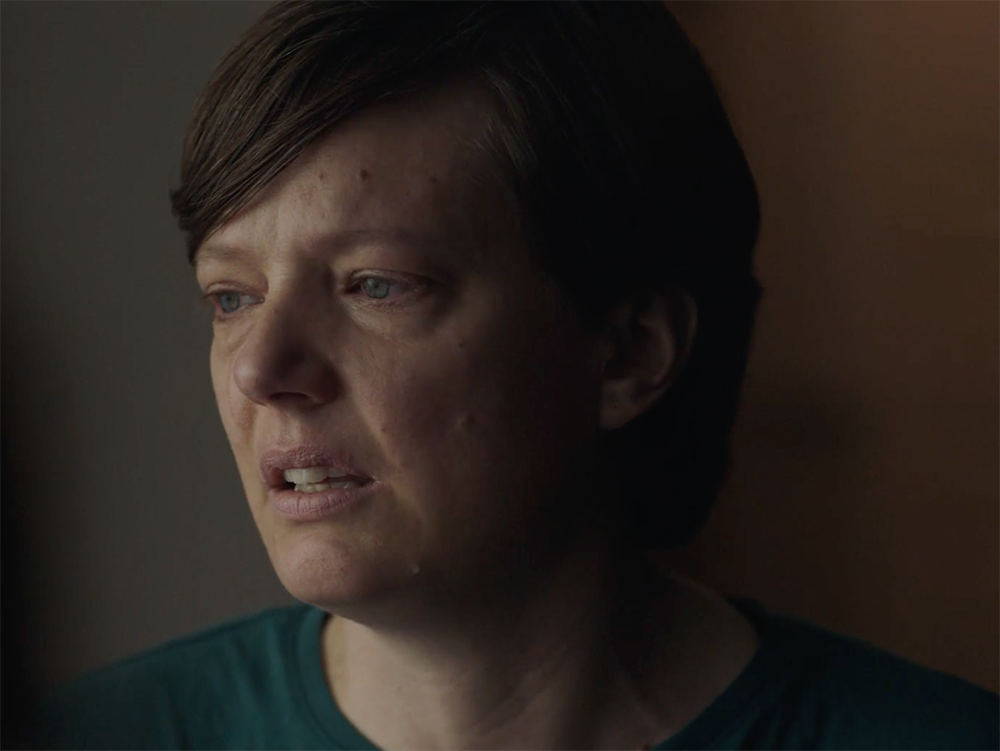
âAlive,â the Swedish short written and directed by Jimmy Olsson, is a highly digestible look at love, independence, and developmental disabilities, brought to life by talented actors and actresses. The film, which saw seven film festival wins, including an Oscar-qualifying film festival, is produced well, and has the polished edges that makes great indie cinema. It makes you feel it, it makes you think, and, in the end, makes audiences question preconceived notions they may have of societyâs pigeonholing of the disabled. What we find here is a film that is very watchable, and draws you in with its emotion and relatability.Â
“Alive’s” description of a disabled woman yearning after intimacy who creates a Tinder profile, finding her caregiver has reservations after seeing her matchâs profile would make you think itâs more racy than it is. But what we see is a film that wants not to entertain us, but to allow us to think and understand. The filmâs opening shows its lead, Viktoria (Eva Johansson) working with her caregiver, Ida (Madeleine Martin), and later walking with Ida’s boyfriend, Björn (Joel Ãdmann). Viktoria is quiet, but slowly we see a theme present itselfâshe feels rejected, and doesnât want to go through life without feeling romantic experiences like so many others around her feel. To make her feel better, Ida helps her set up the Tinder profile; however, she soon gets concerned that Viktoria will be taken advantage of due to her disability.Â
What works about âAliveâ is that its characters are painted as real people. Viktoriaâs need to be accepted is certainly understandable; but what Olsson has done is to take real pains to paint her caregiver Ida as a real person, and not just a caricature or idea of control. We see her lifeâfrom her job as a caregiver, to her boyfriend, to her conversations with Viktoriaâand see that she is a kind person who sincerely cares for this woman. Björn is supportive, but speaks the way many uninterested parties speak; he warns Ida to ânot get Viktoria’s hopes upâ and speaks of the disabled in a dismissive way. But thereâs nothing judgmental about these scenes, but only the notion of a mirror of the way Viktoria fears people see her. She presses Ida about her love life in scenes that are realistic, relatable, and authentic. âThatâs quite personal,â Ida protests, but quickly relents and lets Viktoria in. Thereâs something tangible and sweet about their relationship, even when Viktoria gets mad at herâ¦even when Ida inadvertently tries to control Viktoria for her own good.Â

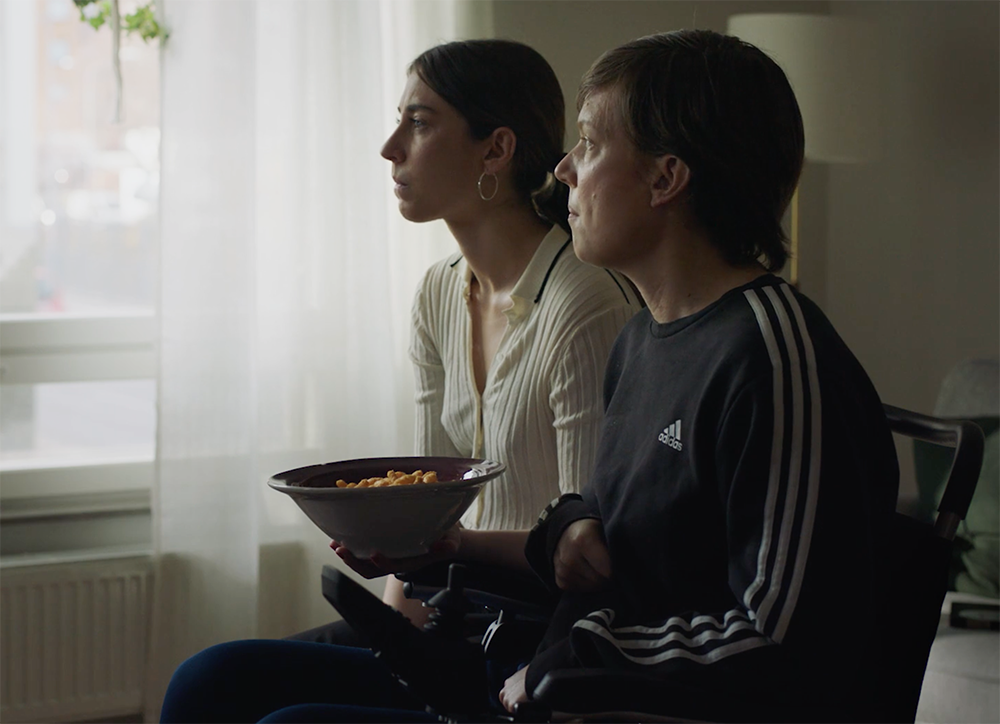
The acting in Olssonâs film is top notch, with Martin and Johansson absolutely owning their scenes, leaving no trace of acting behind, but only characters. Johansson, who is not disabled, imbues Viktoria with qualities and traits all her own; and, unlike lesser films, there is no patronizing or painting disabled persons as âcute.â Viktoria is a real person we feel like we know. Her days consisting of sitting, physical therapy, and watching life from afar, itâs not hard to understand that she wants something more. Likewise, Martin is perfect, and presents in Ida a loving person that wants to help, even if her initial protestations come from a lack of understanding. Her arc, and the way she gets there is splendidly painted, and we believe her connection to Viktoria as something earnest. As Björn, Ãdmann is effective but really just an ancillary character. Filmmaker Olsson and Philip Oros make a small appearance to round out the cast.Â
The film is also scored very well, courtesy of Peter Gregson and Thomas Henley, with soft, gentle pianos underscoring its tender scenes and anxious, beating rhythms highlighting the filmâs fulfilling finale. The cinematography by Staffan ÃvgÃ¥rd is also a highlight of the film, playing with close-up shots of the filmâs leads, as well as darkly cast nights and bright, placid days. The camera plays as important a role as the acting, and lets us get to know these characters as real people.Â
But, at the end of the day, âAliveâsâ greatest achievement is its asking of audiences to think differently about their own notions of the disabled. Itâs not an in-your-face protest, but a kind, pensive meditation on how we think of things we canât understand. Ida means well, but works for a system that thinks that the healthy know best, and the âsickâ should try to adapt to the healthyâs lifestyle. But âAliveâ exists in a world that wants to meet people where theyâre at; Ida, as well as us, learn a great deal about accepting people as they are, and not as the rest of society wants them to be. Â
You can watch the trailer for “Alive” in the screen below. “Alive was currently picked as “Short of the Week” and can be viewed on www.shortoftheweek.com, and was also selected on Vimeo Staff Picks. The film is also in the race for the Oscars short list.