





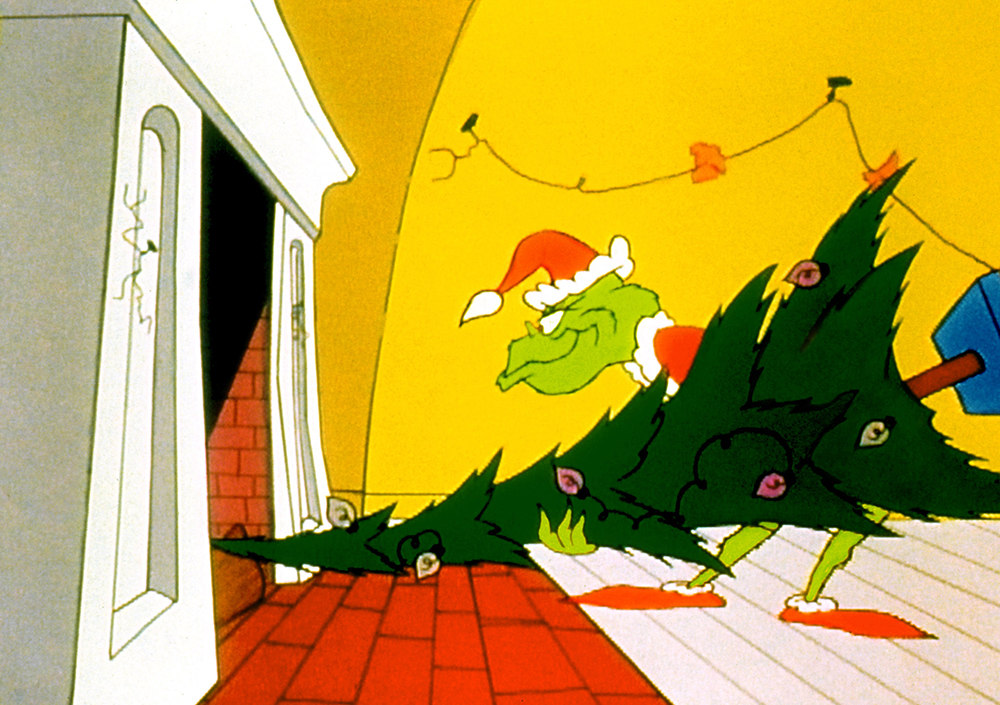
With the footprint left behind by Christmas classics such as Frank Capraâs âItâs a Wonderful Lifeâ and Charles Dickensâ âA Christmas Carol,â it would probably be easy to pick apart the central themes of director Chuck Jones and Ben Washamâs 1966 âHow the Grinch Stole Christmas!,â based off of Dr. Suessâ creation: A curmudgeon of a creature who hates Christmas discovers himself, the reason for the season, and, of course, what it means to love.Â
But aside this, âHow the Grinch Stole Christmas!,â a pure product of its time, accomplishes something greater than full-length features and enhanced CGI have been unable to equal: it not only shows The Grinch the meaning of Christmas Spirit, but audiences alike, both young and old.Â
Thereâs something about the 1966 film, that while basked in the usual Suess-isms, is more toned down and digestible. Its story is tight, its animation apropos, and Suessâ keystone rhyme schemes coming alongside the story more tactfully, seeming part of a narrative that lie in wait to be uncovered, rather than plot device to move the story forward.Â
So much makes the 26-minute animated cartoon work in ways that are virtually unheard of today. âGrinchâ violates the penultimate rule of telling and not showing, but for some reason in this story it just works. Boris Karloff, known for being one of the great âtrue icons of horror cinema,â (IMDb) voices not just the narration over the film, but the âsoundsâ of The Grinch. Weâre told acutely that The Grinch has a heart âtwo sizes too small,â or his shoes are too tight, or he may just have a penchant for meanness. Of course thereâs more to it; the inferences of The Grinch, as with the pleasant town of Whoville that lay below his cave, are both overt and timeless.Â
It would be easy to write off the joyous Whoville as ultimate good; The Grinch ultimate cruelty. But of course itâs not that simple, and through thoughtful cinematography and animation, as well as over-the-top musical numbers sung by Thurl Ravenscroft, the irony of the filmâs themes becomes obvious: a town of immense community that knows nothing of sorrow, and a cynical malefactor that knows nothing of of joy. The Grinch thinks that by introducing misery into the Whosâ lives, they will understand misery and resign themselves to it, as he has. Ironically, by doing just that, and seeing the Whos seemingly unaffected, The Grinch instead is able to glean, for the first time in his life, what Christmas joy truly means.Â

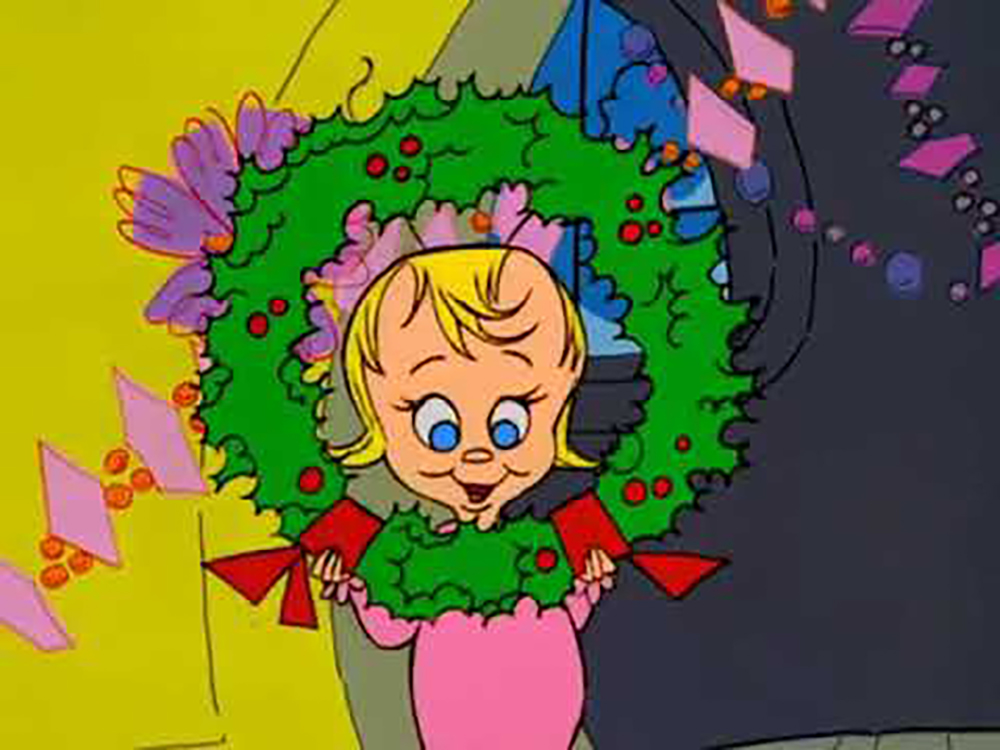
Itâs easy to believe in a year like 2020, ruled by Covid, protests, and isolation from friends and family, that the Christmas season has been put on hold, cancelled, deflated, and cast aside. FaceTime and Zoom have replaced face-to-face contact, and presents seem a far cry from what we really wantâto see our loved ones again and go back to normal. But maybe The Grinch can offer us an alternative. Christmas isnât the presentsâthat was decided as the houses are shown stripped bare, tattered wires the only evidence of Christmas decor. But Christmas wasnât the decor, the ornaments, the cookies, the milk, or the Christmas feast. Itâs the spirt of Christmas, something felt and not seenâbut The Grinch does see it, in the bright blue eyes of little Cindy Lou Who, the same color The Grinchâs eyes become when he sees the resolve of Whoville and the true meaning of Christmas. Itâs a lesson we can all hang onto this year. Change is not the underlying meaning here; itâs simply recognizingâand appreciatingâwhat we had all along.Â
âHow the Grinch Stole Christmas!â is an inarguable classic. It holds up over the years amidst several retreads, musicals, and copycats that up the ante, but canât improve on its unchangeable message. Its animation is perfect and a relic of the time, its musicality succinct and perfect, and its story relatable to all: a story that transcends religion, holidays, and ceremony. Itâs a perfect commentary on the human condition, and best enjoyed (blasphemy for a film critic, I know) with not analyzation but simple and unadulterated acceptance.Â


