




Filmmaker Christopher Nolan has amassed billions of dollars in profits for a host of blockbuster films, ranging from the comic book Batman stories to the serious nature of WW2. To date, the 49-year old has been nominated for a staggering thirty-four Oscars (winning ten.) âMementoâ serves as Nolanâs second effort, and expresses his filmmaking style in an artsy grassroots way.
Released in 2000, âMementoâ is based off of a short story written by Nolanâs younger brother Jonathan, and stars hipster Guy Pearce as Leonard Shelby; an insurance investigator who suffers from Anterograde Amnesia â a condition that causes him to have no short term memory. The amnesia occurred after an assault and the murder of Shelbyâs wife, and the story explores his search to seek vengeance on the assailant.
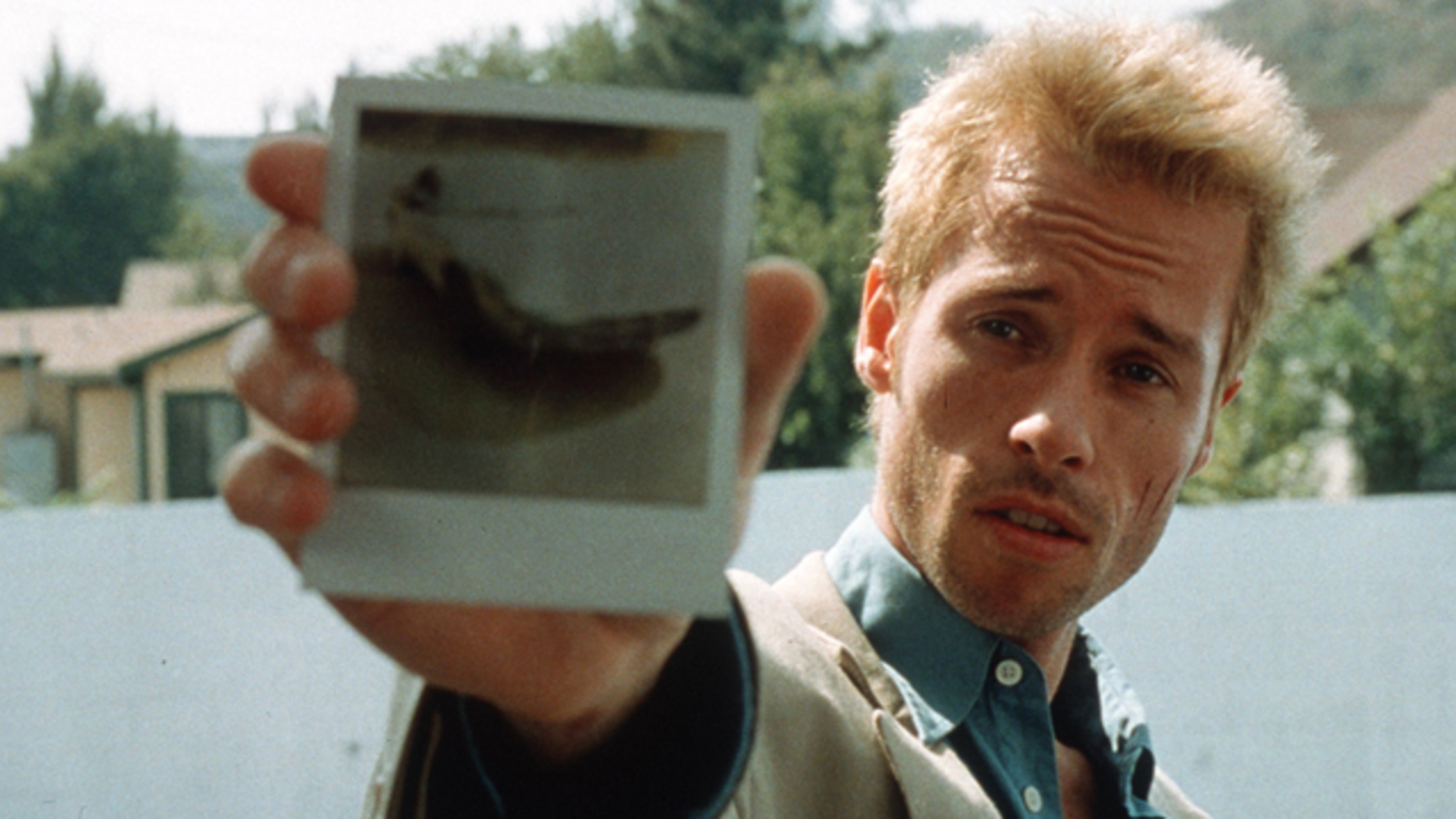
âMementoâ is an example of modern noir style that weâve seen in movies such as âSe7enâ or âSerenity.â The story is presented in a reverse chronological order that is truly unique, with black and white filmed scenes weaved together with achromic ones. The inclusion of anachronistic items such as a rotary telephone or a Polaroid camera that Shelby uses to make reference notes, keeps the viewer guessing as we follow along in the investigation with an unsettling feeling fluid throughout.


Guy Pearce is excellent as Leonard Shelby. The viewer gets to witness him in every scene of the film, and quickly understands the severity of his condition through repetitive narration and exposition. Shelby has a flawless memory right up to the point of his wifeâs murder, but since that time canât make new memories, as if every handful of minutes heâs waking up from a coma. As Shelby narrates âI have to believe that when my eyes are closed, the world’s still there.â
Joining Guy Pearce is the great thespian Joe Pantoliano as Teddy, seemingly a friend of Shelbyâs though we quickly discover that may not be the case. The stunning Carrie-Anne Moss plays Natalie, a sultry bartender who is assisting Leonard, and the highly recognizable Mark Boone Junior offers comic relief as a hotel desk clerk.

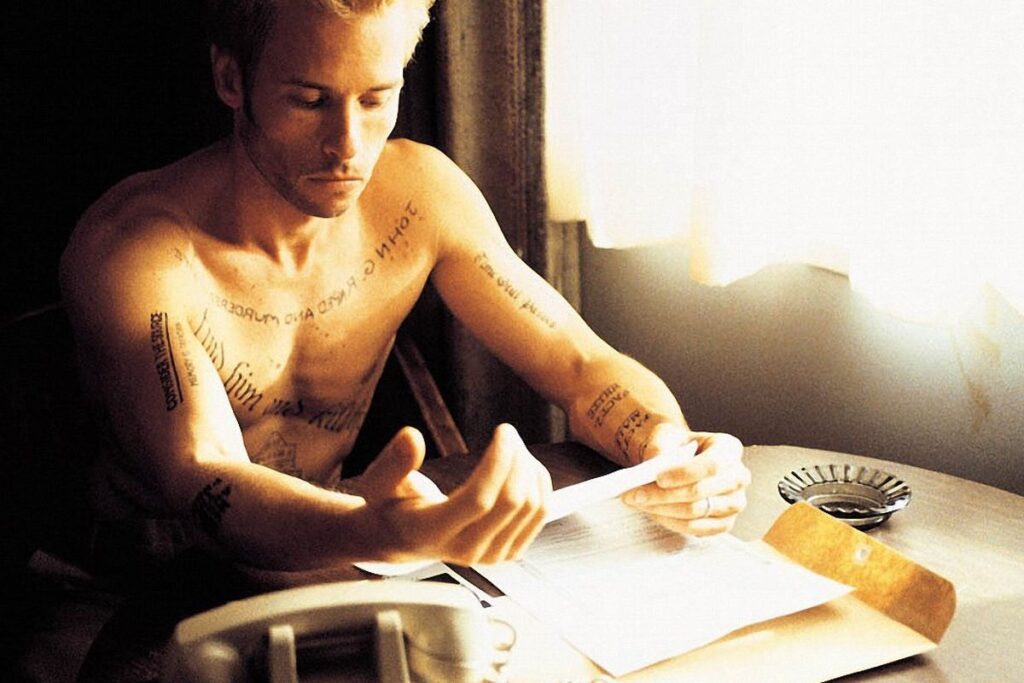
The reverse order the film is displayed in can take a few scenes to get used to. Itâs fascinating to see characters with visible wounds on their faces, and no explanation of how they got them, only to be revealed later on in a âpreviousâ scene. Leonard Shelby uses Polaroidâs, tattoos, and basic notes to aid him in his memory and quest for revenge. My impression is that âMementoâ is best suited to watch more than once, with ever subsequent viewing revealing more and more intricacies.
While âMementoâ is unique in its style and presentation, the overall story is a bit stale. If not presented in a reverse chronological order, a man looking for his wifeâs killer has been done better many times before. I loved the artistic approach, but there is a repetitive nature that, while obviously required for the way the story is set, gets a bit dull. Nevertheless, itâs the type of movie one needs to see for themselves. If not to appreciate the early workings of a powerhouse filmmaker, than to witness firsthand a uniquely styled movie.