-I think we didnât turn blind. I think we are blind.Â
-Blind who can see?
-Blind that, seeing, canât see.Â
Adapting a written piece into a film or TV series can be a double-edged sword; with the help of visual storytelling tools, countless screenwriters and directors have translated novels and short stories into visual pieces while enhancing the original narrative (âArrival,” “The Handmaid’s Tale,” âAnnihilation,” “Big Little Lies,” to name a few), but unfortunately, âBlindness,” directed by Brazilian director Fernando Meirelles (“City of God,” “The Two Popes”) wasnât able to live up to its highly prosaic and metaphorical written counterpart by the Portuguese writer José Saramago (a novel whose title literally translates to âEssay About Blindness.â)Â
The movie follows the outbreak of sudden blindness called âWhite Virus,â an unknown disease that makes people see nothing but a âbright white seaâ (instead of the dark nothingness of a ânormalâ blindness.) As more and more people get infected, the government sends the first cases into a military-guarded asylum. Between these first cases are a doctor (an optometrist, played by Mark Ruffalo) and his wife (Julianne Moore)âwho fakes to be blind in order to take care of her husband, but ends up being the eyes of every infected person in the ward where they are placed, organizing the constantly-increasing number of patients, and trying to keep a humane-as-possible life inside the overpopulated and unheeded community.
Some may say that âBlindness” could live in the same realm as Soderberghâs âContagion,” both being a classic literary narrative about man-versus-man and/or nature-versus-man, and while the latter takes a much more disaster movie narrative (paralleling much more accurately to the current state of events of the COVID-19 pandemic), Meirellesâ film finds itself in a dichotomous in-between of a disaster film and a psychological thriller.Â
The first and most noticeable attribute of the film is its cinematography. Bleached colors, unusual framing, and same-take juggles between overexposed and correctly-exposed lighting immediately place the viewer as another character living in the undisclosed city. And although many may find these characteristics tiring after a while, I believe it was a correct choice that mirrors, besides the obvious âblindingâ feel, the doctorâs wifeâs constant paranoia and uncertainty of the possibility of going blind. Itâs worth mentioning that most of the cast members (kudos for having a racially diverse and multicultural on-screen variety) did a great job with their interpretations; featuring appearances of actors like Danny Glover, Alice Braga, and Gael Garcia Bernal, the ensemble cast plays an important role in the moral of the fable, but no matter how diverse or talented a cast member is, thereâs just so much an actor can do with a script like this.

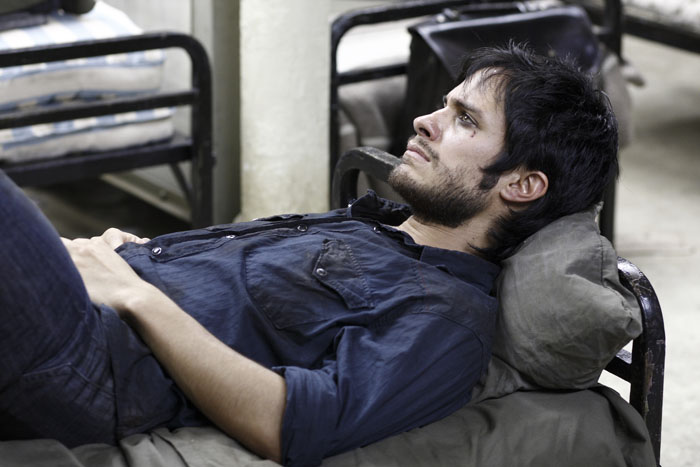
While the camera work was adequate and justified, and the performances are just a little above the acceptable, the narrative takes a lot of liberties in terms of development of the story and next-to-nothing about character arcs. The original tale is filled with imagery and metaphors that are supposed to be a parable about modern society and its lack of connection and empathy, so if it wasnât a difficult enough task to translate that on filmâthe way Saramago wrote the novel (a very prosaic or âbreathlessâ way, lacking many punctuation marks) didnât make it any easier, so itâs no surprise that many scenes are up to interpretation and things are changed âfor the better.â They actually end up being more of a crutch for the lack of time spent with the characters, especially our protagonist, the doctorâs wife, who, given multiple opportunities of showing some kind of arc or change actually remains almost the same throughout most of the filmâs 121 minutes.Â
Of course, in most cases you canât dwell as much on each event and characterâs journey in a movie when compared to a novel, but one thing is cutting or omitting sequences that might not add a lot, Â and another is leaving out important moments that directly reference to the main themes of the tale. Again, this could be due to the fact that the movie canât really decide if it wants to be a post-apocalyptic tale or a psychological piece that focuses on peopleâs psyche and their relationships with each other.Â
With a compelling concept and locations, an okay score, very little character development, and âdeepâ scenes that seem to be a little-too forced to make the audience actually feel something, the rawness, minimalism, and poetic beauty of Saramagoâs Essay About Blindness got lost in the white sea of the obvious choices in Meirellesâ âBlindness.”Â