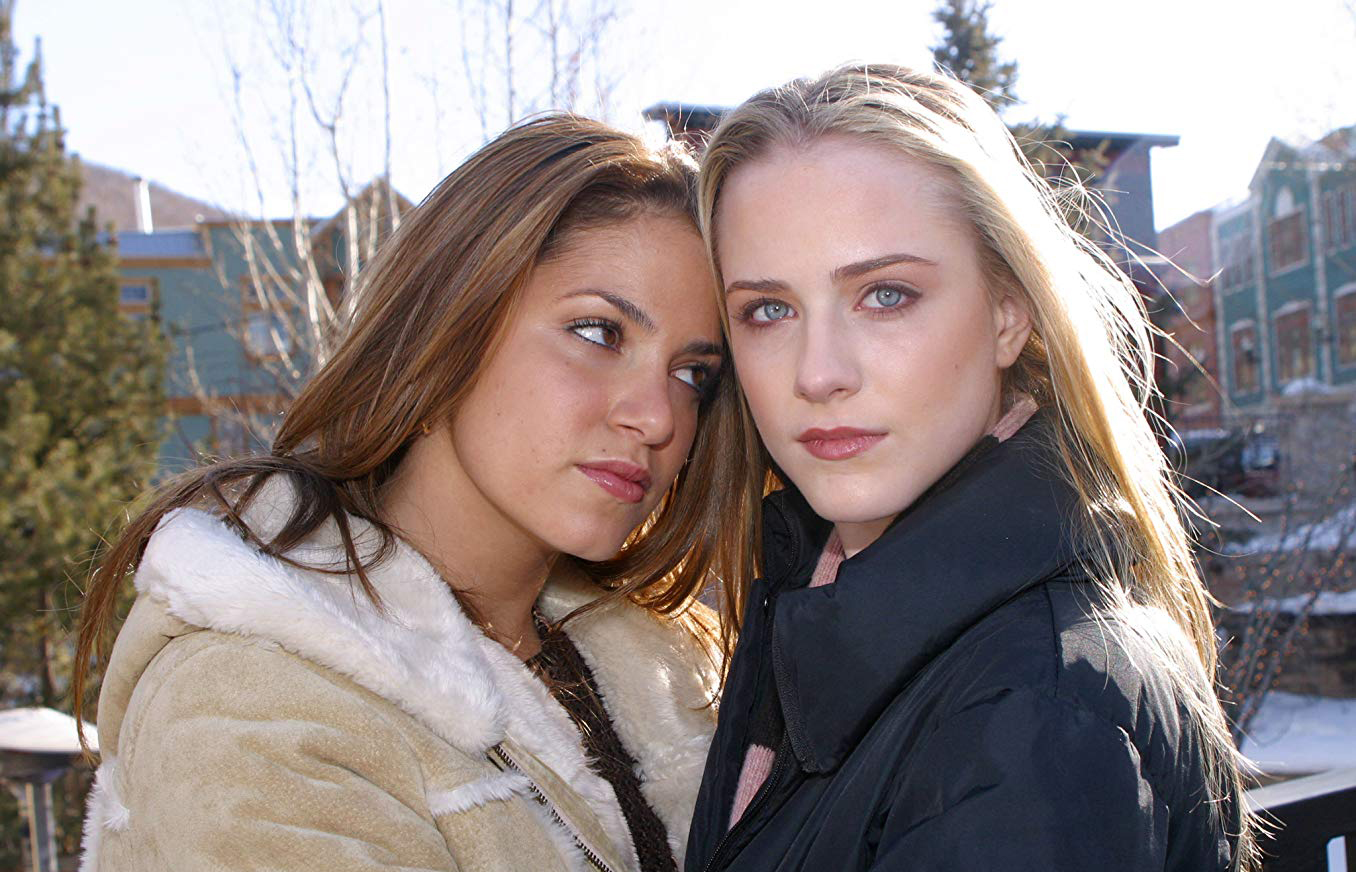
âThirteenâ (2003) is raw, real, and visceral. Itâs a shameless approach to a coming-of-age story flipped on its head, taking us on a rollercoaster. Being a thirteen-year-old girl sucksâin fact, itâs lethal. A compelling debut from both Catherine Hardwicke and Nikki Reed.
Melanie (Holly Hunter) is a recovering alcoholic trying to be the best mother she can be for her two children Mason (Brady Corbet) and Tracy (Evan Rachel Wood). Tracy (Wood) becomes friends with the cool popular girl at school, Evie (Nikki Reed) who corrupts her and they soon become inseparable best friends. Their hedonistic ventures are explosive, involving grown men, promiscuity, drugs, and theft, but they really think they can soar past the danger invincibly without a scratch… they are in for a rude awakening. Of course, this fearless mentality that often may be subject to some trouble is quite typical of teenagers. Weâve all been there before, where weâve done crazy things as teens that werenât exactly wise.Â
It reminds me of Sofia Coppolaâs âThe Virgin Suicidesâ (1999), but specifically of the scene in the hospital after Cecilia Lisbon (Hanna R. Hall) has attempted suicide. Her response to the doctor scolding her “youâre not old enough to know how bad life gets” is very poignant. âObviously, doctor, youâve never been a 13-year-old girl,â she softly says with a blank look in her eyes. âThirteenâ shares a similar sentiment.Â
âThirteenâ was a collaboration between Nikki Reed and director Catherine Hardwicke. The semi-autobiographical (loosely) film was written in six days by Reed and Hardwicke. At the time Reed was only 13-years-old, and shared a few similarities with the character of Tracy. Hardwicke being a family friend for a few years, had noticed a drastic change in Reed when she had turned 13. Reed had a very complicated upbringing with divorced parents leading to her eventually moving out of home as a young teen. She had expressed her interest in acting and Hardwicke suggested she write something like a teen comedy about what itâs like being 13 years old. Instead Reed wrote âThirteenâ (Hardwicke helped, taking care of the final draft), shedding light on some of her personal struggles as a 13-year-old girl.
Not long after writing the film, Hardwicke began filming, this being her directorial debut. When asked about her urgency to make the film, Hardwicke insists that she felt “it was almost like a snapshot of a particular time.â Finding a young actress that would play the role of Evie was tough, Reed was the only actress able to play this mature and daring character. Reed was 14-years-old during the time of filming, contributing to the unique authenticity the film has. Her performance is sharp and sincere, receiving an Independent Spirit Award for âBest Debut Performanceâ as a result. When compared to other coming-of-age films, this is by far one of the purest ones, mostly because the actors share similar ages to their characters, but also because of the story and how it captures an age relentlessly.Â
You fear for these girls but at the same time youâre intrigued as to what ludicrous thing theyâll do next, and whether they surpass the consequences. Itâs a bit like a car accidentâyou donât want to look but you still look. Their approach tends to be transgressive and selfish, yet we feel certain softness for these girls. They may only be girls but they see themselves as women, the nature behind their actions remains immature and they donât see that. Just like the filmâs tagline âitâs happening so fast,â these girls are growing up too fast (I still played with Barbie dolls at that age and boys were stupid mean demons with cooties). Outside that bedroom window is a scary world which Tracy and Evie love to flirt with, whilst the grown-ups that are familiar with that world are fearful.Â

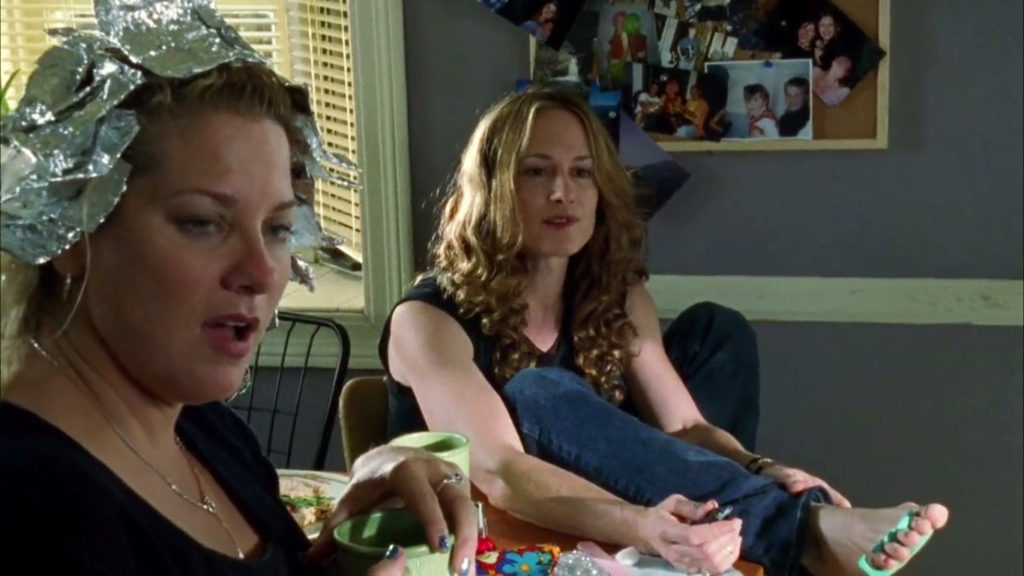
What we see is a single mother that is trying to make sense of her angsty teenage daughterâs rebellion and the reason behind it. There seems to be an unspoken but increasingly evident barrier between mother and daughter. Arguments between the pair and the build-up of tension makes this clearer. âYou canât just enter my room, mom!â Tracy viciously protests after a tender exchange between Evie and her mother, Melanie. Perhaps itâs jealousy? Or simply just feeling left behind, unloved by her mother, but the tension is certainly there. Tracy âbitchesâ a lot to her mother, and Evan Rachel Wood truly performs this angst incredibly well (she was 14 going onto 15 during filming). Tracyâs frustration with what seems to be her outer and inner self trying to conform and comprehend her own emotions is universal but contributes to the overall authenticity of the film. Itâs like sheâs trying to tell her mother something but canât quite understand it herself, instead unleashing her wrath in a different way.Â
At her worst, Tracy really tests Melanieâs patience, basically transforming into a demon. âNo bra, no pantiesâ Tracy chants almost demonically to her worried mother. Melanie is disgusted upon discovering her daughterâs belly-button and tongue piercing, “what the hell is that?â Melanie realises sheâs lost her daughter; sheâs looking at a stranger now. This is tragic, especially as we watch the despair in her eyes as she questions whether sheâs a good mother or not. There is a common ground between mother and daughter that they both fail to see. Both of them are unstable, confused, and frustrated with life and their situations. Throughout the film we see their relationship being stripped back, leaving a wound exposed. This wound represents the deterioration of girl and woman in life. A bond that we see, but they do not. If they recognised this bond, their love would grow deeper.
Throughout the film, Tracy goes on a life-changing journey, coming out of it mature (weâd like to think so!) and wiser. The ending is humbling, she is vulnerable, a kid crying in her motherâs arm. We can barely recognise Tracy by the end of the film; she looks like a grown woman. Standing alongside her former friends (before befriending Evie), Tracy looks years older than them just by their contrasting attires that were once similar. Her attitude and aura have also changed, entitled, dumbed-down, and a confidence that she uses to mask her insecurity. Tracy was once a docile, intelligent, and charming young womanâthis has now been corrupted. Evie, who was cruel to her at the beginning of their friendship, had eventually become her other half, inseparable, best friend. Soon disposing of this friendship to look for another where she is accepted on her terms, Evie is not a nice person. Tracy becomes a replica of her in the end; regardless, it was in vain.
Nikki Reedâs performance of Evie remains impressive. Her manner of conveying the twisted yet sad nature behind Evie is meticulous. She maintains Evie as a mysterious character in comparison to Tracy who we know more about. Likewise, it feels almost abrupt, the manner in which we arrive to this story. Itâs only a snippet of a small period of time, a glimpse into somebody elseâs life. When Evie recalls to Melanie the abuse she suffers from her family, we arenât sure if she is lying. Her tone is convincing, but her eyes and body language show otherwise.
Although, when we meet Evieâs mother (Deborah Kara Unger), we can empathise with Evie as to why she is barely home; it feels like we miss out on knowing something. We arenât sure if Evie is even genuine to her mother, or vice versa. Their dynamic isnât the clearestâbut then again, it doesnât have to be. What we do see is a mother-daughter dynamic that is bleak and ridden with pain, similar to the one Tracy has with her mother; however this one has more cracks and flaws. It doesnât mean that Tracyâs relationship with her mother isnât susceptible to such cracks and flaws; now that sheâs let Evie into this relationship, itâs already starting to happen. This suggests a cycle of corruption, manifesting itself through vulnerable individuals, leading to a downward spiral.

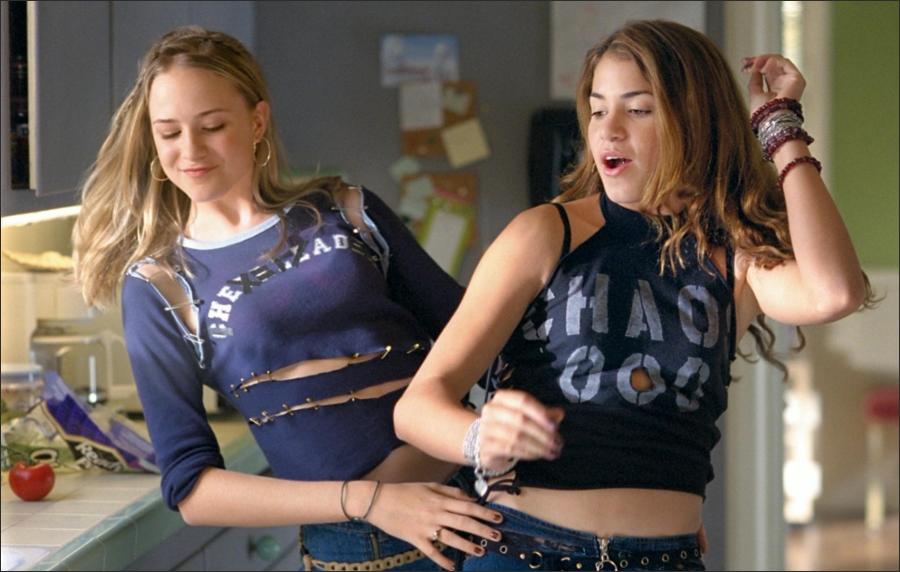
The moment in which the girls oppose each other alongside their mothers is a significant one. Itâs symbolic in its depiction of womanhood and their bond. Blood is thicker than water, and the cycle of abuse continues. For these girls, this is an experience that they will carry on their backs for the rest of their lives. For their mothers itâs an impactful experience, one that leads to a lot of questioning and strength, or simply weakness. Tracy learned a bit about herself, and the not-so sincere intentions of others (or did she?). Evie returns to her life in vain, but soon sheâll find a replacement. Itâs a call for help. Now the girls are strangers, probably spreading rumours as they watch their backs in the cafeteria. Middle school sucks and high school isnât kind to most people.
The bond between Tracy and Evie translates itself off screen universally. The endless sleepovers, where your best friendâs mother practically becomes yours. Itâs something that many young teenage girls have, but in the same vein can be so easily disposed. Because at that age popularity and being seen as something or someone is more important than loving and knowing who you are. Itâs more than just peer pressure; itâs just a coping mechanism, because things are changing so fast, you are changing so fast, and so is everybody else. Trying to keep up with the changes and finding yourself amongst all of it is often overlooked. Being thirteen sucks and we all kind of know it. Everybody has had their fair share of teenage sufferings, although sometimes they seem small in comparison to the ones suffered nowadays. But when youâre at that age, everything is now, now, now! Youâre so quick to grow up, and when you do grow up, you look back and yearn for those days when things were simpler. What remains is the fact that kids can be cruel.
This is Hardwickeâs strongest work to date; it feels personal and honest. Her approach to cinematography and the overall visual depiction of this story is fascinating. It is voyeuristic but also manages to throw you right in the middle of the action, adding a zesty energy to it. The filmâs pace is fast and fly-on-the-wall, with cold tones. Hardwicke applies a similar approach to some of her later films like âTwilightâ (2008) and somewhat on âLords of Dogtownâ (2005). This is clearer in âTwilight,â where the tones present throughout most of the film are much like those in âThirteen.â The camera movement on both films is also very similar to that of âThirteen.â Although in âLords of Dogtown,â the camera movement and fast pace editing works so well, it completely destroys âTwilightâ from being seen as a serious film (a viewing of the film today will show you just how badly it has also aged).
âThirteenâ has a legacy that lives on years after, but will it be preserved as a timeless piece? Itâs a commentary of a generation, that grew up amongst the chaos of technology and with a distorted image of self-love. Iâd like to think this is a thing of the past amongst many girls coming-of-age, but I doubt it. If itâs not one thing, then it would be the other. 13-15 are formative for young women, but theyâre also years of war with the world.Â