





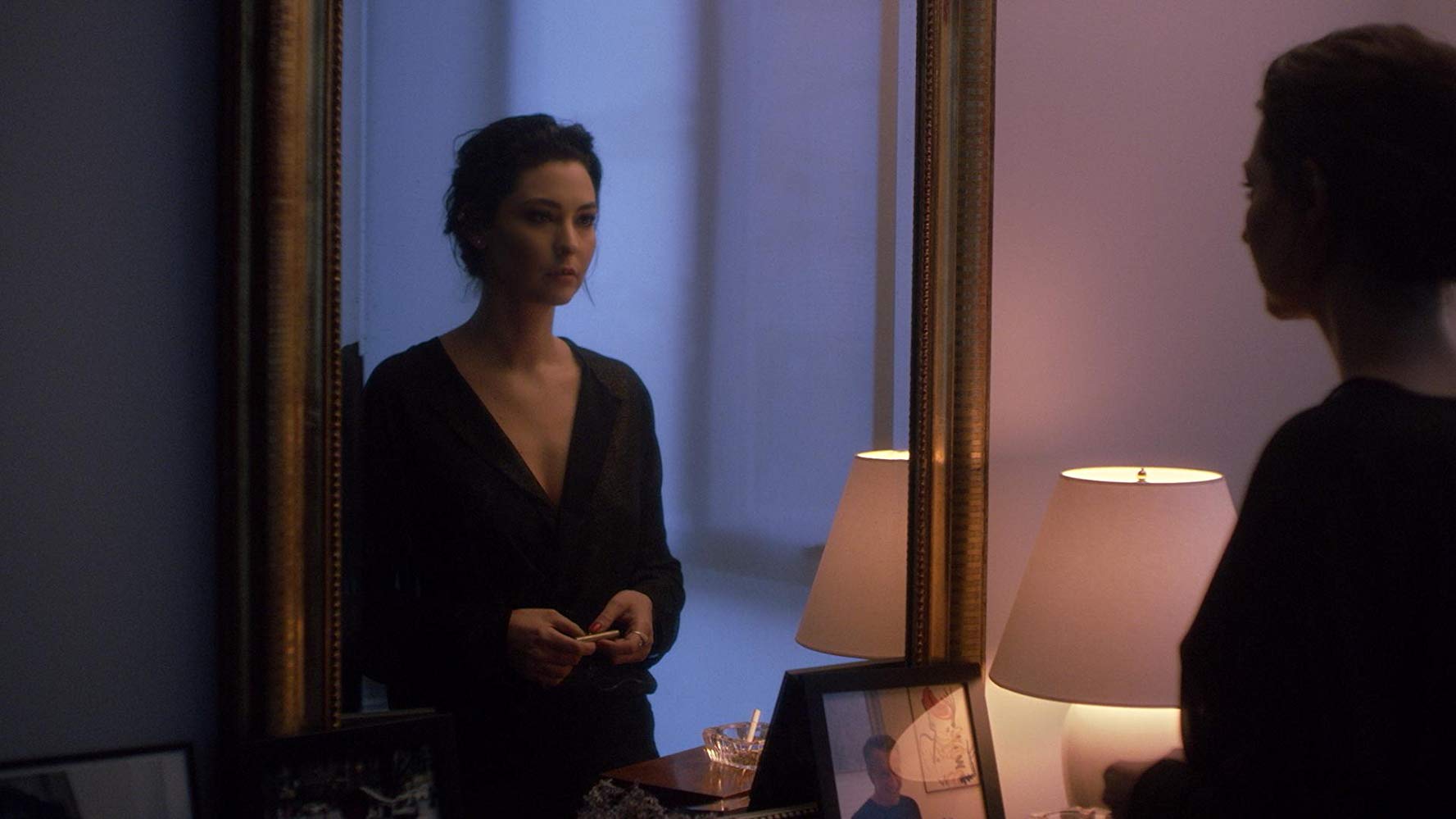
âThe Criticâ is a 15-minute short directed and written by Stella Velon about a green actress who wins an Academy Award for playing a drug addled woman and is subjected to a harsh interview with a domineering interviewer as seeming penance. The film deals with heavy material, and, from its start, Velon (who also stars in the film as the actress) positions herself as a serious filmmaker. Its opening, showing Velon looking at herself in the mirror as we hear a monologue of her acceptance speech is cinematic beauty, as are the following shots of her standing in the huge window of her solitary house, looking down. She soon greets the interviewer, and things get complicated. Not only is this guy stern, heâs harsh; his questions dig into her soul, causing question, tears, introspection.
What stands out about âThe Criticâ is its production value and aim, which are both pristine in their execution. The film is ambitious, and wants us to follow it along it progression. The cinematography is done by Akis Konstantakopoulos, and the shots are immediate and precise. Youâre left with the distinct impression of watching a film, and none of the lighting, scene setting, or production problems that can sometimes plague low-budget indies are present here.Â
What is intriguing about âThe Criticâ is that it presents the actressesâ interview not as accolade, but as judgement – which is incidentally one of the criticisms I have with the film. The acting is astute, and both Velon and Alan Smyth, who plays the interviewer, turn in wonderful performances. Smyth in particular excels; his questions come off as passive aggressive, as demanding, as pseudo armchair psychologistâ¦and, at the end of the day, irreverent. He means to tear the actress down for the sake of tearing her down. He accuses her of not answering his questions; but often his questions jump out of left field and when she does answer he doesnât probe deeper, but simply asks another unrelated, worse question. Sometimes weâre left wondering what his aim is, what he wants. Answers are forthcoming, though Velon and company make you wait for them.Â
One thing that âThe Criticâ struggles with is length. Filming shorts is a difficult medium; too long, and you risk losing the audience, too short and you risk not injecting the picture with enough information to make an impact. Velonâs film packs an emotional punch and is rife with good performances and thoughtful shots; but it is, on the whole, too short. Other critics have suggested that the film is not about an interview but about the actressesâ psychology. However, more of the pictureâs writing is centered around the questions than the answers.

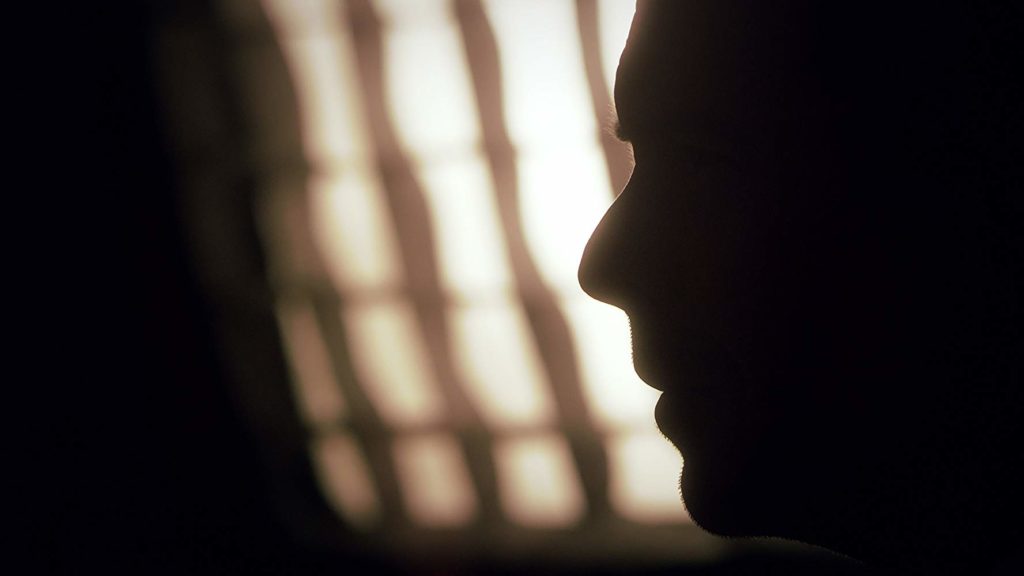
The interviewer punches deep, but the film is reticent to allow a detailed or thorough answer from Velonâs actress to allow the kind of deep, psychological understanding of her character that it deserves. Smythâs questions set the stage as the brutal, personal weapons they are; however, by the time the actress stands up to him, while we understand more about him, we do less about her due to her lack of answers and the filmâs interest in Smythâs attacks. I feel five minutes or so of added explanation into the actressesâ psyche would have gone a long way toward filling out the questions and making them less an end in themselves.
To be fair – and without giving spoilers – there is a purpose to this, and Velonâs film is nuanced nicely with and ending that vindicates the hurt the actress feels after dealing with the barrage of questions. And, for her right, a scene with director Velon as she sits slumped on the ground, questioning wether to relapse into drug and alcohol use is the filmâs most powerful. It requires a terrific physical performance of tears and pain from Velon, and she delivers. Thereâs a fair amount of âin your faceâ cinematography here, but also symbolism. As the actress steps purposefully barefoot on shards of glass on the tile floor of her bathroom I winced; the pain – both psychological and physical – is palpable, and Velon (through her direction and acting) makes us feel it.
All-in-all, âThe Criticâ is a good production that involves the audience directly in the picture. Itâs painted with vibrant colors, has a solid intention, and delivers on both fronts of cinematography and acting. Itâs easy to follow, watches quickly, and has a soundtrack and score (handled by Greg Richling, especially during the filmâs penultimate addiction scene) that are immediate and powerful. While the actress is painted somewhat thin, its all forgivable. Velon has written and produced a powerful indie here, and Iâm eager to see what she does with her next production.Â
-by Mark Ziobro


