




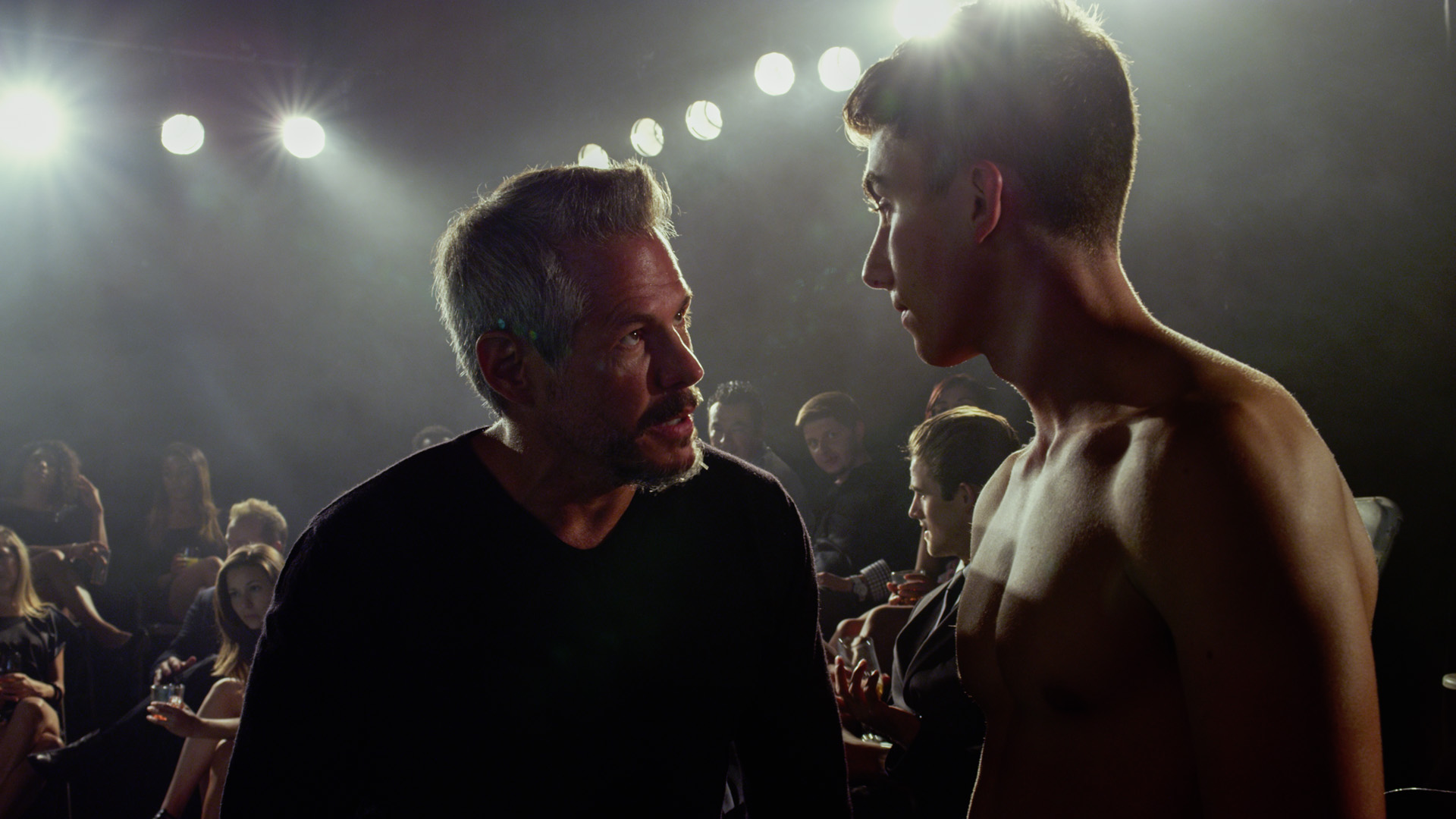
The best way to describe âShiner,â the indie feature written by Kevin Bernhardt, is a family drama about loyalty and healing. Itâs also a boxing picture. Wellâ¦a boxing picture is there, hidden somewhere along the ropes, but the meat of the story and these charactersâ lives lies with emotion, not punches. Writer Bernhardt also acts, in a performance that won him âBest Actor in a Feature Filmâ at the Northeast Film Festival, US in 2017. Itâs not as dramatic or fight-focused as big budget moneymakers but it has its heart in the right place. Thatâs an accomplishment in itself.
The film is billed as a newcomer who wants to be a contender who seeks out a fighter past his prime to tutor him. But the film is a bit of a misnomer, as Bernhardtâs âHappy McBrideâ is a character cloaked in mystery. But in this description lies the filmâs strongest asset – the camaraderie and chemistry between Seya Hug, who plays young Matt, and Bernhardt. Itâs an almost instant bond, one carefully written by Bernhardt, acted by both men, and directed to near perfection by Seo Mutarevic.
When Matt meets Happy heâs a washed up medical student living out of what answers for an RV. By the end heâs still living in his RV but heâs learned something along the way. âShinerâ is not a film like âRockyâ that intends to push its characters to the their physical and emotional limits and prove something to themselves and the world in tandem. Itâs more interested in the small stuff; the fact that it watches well and its one hour and 34 minute run-time passes quickly is the biggest credit to its success.
For an indie feature, the production value for the film is high, both in its cinematography and acting. Mutarevic also acts as director of photography here, and his shots are clean, precise, immediate. The movie is set in Los Angeles, but Mutarevic avoids the temptation to shoot flyovers of the skyline or Hollywood, setting his tale in dingy garages, bars, and fight arenas. And, unlike films like âDriveâ or âTraining Day,â the film is allowed to be shot in the bright sun LA allows, not tinted with that ever-present blanket of fading sunlight that these aforementioned films provide.
The acting is also apt. Hug, who is son to K1 martial arts superstar Andy Hug, finds easy footing in âShinerâ as an outsider who desperately wants to be a fighter. He does things that sets him apart, such as having a near encyclopedic knowledge of boxers and vital organs to punch, a composite of his luster for the profession and his having dropped out of medical school. âYou donât talk like a fighter,â McBride observes. Heâs right.


Whatâs interesting about âShinerâ is that apart from Bernhardt and Hug, the film is also littered with a plethora of supporting actors, from boxing promoters, to trainers, to fighters and more, all whom do a good job as well. The most developed of these is a fight promoter/former manager for Happy named Larry (Brian T. Finney of âMillion Dollar Babyâ fame) and Shannon Staller, who plays Happyâs daughter Nikki. Staller is a nice addition, and won âBest Supporting Actress in a Feature Filmâ at the Northeast Film Festival, US for her role here.
If criticisms do come, they come in the form of the filmâs story, which unfortunately isnât as tight as one would hope. It shows in the little things. For instance, we know that Happy was a contender and Matt wants to be an MMA fighter, but we donât feel these things as emotionally as we should. Additionally, the filmâs pièce de résistance, its finale, is watered down and loose fitting.
I donât fault the film for laying off the often-clichéd âfinal fightâ trope here (and the filmâs final shot, showing Happy looking over LAâs winding freeways at night is brilliant), but something that answers for closure is missing. Bernhardt does such a stellar job layering the relationship between he and Matt that it deserved an arena (no pun intended) for it to come to fruition. Sadly, this aspect, as well as some loose ends between Happy and Nikki are left to the wayside (though a heart-to-heart McBride has with his daughter in the diner she works at is emotional and raw, and the stuff that great performances are made of).
Overall, âShinerâ is a competent film. Itâs produced well, acted well, and contains both action and drama. The fight sequences are short but choreographed well, and its soundtrack, composed by Oliver Goodwill and Alan Howarth, is fitting and appropriate. âShinerâ seems to contain the budget and resources to excel and push the envelope of the genre more than it does. Amidst a film of other, stellar accomplishments, this is its ultimate shortcoming. Bernhardt has shown himself capable of creating an engaging project; Iâd be interested to see what he comes up with next.
-by Mark Ziobro