





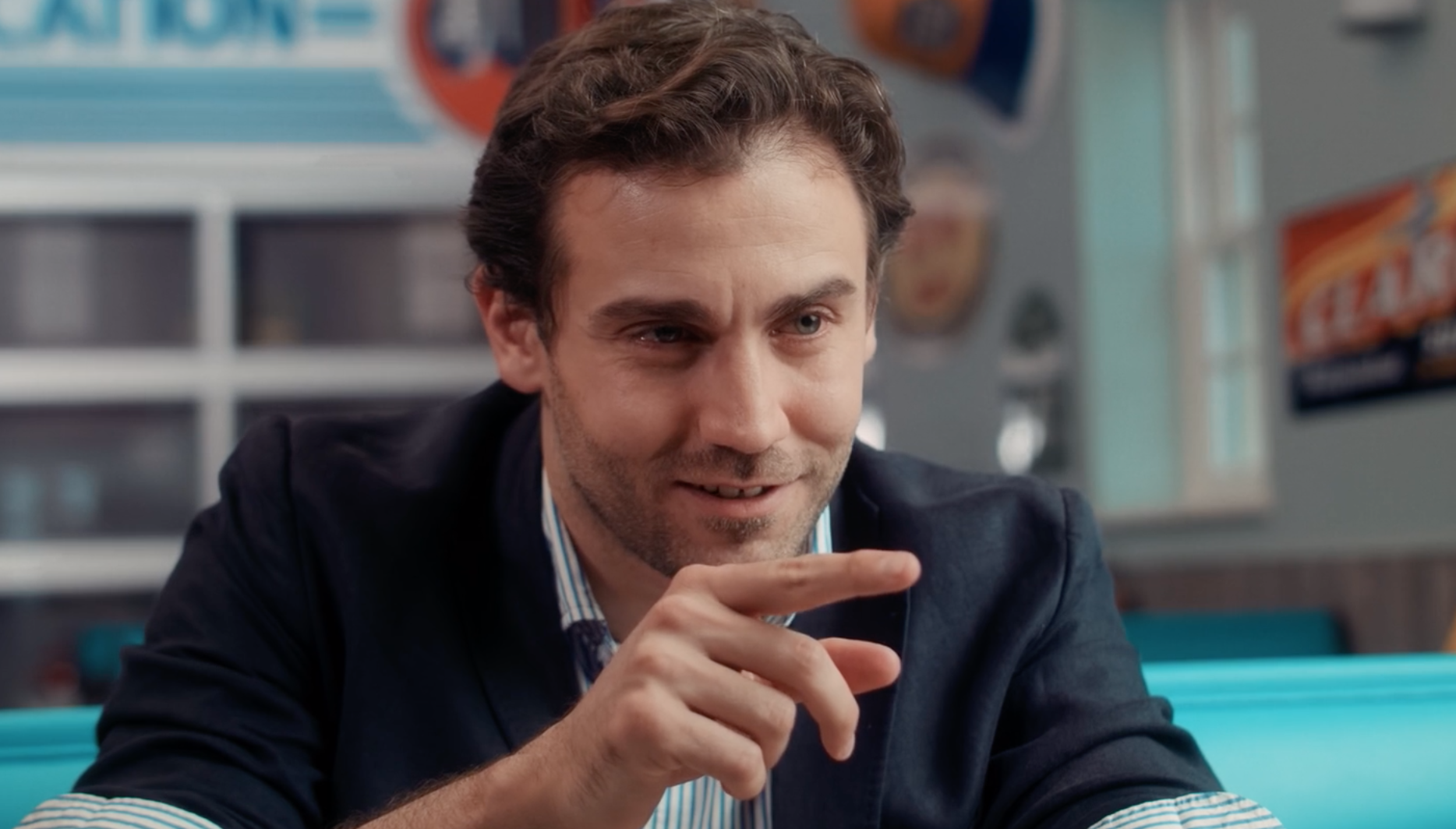
Ashely Tabatabai, creator of the short film âFalsifiedâ follows up his more serious drama with the paraody/introspective âThe Interview.â Tabatabai, who starred in âFalsifiedâ as a son searching for his father here stars as a hot shot media exec meeting a down-on-his-luck employee in a secluded diner to offer the man a job – however his interviewee may have bitten off more than he can chew. The effort, at just under 8 minutes, is well-shot, well-acted, and well-produced. With humor and hints of satire, Tabatabai has produced another interesting film worthy of a second look.Â
While âFalsifiedâ was a introspective look at fathers and sons and Spainâs nefarious âstolen baby scandal,â âThe Interviewâ is important in its own ways, both for its tongue-in-cheek comedy and satire, all while blanketed in a haze of realism. Weâre introduced to two men – one, a feckless, shy, and nervous man named Robert (Scott Michael Wagstaff) and another, the dominant interviewer Joseph, played by Ashley Tabatabai. Robert looks like he drinks too much coffee and lives his life in a cloud of relaxation tapes and Xanax. Joseph looks like a slick Hollywood type who knows he has the upper hand and flaunts it. Robert wants/needs a job. But he gets so much more than he bargained for.Â
Watching âThe Interview,â I was most impressed with Tabatabaiâs eye for, and ability to perform, starkly different genres. His character in âFalsifiedâ was empathetic and ultra serious. It was a physical performance where more was said in a look than dialogue. However, in âThe Interview,â his character is commanding, dominant, comedic, and satiric. As Joseph makes Robert wait as he finishes berating someone on the phone, only to then coddle Robert, I realized that Tabatabai has not only a keen directing talent but an acting one as well. He easily slips into a new role without looking back.Â
Wagstaff, who is tasked with a plethora of dialogue, most of it delivered beneath an anxious veneer, stuck out to me as a fantastic actor. Under the direction of Stephen Fairlamb, Wagstaff is a comedy of nerves that makes us feel for him. His speech, his mannerisms, his nervous coffee pouring out of a kidâs thermos he brought to his interview… There is a good amount of layering to his character; written by Tabatabai, Wagstaff takes a difficult character and runs with him. He has 16 acting credits, mostly indie shorts, and his penchant for the genre shows.Â
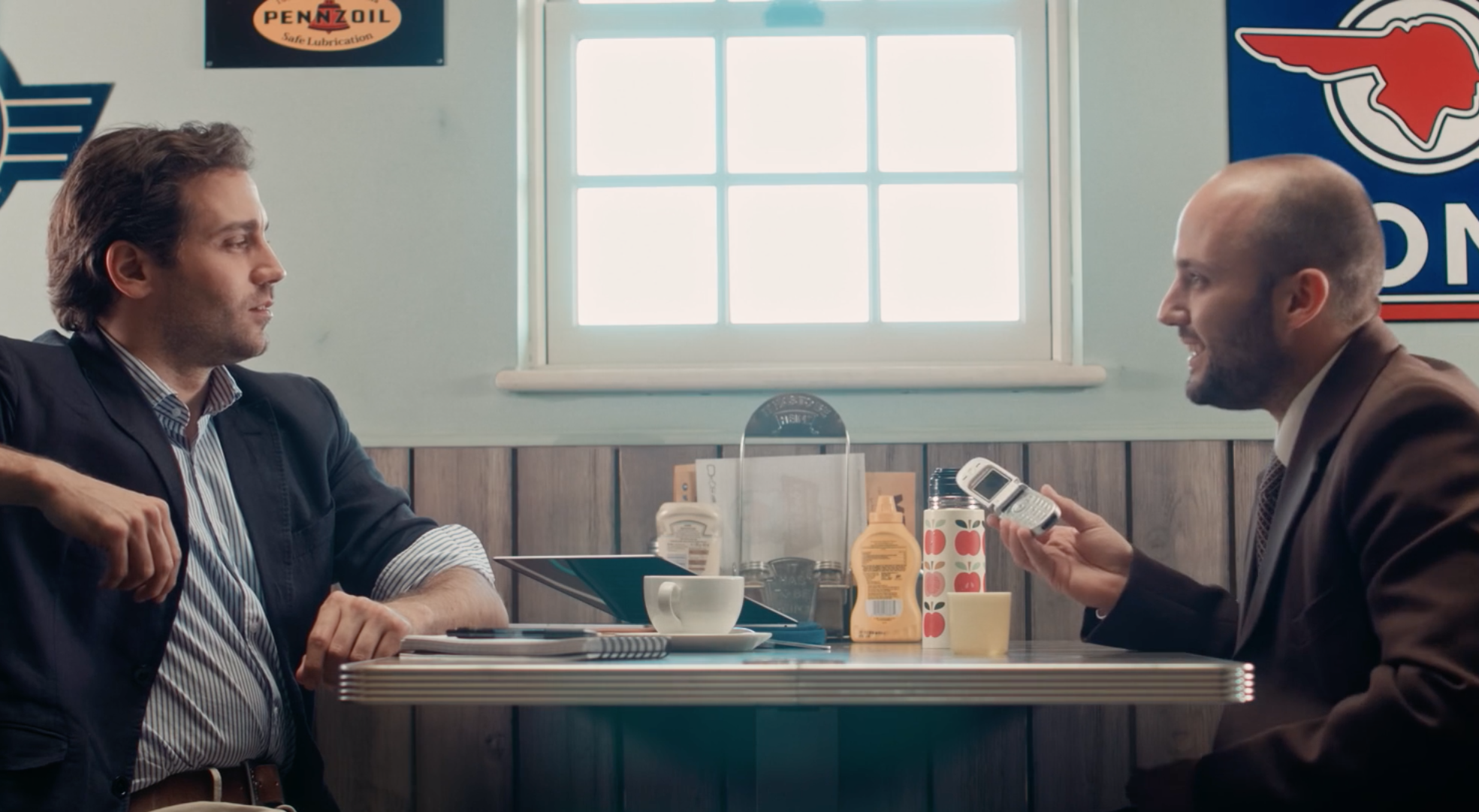
The film also has touches of pleasing cinematography and filmmaking, from the brightly lit interior of the diner where the interview takes place to an original score by Howard Carter. Thereâs something about a diner that alludes to feelings of comfort that make it an odd milieu for a job interview of this magnitude. High power media moguls donât typically discuss power brokering over coffee and waffles, and somehow the whole effort is nuanced in a way that feels seamless.Â
Underneath it all, thereâs also a keen social message running through âThe Interviewâ that shows Tabatabaiâs comfort with the material and the commentary he is trying to make. âCorporations are psychopathic,â Joseph narrates before explaining why his firm is different – right before asking Robert to do something immoral while disguising it as a joke. And while Tabatabai doesnât come right out and say it, heâs remarking on the desire we have for a different lives while interviewing for a job, and the concessions we make for impressing others. While most people arenât asked to do soul crushing things to get the job, we are asked to change; Tabatabai comments on this in interesting ways that makes his film more than just a parody. Its ending, truncated and expected, reminded me of another indie director I like, Alexei Slater, who turns slapstick into an art form. Here, Tabatabai is not celebrating slapstick, but is celebrating satire. That the effort comes off nuanced and believable is a credit to his vision.Â
All in all, âThe Interviewâ is a solid movie. Not as seminal as âFalsified,â it will make you laugh while hinting at notes of seriousness and introspection that belie its awkward style. It features good acting, good production, and never drags. An easy recommend that makes us look forward to Tabatabaiâs next move.Â
– by Mark Ziobro


