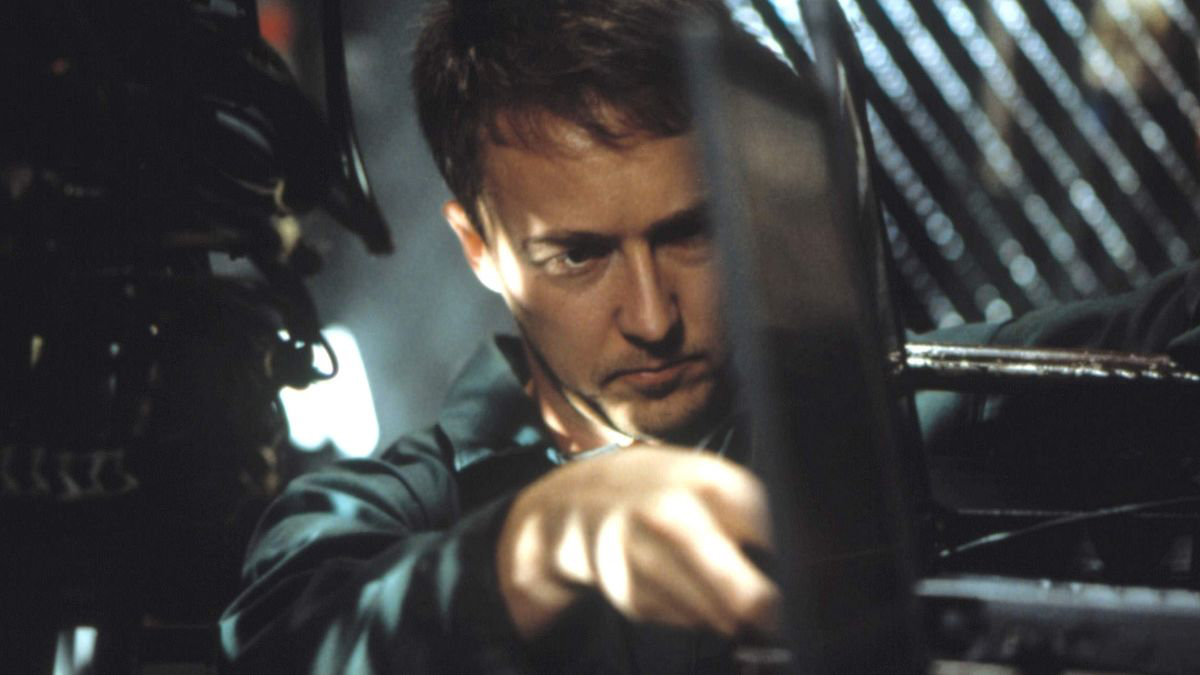
The heist picture scene is littered with so many bank jobs, one often forgets the elegance of cat burglary unless routinely reminded. Pierce Brosnan reminded us competently in 1999 with âThe Thomas Crown Affair,â while 2003âs âThe Italian Jobâ was slightly more cluttered. However, with âThe Scoreâ â starring Robert De Niro and Edward Norton as two mismatched thieves attempting to lift a priceless artifact from a customs house â weâre reminded of what suspense and planning can do when executed properly. While not overzealous, this is an entertaining film with a payoff to match.Â
The film is directed by Frank Oz (best known, of course, for voicing Yoda in the âStar Warsâ series), who makes the unique decision to set the caper in Montréal, avoiding the usual bustle of New York City or like metropolis. The movieâs scope is small, as is the cast. Aside from De Niro and Norton, the movie features but a few others, most notably Angela Bassett as a love interest for De Niro and screen legend Marlon Brando in one of his last appearances before his death in 2004.
De Niro in a Controlled Performance
The production opens subtly, with aging thief Nick Wells (De Niro) cracking a safe in a posh estate outside Boston. Heâs careful. Using a flashlight in the dark, he carefully waits until a couple postpones their foreplay to finish his job. He returns to Montréal to meet his handler, Max (Brando), but we see all is not well. Max has lost the buyer for his heist, one of the first of slip-ups that position the man as less than reliable. It isnât long before he introduces Nick to the young and ambitious Jack Teller (Norton), who broaches the heist of a priceless scepter from the Montréal Custom House, much to the chagrin of Nick. Nick, a Montréal resident, lives by a strict motto â never steal from your own backyard.Â
Oz and the screenplay written by a staggering five writers play off of Nickâs relationship with Jack to pleasing effect. The charactersâ motives are simplistic even when their plans are not. Some standard tropes are revisited: Nick, a thief who wants to quit but agrees to do one last job, contrasted with hotshot Jack who throws caution to the wind. âYou want my advice?â Nick offers. âMake a list of everything you want now and spend the next twenty five years getting it, slowly, piece by piece.â Jackâs not having any of it. He wants it all. Now.
Stealing from your own Backyard
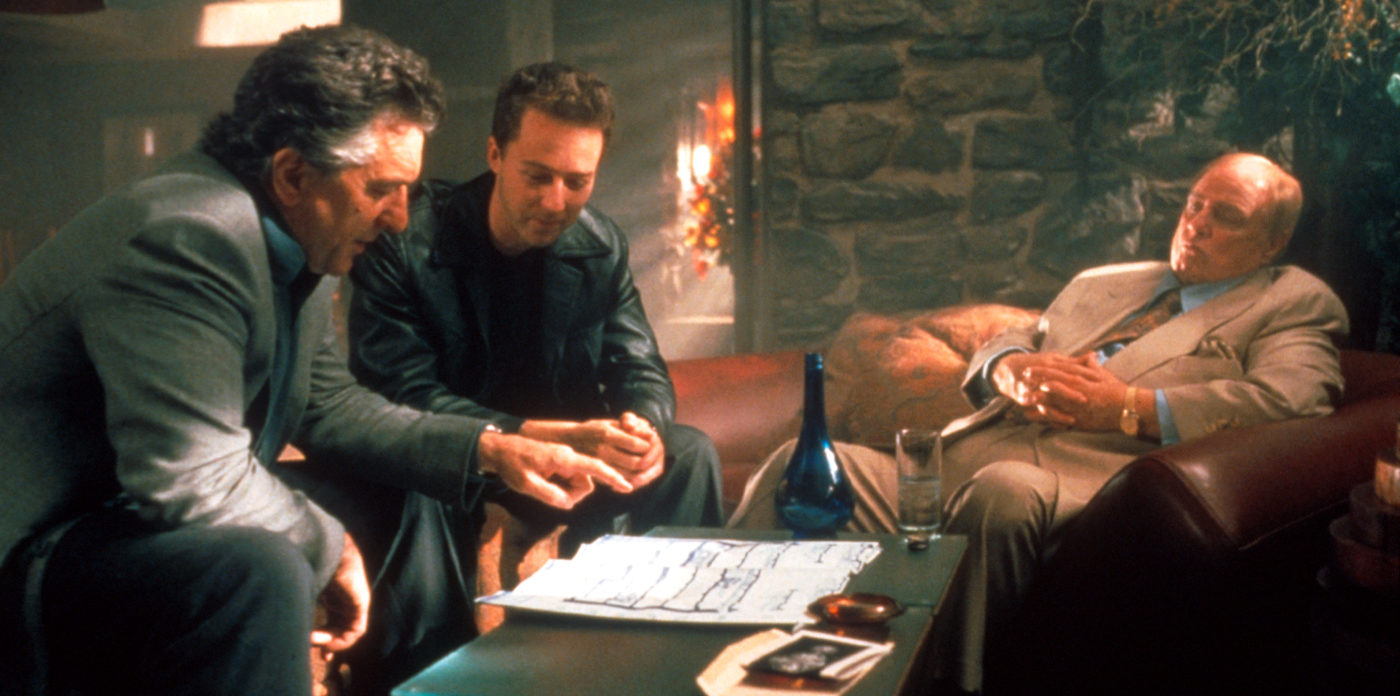
The set pieces in âThe Scoreâ are tight and suspenseful. Unlike pictures in a hurry to get where theyâre going, this film is not, taking its robbery â and audiences â through careful planning. Like capers such as âOceanâs Eleven,â Nick and Jack carefully explain their plan to let the audience understand what they’ll see when they see it. We see a lot of late night exploration below the Custom House and the working out of problems as they occur. Jack handles the internal details; Nick the safecracking. In one interesting sequence, a spilled beer keg on the cobbled streets of Old Montréal gives Nick an idea to crack the seemingly uncrackable safe; though its actualization is kept from viewers until its on-job unveiling.
âThe Scoreâ derives its tension from its plan and its forced deviation from it when life gets in the way. A maintenance crew outside the Custom House deters Nick to find another exit⦠and Jack (who role plays a mentally challenged janitor named âBrianâ) must improvise when his boss (Paul Soles) refuses to break for lunch as planned.
These scenes are all the more taut as the film â clocking in at 2 hours and 4 minutes â spends most of its run-time in the set up rather than the takedown. The movie carefully sets up our expectations and then spends its tense finale threatening to violate them.
A Solid Heist Film
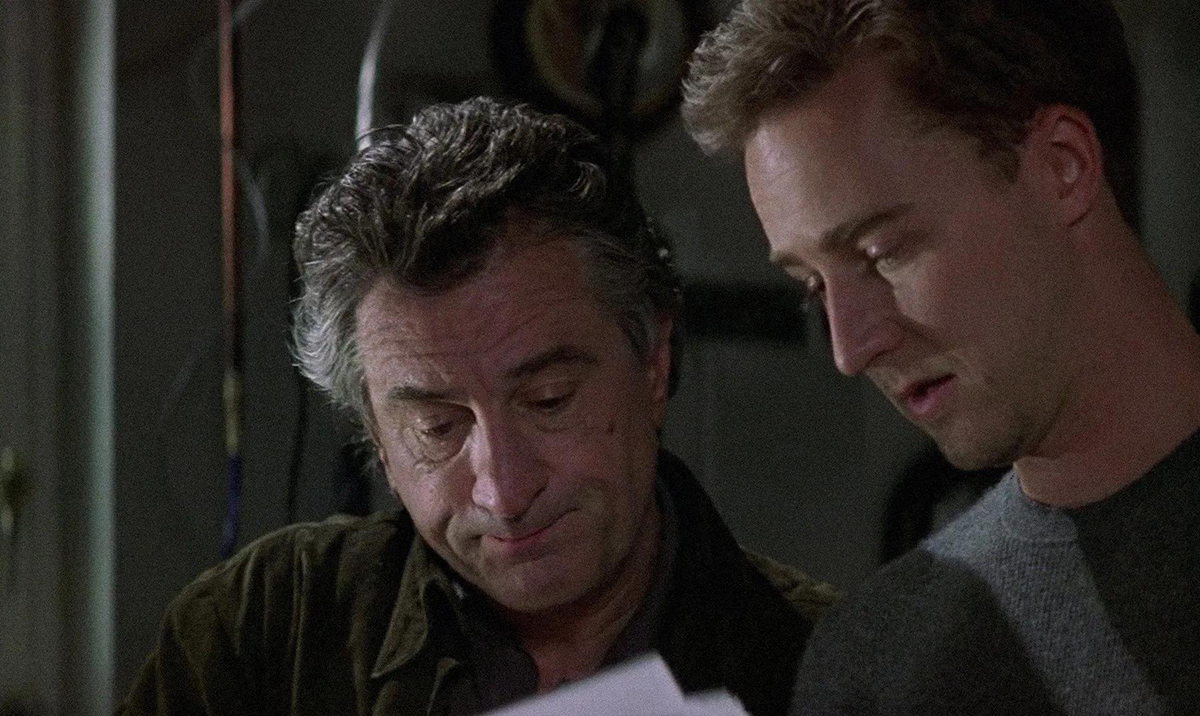
The acting works, and De Niro and Norton make a good pair; not by their camaraderie, but in their mutual distrust of the other. Both have predictable arcs, but the way the film progresses makes you second guess its conclusion until it plays out. âThe Scoreâ brings you into its world through careful design and execution, and its setting in Montréal drew me in that much more. I could criticize Brando, who more or less phones his performance in, but it isn’t necessary. The real meat lies in the heist itself and the power brokering between De Niro and Norton.
âThe Scoreâ is a solid film. Itâs full of plans, backup plans, tension, and pace. It takes patient viewing. Thereâre no gunfights or explosions here, but the film is the better for it. It isnât perfect; but it entertains perfectly, and that may be enough.