Amidst a genre packed with coming of age themes, John Hughesâ 1985 âThe Breakfast Clubâ succeeds by concerning itself more with personal discovery, adolescent insight, and unlikely camaraderie. This is a film that starts with five teenagers separated by social structures as thick as brick walls; but a Saturday detention and nine hours of forced bonding breaks down these walls and offers something this side of understanding. With solid writing and matching performances, Hughes takes a concept that some feel never should have worked and turns it into a classic.Â
Basking in the wake of films like âRebel without a Cause,â Hughes produced a legion of films that explored human elements of teen life, their problems given real weight and concern. And whereas high school films often focus on love, popularity, and sporting events, Hughes created something unique by exploring his characters as people. He doesnât prod or poke, trivialize or make fun. In âThe Breakfast Clubâ he takes five characters struggling with various aspects of adolescence and explores them smartly and empathetically.Â
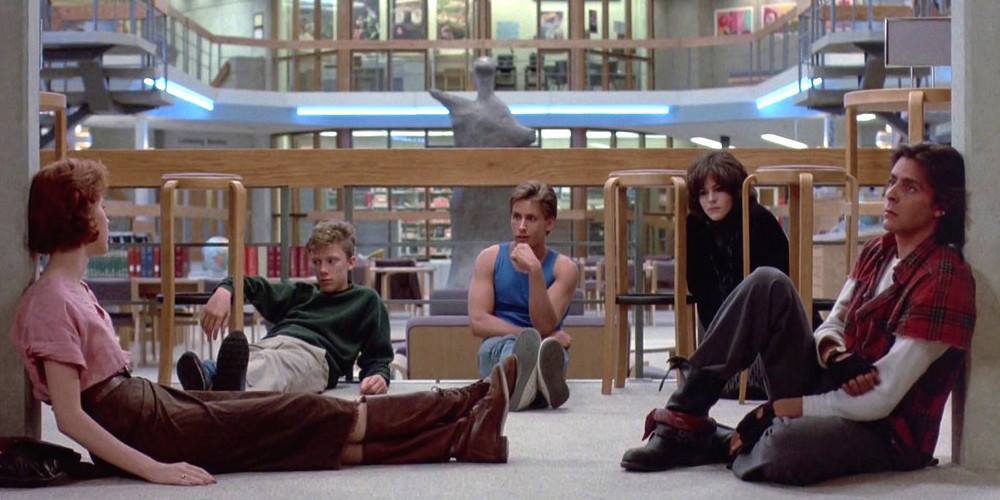
The filmâs characters have now become iconic. Thereâs the jock Andy (Emilio Estevez), the brain Brian (Michael Anthony Hall), the rich girl Claire (Molly Ringwald), the outcast Allison (Ally Sheedy), and the criminal Bender (Judd Nelson). The script, penned by Hughes, paints them in a believable light. They donât meet, meld instantly together, and walk off into the sunset. Thereâs confrontation, anger, and misunderstandings. Nelson plays a gruff, adversarial type who seems to hate everyone and everything. His needling, constant button pressing of the rest of the group seems at first to be an extension of his irritable personality. But itâs only in a movie with this manner of focus that he becomes something more.Â
âThe Breakfast Clubâ is a unique entry point into these charactersâ lives. Itâs cinematography highlights this, such as its opening montage as the five are dropped off for detention (amidst respective admonishment and apathy from their parents), to wardrobes and attitudes that suit them. Claireâs diamond earringsâ¦Andyâs athletic sweatshirtâ¦Brianâs simple jeans and sweaterâ¦Benderâs audacious greatcoat pulled over jean jacket and flannel. The clothes match their personalities and the images they wish to convey.Â
The writing in âThe Breakfast Clubâ is introspective and deep, the five engaging in conversations and insights that betray their young age. They experience anger, fear, and pride. They deal with repressed feelings and hurt; defense mechanisms line their speech. Claire tries hard to hide how pampered she is; Bender how kind. The film is expert in the way it picks at their veneer, showing they have more in common than initially thought.Â

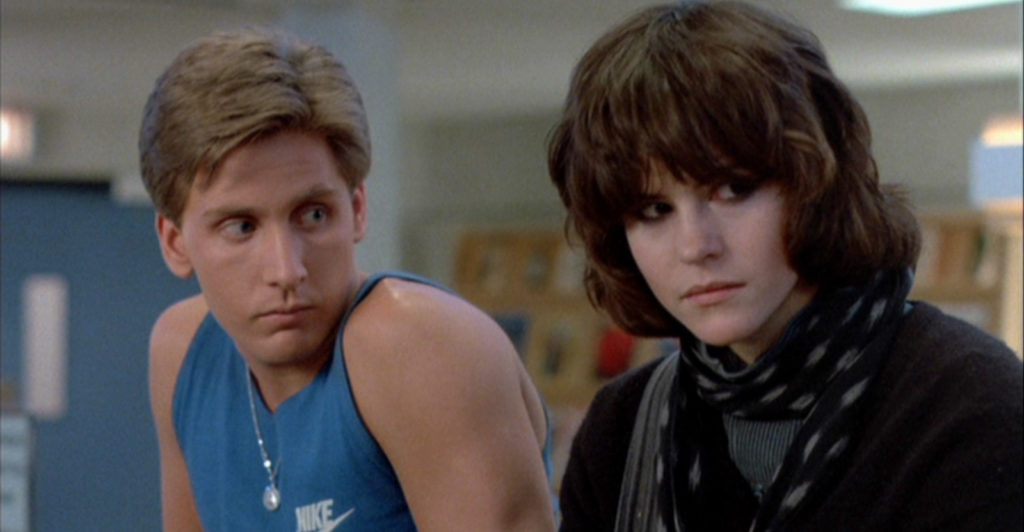
Aside this, the film is a keen comedy and injection of 80âs subculture, with easy humor and a soundtrack to match. Energetic songs like Simple Mindsâ âDont You (Forget About Me)â and âFire in the Twilightâ by Wang Chung line its run. Hughesâ drama is broken up with scenes of light camaraderies such as sneaking out of detention to visit Benderâs locker (âIt feels good to be bad, doesnât it?â he asks Claire), as well as a few dance numbers and an obligatory makeover scene that wouldnât have worked in a weaker film. The scenes highlight youthfulness, enthusiasm, rebellion. Â
Reigning over their rebellion is Richard Vernon (Paul Gleason), a jaded educator who despises teenagers in general and Bender in specific. A scene where he cuts Bender down, taking it so far as to threaten him past high school hits sharp and painfully. Another conversation between he and the school janitor highlights Vernonâs heavy-handedness and faux-victimhood. âThese kids get more and more arrogant.â He states. âThey turned on me.â Gleasonâs acting is apt and proves Hughesâ point well. Kids come and go, one year to the next, but heâs doesnât see them. He sees their variety, he sees their numbers, but to him theyâre all the same. âYou see us as you want to see us,â accuses one at the filmâs opening. Heâs right.Â
The film skips along in this way: run-ins with Vernon that strengthen the groupsâ solidarity along with heavy truths and realizations. A rich girl whose parent speak in money rather than loveâ¦an athlete whose abusive father drives him to perfectionâ¦a seemingly innocent brainiac driven to a point of desperation from failing shop classâ¦a tough, criminal type who rejects everyone and everything, hindered by adults who know better yet harm him.Â
But amidst these revelations Hughes throws in some levity. The group discusses their strengths, their accomplishments, their hopes and dreams. What donât they want? To be like their parents. Some find it inevitable, others not. The filmâs acting and the chemistry between the cast makes these scenes work. Nelson, Estevez, Hall, Sheedy, and Ringwald turn in exceptional performances. The film simply wouldnât work without them.Â
âThe Breakfast Clubâ holds up over time as relevant and iconic. It features good performances, relatable themes, and a staying power that saw it indicted into the National Film Preservation Board in 2016. Its characters are sympathetic and smart. Perhaps not in totality, they represent the versions of our younger selves that play out in our minds when we think of high school. Their experiences are adult and singular. Theyâre what we would have sounded like if we could have analyzed adolescence with our minds of today. But we canât. So we donât. We listen and we understand.Â