





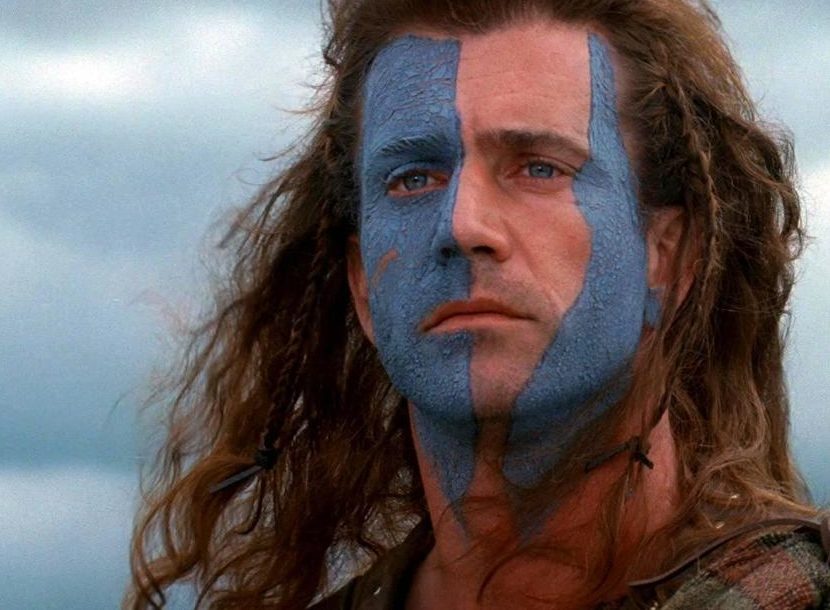
While not historical biography, and grabbing lose inspiration from the myth of Scottish rebel William Wallace, Mel Gibsonâs âBraveheartâ won five Oscars and remains a taut, emotional epic that is one of the genresâs best. Dividing its time between the Scottish capitol of Edinburgh and the countryâs lush, rolling fields, âBraveheartâ has much in common with the 2006 movie âThe Wind That Shakes the Barley;â though it uses swords as its dialogue instead of guns. The film sets out to draw audiences in with its scope, action sequences, and emotion. And reviewing the film in 2018 – 23 years after its release and amidst many other blockbusters with more ambitious budgets – itâs safe to say it still accomplishes this with ease.Â
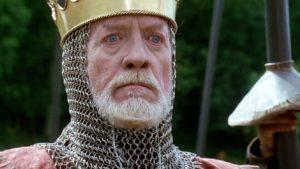
âBraveheartâ has a way of broaching difficult topics early. âHistory is written by those who have hanged heroes,â narrates Scottish noble Robert the Bruce (Angus Macfayden). And, rightly, itâs only a matter of time before we see the aftermath of âtruce talksâ between the vicious King of England (Patrick McGoohan) and some Scottish nobles that ends in a mass execution. Wallace learns quickly that 1300sâ Scotland is a dangerous time, where even whispers against the Crown can end disastrously. In quick time, however, Wallaceâs father and brother are killed in combat, with William entrusted to his uncle (Brian Cox) who becomes his guardian.
Gibson paints the landscape, and takes the time to set up his characters as tangible humans we grow to care for, not merely as cannon fodder as lesser epics make the mistake of doing. We see a friend, Hamish, played warmly by Brendan Gleeson. He and Wallace have play an accuracy game with stones; the film finds an interesting way to work this back into their lives when they reunite as adults.

We also see a love interest for Wallace in the form of a woman named Murron, played sympathetically by Catherine McCormack. Murron, aside Hamish, has been special to Wallace for many years. It was her that gave him a single thistle when his father was buried. She will soon lose her life to as the result of an attempted rape – euphemized as âprima nocteâ – or the practice of English soldiers having âsexual rightsâ to newlywed common girls. She and Wallace have married in secret to avoid this very thing. Her death would lead Wallace to become the unlikely leader of a rebellion against England.Â
Gibson wisely shows how Murron’s death lights a match under a rebellion that had all but started before this event. Centuries of oppression and murder underlie the proceedings, and its a credit to the script that you can feel this emotion throughout the film, specifically in its battle sequences which are fast paced and violent. And while some scenes are graphic (puncture wounds and cleaved limbs are plentiful), the filmâs violence is contained, its special effects limiting viewersâ exposure to more personal occurrences like executions of key characters. âBraveheartâ isnât a movie that celebrates gore, but one that uses it in its storytelling for no other reason than necessity.Â
The acting is good all around, highlighting characters from oppressed Scotland to England. Gibson performs well, and, while emotional throughout, plays the part in a detached way that restricts the picture from degenerating into hero worship. Both the script and Gibson humanize him, showing his bravery in battle, but not shying away from his fear of death and humanity in the process. There is a scene where Wallace prays to God for help, in between naked admissions of his fear, that lets us feel his plight and makes him someone we can relate to.Â
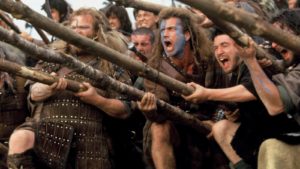

âBraveheartâ rides many emotions during its runtime such as loyalty, love, patriotism, and perseverance. This isnât a epic of superhero proportions, is, in fact a tragic film, but one that successfully inserts the myth of William Wallace into a package that is both relatable and real. Gibson, who would go on to direct the powerful âPassion of the Christ,â here took home a âBest Directorâ Oscar and rightly deserves it. The film ends in a sublime yet powerful way, in an emotional scene that is one of the genreâs best. If youâve yet to see âBraveheart,â now is a good a time as any.Â
– by Mark Ziobro


