




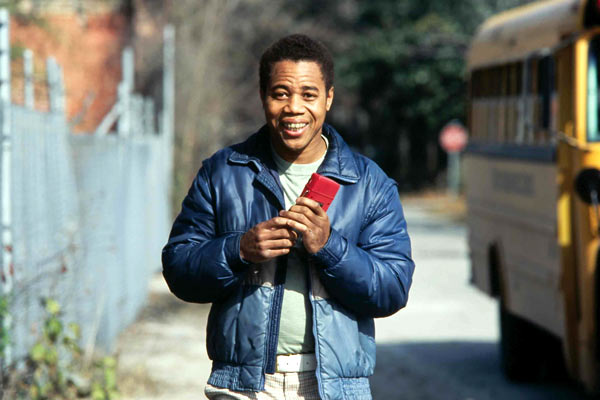
Ed Harris and Cuba Gooding Jr. star in âRadio,â a film about a man with a developmental disability who somehow finds peace in the company of a high school football team. The filmâs events are also inspired by a true story, particularly a Sports Illustrated article by Gary Smith entitled âSomeone to Lean On.â Parts of the film even include footage of the real young man, nicknamed Radio, and its real coach, Harold Jones, toward the filmâs conclusion. But ultimately what we have here is a feel good movie – not one of cheese or false sentiment – but a simple and pleasing film that is both a sports movie and a poignant drama, and refuses to sacrifice one for the other.Â
Radio is a complex character, and is played superbly here by Cuba Gooding Jr. Those familiar with Gooding Jr.âs work, especially the high energy âJerry McGuire,â will find surprise in his role of the developmentally delayed Radio. Heâs not over the top, or cute, or attention seeking. Radio is a young man who wanders around town pushing a shopping cart with a few necessities and a radio, who asks nothing of anyone but acceptance. He likes to hang around the football practices, on the other side of the fence, just watching.
Heâs introduced to coach Harold Jones (Ed Harris), after a incident in which a group of football players at the Hanna High School play a mean prank on the Radio which terrifies the young man and infuriates Coach Jones. But thus begins a connection between Radio and the coach, a connection that would link them forever (even if it sometimes takes Jones away from his own family in the process).


Jones – like many people of Hanna, S.C., changes because of Radio. Of course Radio is not his real name – that is James Robert Kennedy. Radio begins to hand around the football practices and games, is eventually accepted by the team, and begins to teach them something along the way about life. Since this is a small town, there are of course repercussions, with several of the townsfolk question the coachâs decision to bring the developmentally disabled boy under his wing.
Many conversations – about football, wins, losses, and, about Radio – take place in the local barbershop. Coach Jones stops in for a cup of fresh coffee and dishes out the weekâs news. Itâs as small town as you can get, and these feel like real people, not merely caricatures for a movie.
The strength of âRadioâ lies in its acting, and its straightforward aim. Harris puts forth a wonderful performance as Coach Jones, becoming at once a teacher, athletic director, coach, and father to Radio that he never had. In films like âA Beautiful Mindâ or âEnemy At The Gates,â Harris has a semi prickly demeanor, required by the role. But here we are brought a fresh, energetic, and caring Harris, mirroring acting chops and character dynamism I havenât seen since 1992âs âGlengarry Glen Ross.â
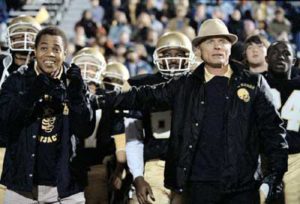

At the end of the day, âRadioâ is both an inspirational film and a sports film. There are places that are tough to get through, but overall the movie is tight and focused. It builds its small town culture well, gives its characters the depth they deserve, and ends in a positive place that shies away from convention. If youâre expecting Radio to charge the fieldâs as one of Hannaâs own, as in the powerful âRudy,â this isnât the movie for you. This is a film about acceptance, redemption, and love. If thatâs enough for you, give âRadioâ a try. You wonât be disappointed.
– by Mark Ziobro