1999âs âRavenousâ isnât able to be characterized simply as a horror movie, but maybe it should have been. Itâs elementalâ¦bizarreâ¦chaotic. It works its way under your skin in different ways, most notably its score and slow-to-build pace. Itâs also an exercise in unconventional filmmaking, directed by Antonia Bird, who takes great pains to distance audiences from its graphic and macabre material. In the end it isnât a great film, but will definitely please those who are looking for unique scares and a film – that while slow – will keep you guessing until the end.Â
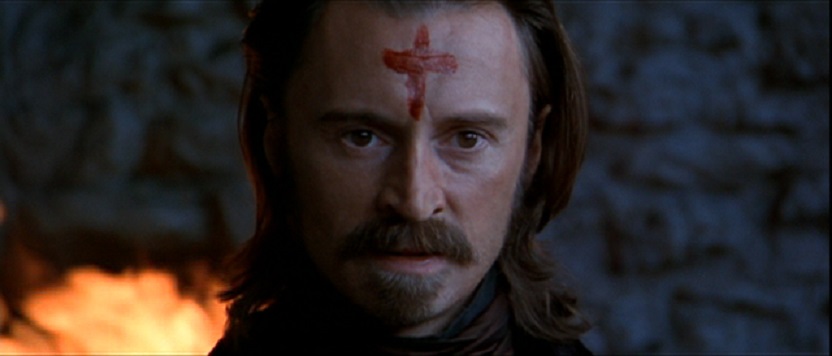
The plot is there, but less important than the atmosphere of this film. Basically a reluctant Mexican-American War hero, Capt. John Boyd (Guy Pearce) is reassigned to a remote wintery outpost, where he and others in his company soon discover a lost man (Robert Carlyle), near death, who soon tells a tale akin to the fated Donner family. He and his traveling companions, dying of hunger, had turned to the abhorrent practice of cannibalism to survive. But it isnât long before the group of stranded soldiers realize this lost man, named F.W. Colqhoun, may be hiding terrible secrets.
The film does have some interesting ways of telling the story before we get to this point, however, specifically in the word choice Colqhoun uses throughout. “We ate the oxen, then the horses, then a dog, then our belts and shoes â¦,â he states, and describes in increasing horror how when one man died of malnutrition, the party decided to consume him. âI came back from my walk and they were preparing his legs for dinner.â
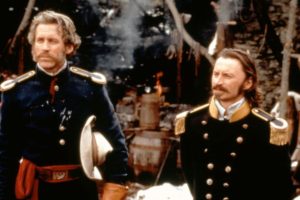

The most interesting thing about âRavenousâ is its atmosphere. Soldiers stationed at a wintery outpost, dressed in garb akin to the Civil War, the film shows itsâ hand early at being deft with imagery. Probably the best instance of this is as Boyd, along with several other soldiers (Jeremy Davies, Jeffery Jones, David Arguette) venture to a cave in the middle of the wilderness to attempt to save survivors of the cannibal horror that Colqhoun details in his story.
What affronts them is horror they did not imagine, and to give away the details is to do the movie a horrible disservice. Boyd and his counterpart find the remains of the canibal victims in the cave, but the real horror here lies in the soundtrack, filled with pulsing drums and synthesizers, which is both nausea inducing and anxious. As the group falls under attack, the soundtrack comes to life, making the proceedings that much more horrible than they would have otherwise.
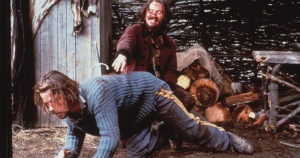
We also see that director Bird keeps the audience slightly divorced from the graphic material by an overabundance of gore. Gunshot wounds, knife wounds, impalations; and, in the movieâs most disturbing set piece, two men trapped inside a giant bear trap.
The filmâs various murders (I will not give away the culprit, though it may be obvious enough to many), are in many ways so over-the-top in gore that they almost donât seem real. Thereâs not a lot of stalking or set ups such in films like âFriday the 13thâ or âHalloween,â but rather abrupt, gory affronts, scored with the same cacophonous organs and droning bass that makes the events seem chaotic and dreamlike.

Overall âRavenousâ is effective in what it does: namely send some shivers up its viewerâs spines. The story is lacking, and jumps to and fro, as well as presenting some elements (such as they killerâs identity), which are often glossed over in favor of the filmâs gore and chaotic presentation. The acting is good, and the film even touches on the elemental and philosophical horror of what it means to turn to cannibalism as a means of survival. Do some men do it because they have to? Do some men like it?
The bottom line: if horror is your thing, youâll probably like this film. Donât expect to be blown away – the film clambers on for too long but is still scary enough. If thatâs enough for you – enjoy.
– by Mark Ziobro