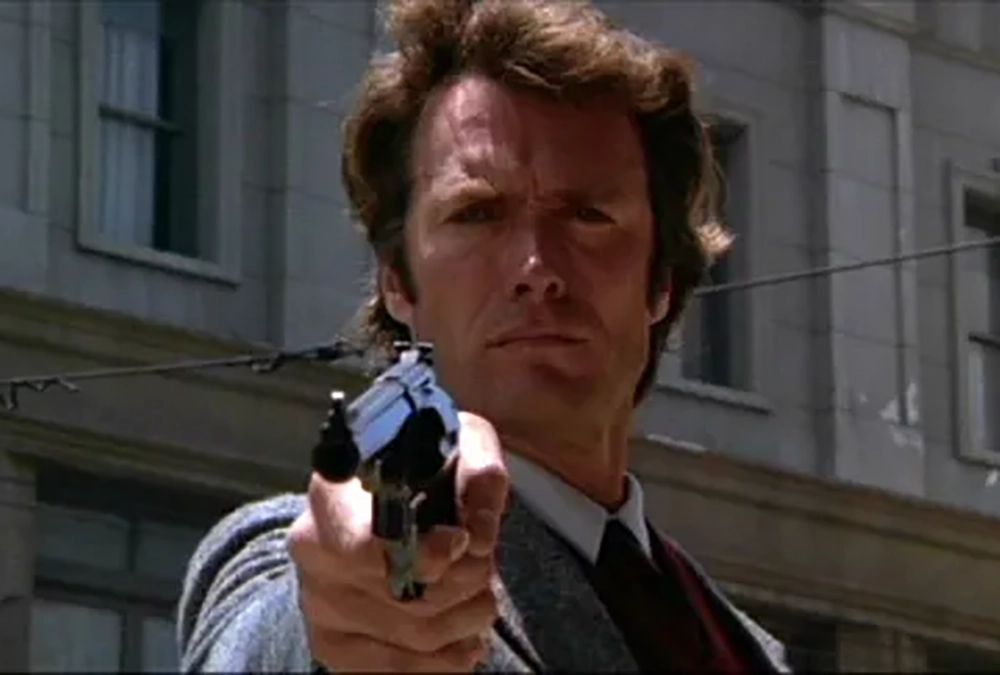
Even if you had lived under a rock and never known the name Harry Callahan, you would certainly know the iconic line from this movie, âDo I feel lucky? Well do ya punk?â With âDirty Harry,â released in 1971, Director Don Siegel would launch one of the most iconic TV detectives in history. Watching this movie, as with most classics, I wasnât sure what to expect. But Iâll tell you what: it does a good job at being monstrously entertaining, tenseâand, for the lover of tough guy movies out thereâequally hilarious. Its scope is a tad too ambitious at times, and feels much longer than its 102-minute run-time, but itâs all forgivable. This is classic action at its best either way.
While âDirty Harryâ takes pains to cast its hero in a cloak of machismo at times, what separates it from modern attempts lies in its scope. The film proceeds slowly for much of its run-time and is also slow to build. Sure, its next-to-opening scene, featuring Callahan single-handedly foiling a robbery with a .44-magnum while still finishing his hot dog is wrought with the right stuff. However, much of the rest of the film runs like a true detective story, with the filmâs other players slow to pick up both the aim and M.O. of itsâ chief villain.
Why Do They Call Him ‘Dirty Harry?’
The filmâs players all do an adequate job here, even if some are more developed than others. The primary focus of the film is of course Callahan, who is brought to macho life by Clint Eastwood. The film does an interesting thing with Callahanârather than show him gunning down perps in ruthless fashion throughout the entire film, it instead casts him in enigma, his reputation built through othersâ comments rather than brute force. For instance, thereâs newcomer Chico (Harry Guardino), a rookie cop who keeps trying to work out why everyone calls him âDirty Harry.â And then thereâs Harryâs comments as the filmâs villain ends up getting beat up and sets up Harry as the perpetrator. Harry defends himself to his superiors, stating they should know he didnât do that to the criminal. How? âHe looks too good, thatâs why.â
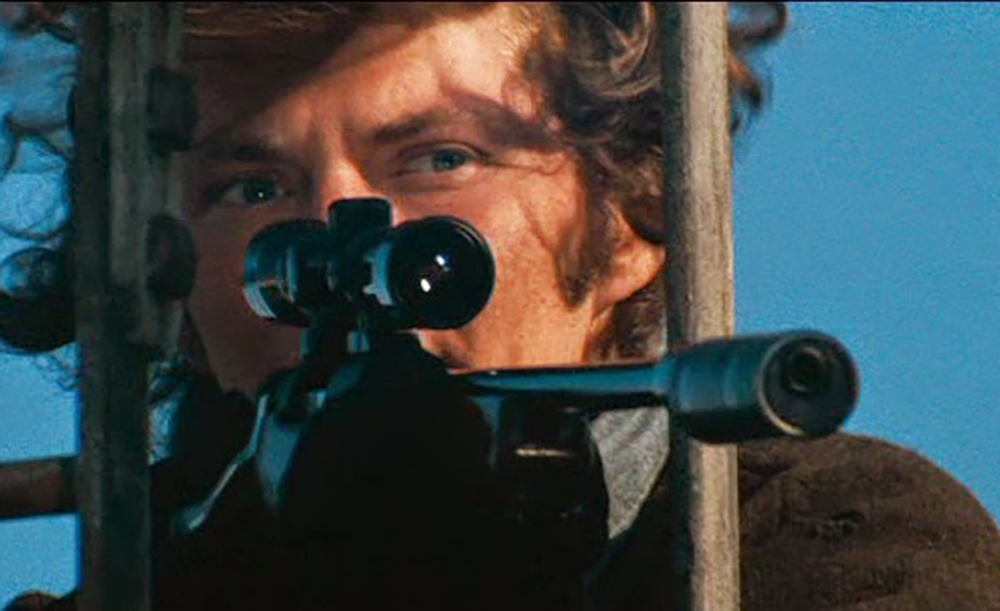
However, for an action film to work, itâs villain has to be as engaging as itsâ hero, and âDirty Harryâ is no exception. Andrew Robinson (“Hellraiser“), as the killer âScorpio,â creates both intrigue and a secretiveness around his character that draws our attention along the way. Heâs also kind of pathetic, which somehow works to solidify his character even more. A scene where he beats Callahan nearly to death, or another where he kidnaps a bus full of kids show his sinister nature. However, others, where he begs for his life or oozes with racism are less calculating. His showdowns with Callahan are more of a cat-and-mouse ordeal, and rightly separate the two enigmas from each other until their inevitable confrontation.
Painting Eastwood in Machismo, but Reality
Several other elements work to sell this film, primarily its filming location and musical score. Siegel presents San Francisco in all its glory, from high elevation streets to its many rooftops. There are no picturesque flyovers of the Golden Gate Bridge here, or nostalgic trolley rides. Instead, the film paints San Francisco in a rather humdrum yet mysterious way. We see its higher elevations during cop chases, its’ Bay only from afar, and a good chunk of the film takes place during pitch dark nightâa filming decision that works to immerse viewers more in the proceedings than one might think. The film enhances this with its score, which is devoid of a musical soundtrack, cast instead in something that feels part film noir, part alternative, blending together to cast the movie in intrigue and suspense. This is best seen during a climatic rooftop shootout where the film relies on a glowing neon sign and its shrill soundtrack to imply a suspense its antiquated special effects would have been ill suited to deliver.
Additionally, there are no death-defying stunts here. The situations Callahan finds himself in, and the way he acts (minus some serious bravado and sarcastic grumbling) is almost everyday and relatable. Itâs a credit to Director Don Siegel that he chose this route, casting the movie in more believability than some modern movies that show its protagonists simply wading through bullets or completing superhuman gymnastic moves with little personal damage.
An Entertaining Rogue Cop ProceduralÂ
I was impressed with this film. For a movie released more than 30 years ago, it has all the right elements to make it both engaging and poignant. Harry gets in trouble with both criminals and his superiors in this movie, and the film doesnât ignore this, but uses it to make comments on both police corruption and the sometimes-ineffectiveness of our legal system. Eastwood shines as the filmâs protagonist, who would go on to star in four additional âDirty Harryâ films, and the film wraps up in a believable, rewarding way rather than going over-the-top. A solid effort, and one worth checking out if somehow youâve managed to miss it so far in your life.