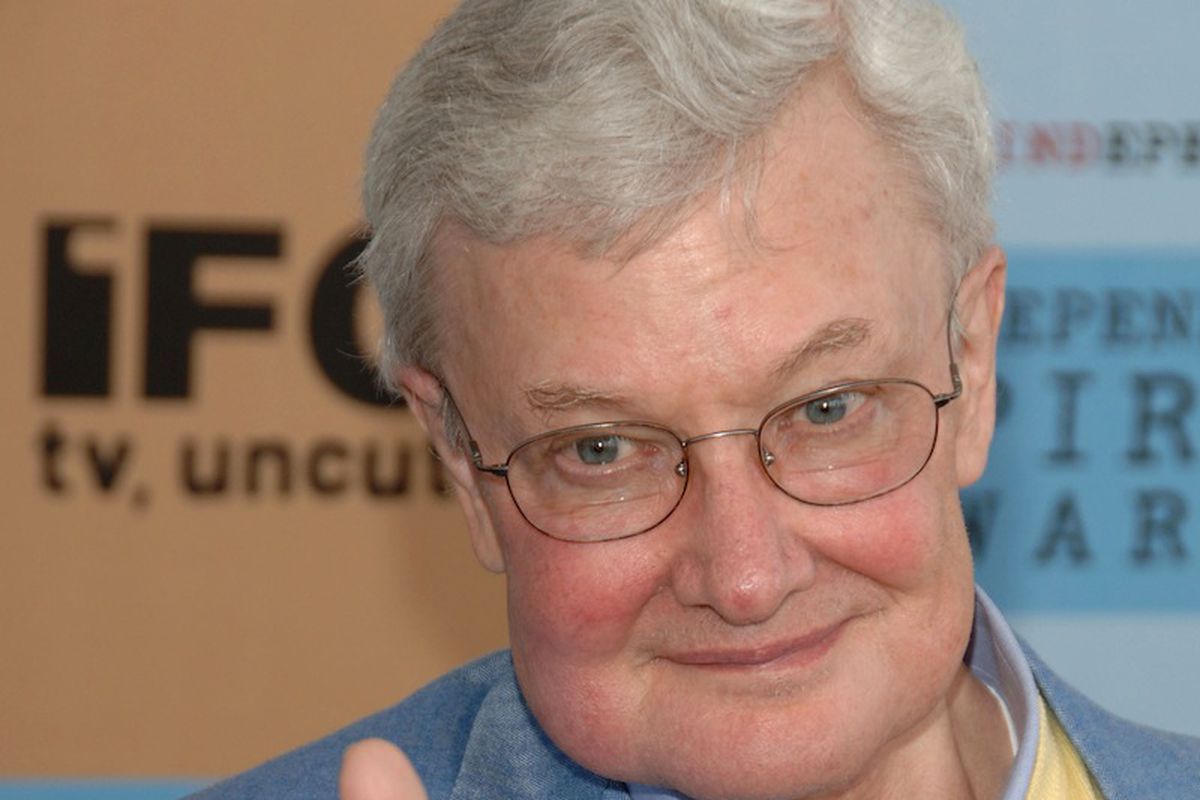
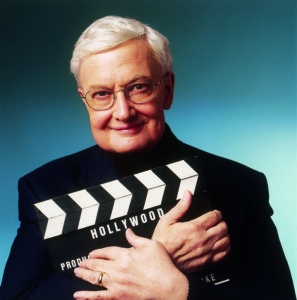
For a man who dedicated himself to all things movies, itâs fitting that critic and movie-lover Roger Ebertâs last words in his farewell journal, posted on RogerEbert.com, were, âSee you at the movies.â At age 70, the renowned pundit passed away, succumbing to a long battle with cancer, leaving in his wake a legacy of over 10,000 movie reviews, a legion of articles, and a fan base and accolades that spanned the entire world.
Ebert had a way of looking at movies that was straight on while at the same time unique. As a movie critic, I have been writing reviews for almost three years, and as such like to read the work of other critics, movie enthusiasts, and bloggers available on the web. There is a certain style most critics take â the technical accomplishments (or deficits) of a piece, the directorâs past work, itâs cast and crew â that was often missing from Ebertâs work, but somehow his writing was the better for it. The man knew movies, his reviews coming easily and seemingly without effort â an ease borne from knowing his trade inside and out and being able to communicate this love through words and ideas.

Thatâs not to say Ebert was always kind. Many of his reviews were pointed or, in some cases, downright nasty. He was a man who beat up on movies, not films, and a man who didnât mince words. And I didnât always agree with him. Of the film âThe Other Sister,â Ebert wrote, â⦠is shameless in its use of mental retardation as a gimmick, a prop, and a plot device.â Other movies, for which Ebert aptly dubbed, âDead Teenager Movies,â fared far worse in his critique. For instance, of âThe Texas Chainsaw Massacreâ 2003 remake, Ebert plainly describes his disdain for the film, calling it âvile, ugly, and brutal…thereâs not a shred of reason to see it.â Roger Ebert was honest. But above all else, he was fair. Of âBreaking Dawn Part 2,â he writes, âIâll be honestâ¦the Twilight films arenât really my thing.â But he gave the movie 2 ½ stars, a rating the film deserved, where many other critics, who had long ago made up their mind about the melodramatic series, gave it 1 star out of spite.
Ebert had a distinguished eye, judging each film on its own merits, and not lumping together genres or writing off films before giving them a chance. His reviews often encapsulated how he felt watching a movie, and had a way of resonating these lasting impressions to his readers. He talked about the characters of the film more than the actors, of the intentions of their directors more than their outcome. He talked about what a film was; as a living, breathing entity, and not as a checklist of ingredients that can be scratched off a list.
Some of his reviews gained much attention, such as his review of Sophia Coppolaâs âLost in Translation,â where he describes that the two leads âshare something as personal as their feelings rather than something as generic as their genitals.â Others were equally moving, such as a review of an unsung 2007 movie âBella,â where he narrates acutely âI have failed to relay the charm of this movie.â But to me, none were so self-aware, stunning, and movingly beautiful as his last words to a review of David Gordon Greenâs âAll the Real Girls,â a movie about first love in a small town. âThe thing about real love isâ¦if you lose it, you can lose your ability to believe in it, and that hurts even more,â Ebert writes. âEspecially in a small town where real love might be the only world-class thing that ever happens.â Whenâs the last time a review reached out to its audience on such a personal level? The last time a critic captured the essence of a movie he had no part of producing, but only watching?

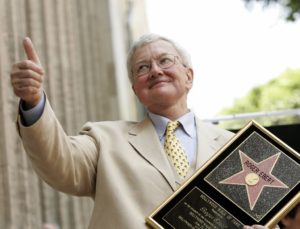
His reviews were often strewn with factoids, none so abundantly as his âGreat Moviesâ archive, an archive filled with the usual suspects, but an archive that often held the most unlikely films. I expected âThe Godfatherâ to be there, as well as âCitizen Kane.â But it was inspiring that lesser-known films found their way into this collection, such as the 1962 Japanese film âHarakiriâ or John Malkovichâs practically unheard of âRipleyâs Game.â These are films I loved, and had loved in secret as if others wouldnât understand had I tried to explain it to them. But Ebert understood these films and gave them their due credit. Both Jimmy Stewart and Frank Capra openly protested, in court, the colorization of the 1941-classic âItâs a Wonderful Life;â I learned this not from an IMDB âtriviaâ section, but in Rogerâs review, a fact which somehow makes the movie more powerful, more poignant, and more painfully beautiful for reasons I canât understand.
Some films are made just to win Oscars. Ang Leeâs 2012 âLife of Piâ was a visual splendor, and rightly took home many awards. But the thing about films like this, I think, is that no one was surprised. It was destined to win awards the moment it was released. But Ebert was smart enough to be able to see through the smoke and mirrors of highly touted films and pick the smart choice. Months before the 2013 Oscars he predicted âArgoâ would win best picture. And his prediction was right on the money.

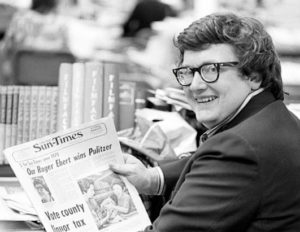
From a film loverâs perspective, I think that Roger Ebertâs passing will be most starkly felt by his silence on the Internet, and his absence from the movie theatres and premiers around the country. Readers of his website will have noticed, over the last few weeks, more and more articles by Richard Roeper, Simon Abrams, and others. All professional critics, all keen in their analysis of movies. But something is missing, something extra, that x factor that brought life and color to the products of directors, producers, actors and film professionals. Itâs not enough to revere someoneâ¦to say someone is great. It has to be embodied. Through his life Roger Ebert was passionate, through his writing, commentary, and criticism he was poignant. However, it is sometimes through a personâs absence that we realize that they were something more. It is through Roger Ebertâs absence that we are left with the impression that the world of film criticism, chock full of innumerable talent to fill its roster, lost something invaluable and something it canât easily replace on April 4, 2013. It lost not only a critic but one of its most ardent fans.
We’ll see you at the movies, Roger.