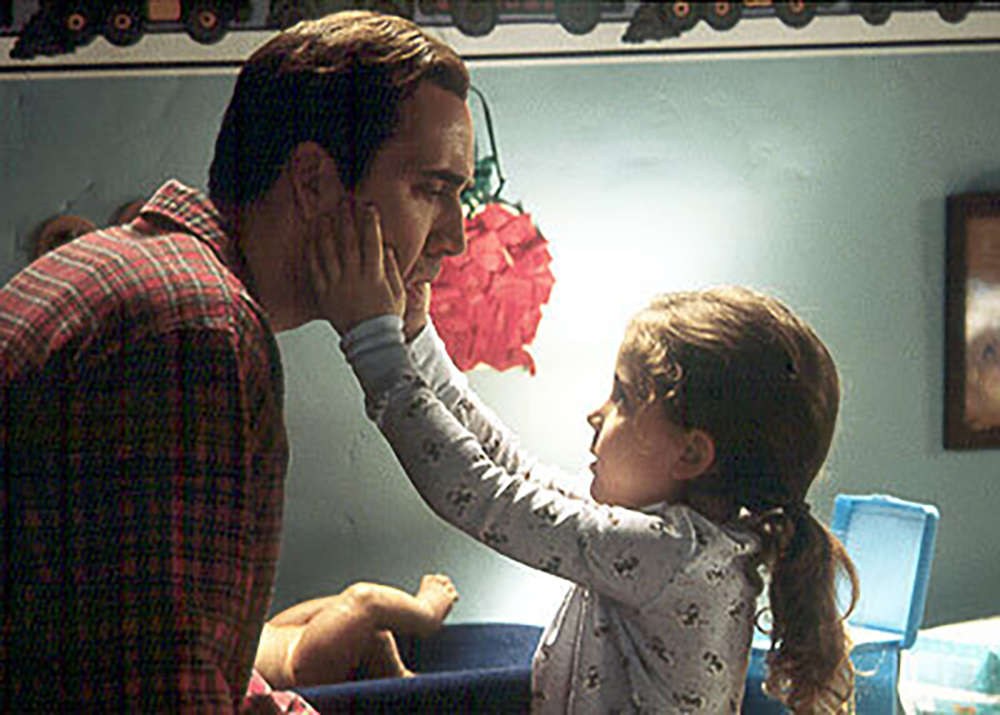
Something about Christmas causes reflection. Perhaps itâs the cheer the season tends to impart, or the closeness it brings with friends and family we might see but a handful of times during the year. And Christmas movies are a good a gauge of this as any. Take renditions of âScrooge,â or âItâs a Wonderful Life,â which teach their main character a lesson in appreciating what heâs got. Other films, such as âHome Aloneâ aptly accomplish the same mission, showing its protagonist the importance of family by granting his wish to have them disappear. In this same vein, the 2000 comedy/drama “The Family Man” attempts to revisit this blueprint once again. With everyday humor, insight, and bittersweet tone, the movie manages to deliver genuine laughs and drama, but its open-to-interpretation ending may ultimately leave some viewers cold.
âThe Family Manâ follows the familiar tale. Nicholas Cage plays Jack Campbell, president of a financial company ruled by the almighty dollar. In the middle of a multi-billion dollar merger, he gladly offers to spend Christmas Eve crunching the numbers in his office long after the rest of his team has gone home for the holiday. And Christmas Day? Jack eagerly agrees to fly to Aspen to handhold a major drug manufacturer through the remaining days of the deal. His boss, Peter Lassiter (Josef Sommer, âPatch Adamsâ) is only too happy to accept Jackâs willingness to fight for the company, even at his own detriment. âYouâre a credit to Capitalism,â Lassiter states.
We learn more about Jack: he is rational, seldom acting emotionally or impulsively. A phone message at his office from an ex-girlfriend Kate (Tea Leoni) sets the tone for a remembrance of years before when he left her at the airport for business school and never saw her again. Questions abound, among them, should he call her back or let the past go. A fair question. Of course, Lassiter has advice for this as well. âOld flames are like old tax returnsâ¦put âem in the file cabinet for three years, then you cut âem loose.â
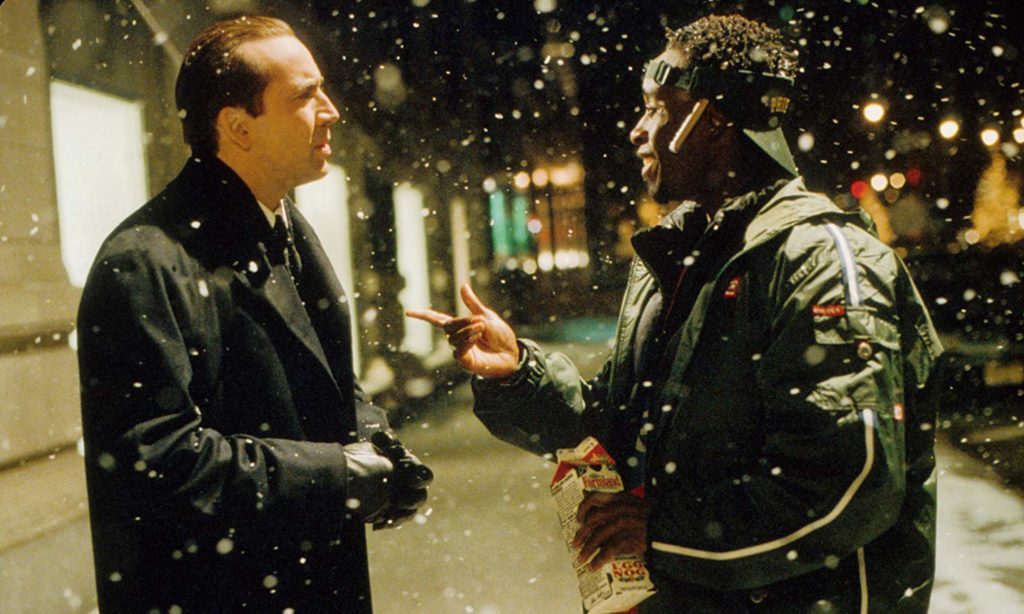
However, Jackâs reminiscence, and his by the clock life are put on hold when he has an encounter with a philosophical thief (Don Cheadle, âSwordfishâ) who, hearing Jack rave about how great his life is, offers him a glimpse. Making plans with a casual fling that night, Jack falls asleep in his apartment in Manhattan and wakes up the next morning in suburban New Jersey with the life he would have had had he stayed with Kate instead of going to business school. A single bachelor in New York, he now finds he is married to Kate, has two young children, and wakes up just time to answer a knock on the door from his parents. He panics, drives to his office in Manhattan where no one recognizes him. He realizes that his old life is now gone, and heâs faced with a burning question: How long? âIâm in the middle of a deal,â he entreats to the thief. He doesnât get the answer he was hoping. âYouâre in the middle of a new deal now.â
âThe Family Manâ is fairly humorous movie, driven by a performance by Nicholas Cage unlike many roles that line his past. Thereâs really no trace of comic characters such as Cameron Poe in âCon Airâ or the vicious Castor Troy in âFace Off.â Toned down, Cage plays a man baffled by circumstance but one who begins to see the life he could have had is just a good â if not better â option than his current breakneck â albeit wealthy â lifestyle.

Buffering his portryal, Tea Leoni (whose roles in movies such as âJurassic Park III,â and  âSpanglishâ were both unfocused and sporadic), delivers a sweet performance, making Kate a likeable character, both in Jackâs glimpse and later in his modern life. Some of the best scenes in the movie exist between Leoni and Cage; first, as Jack struggles to understand his current predicament, and later, as he not only begins to accept it, but, we see, grows to love it.
Fans of romance will most likely be drawn to scenes such as an anniversary dinner in Manhattan, but some of the best scenes in the movie involve Jack and Kate as they manage their way through the humdrum of suburban life, such as a Christmas party at a friends house and an âall dayâ trip to the local shopping mall to buy gifts for the kids after the holidays. Anyone who has attended a family holiday get together or been dragged to one store after another with their parents will likely find humor in the honest yet comedic way these scenes are presented.
Of course other parts of the movie are a bit more somber (such as when Jack almost has an affair, only to be stopped by his best friend (Jeremy Piven), or when Jack realizes with regret that his glimpse may be over and he has to return to his old life. These scenes work because of the rapport that Cage seems to have with his co-stars, as well as with the development he puts into both Jacks â one a multi-million-dollar player, the other a resigned but somehow relatable everyman. One scene toward the end, as he fights off sleep to avoid leaving his newfound life, resonates both a bittersweet and melancholy tone.
As a Christmas movie, âThe Family Manâ succeeds at hitting the correct notes of the holiday season, but where it may disappoint some viewers lies in its overall plot. Fans of âItâs a Wonderful Lifeâ will doubtless enjoy that film for the lesson it imparts â a lesson George Bailey is able to take and apply to his life he took for granted. Even the doleful 2002 comedy “Click,” with its heavy overtones of depression, allowed its main character to grow and learn from his past errors. However,  âthe Family Man,â seems to go the opposite way, showing its main character what could have been without giving him any kind of chance to get there. Subsequently, the lessons he learns seem superfluous, leaving Jack, as well as the viewing audience, feeling they are only waking from a pleasant dream and must go back to dreary reality.
Itâs not to say âThe Family Manâ is a waste of time. Certainly better Christmas movies exists, but, among a sea of holiday movies often overly-reliant on cheese and touchy emotion, Cage and company do a fairly solid job delivering an alternative to the standard âWhat would life be like ifâ motif while at the same time underscoring the humdrum and often-banality of the Christmas season. The movie, as the holiday itself, is best enjoyed with family members present â a lesson Jack learns the hard way, and perhaps one that others, if wise, would do well not to take for granted.
– by Mark ZiobroÂ