





Last things, the poet Tess Gallagher wrote in a forward to her husband Raymond Carverâs final poetry collection, âhave rights of their own. They donât need us, but in our need of them we commemorate and make more real that finality which encircles us.â The singular British auteur Mike Leigh has said that his latest understated banger âTender Loving Care,â would probably be his last film. And what a commemorative address Leigh has delivered. A timeless, somber, and silly work of art for fans, âTenderâ is also a full meal served up to a pitch-perfect ensemble cast. In typical Leigh fashion, the writer/director blends dirty realism (a la Carver) with screwball-lite, pathos-heavy humor. Joining âAnother Yearâ (2016) and âHappy-Go-Luckyâ (2008)âhigh-water marks in Leighâs six-decade movie careerââTenderâ puts on a big, performative smile that only temporarily disguises the lingering emotional elephant in every room.Â
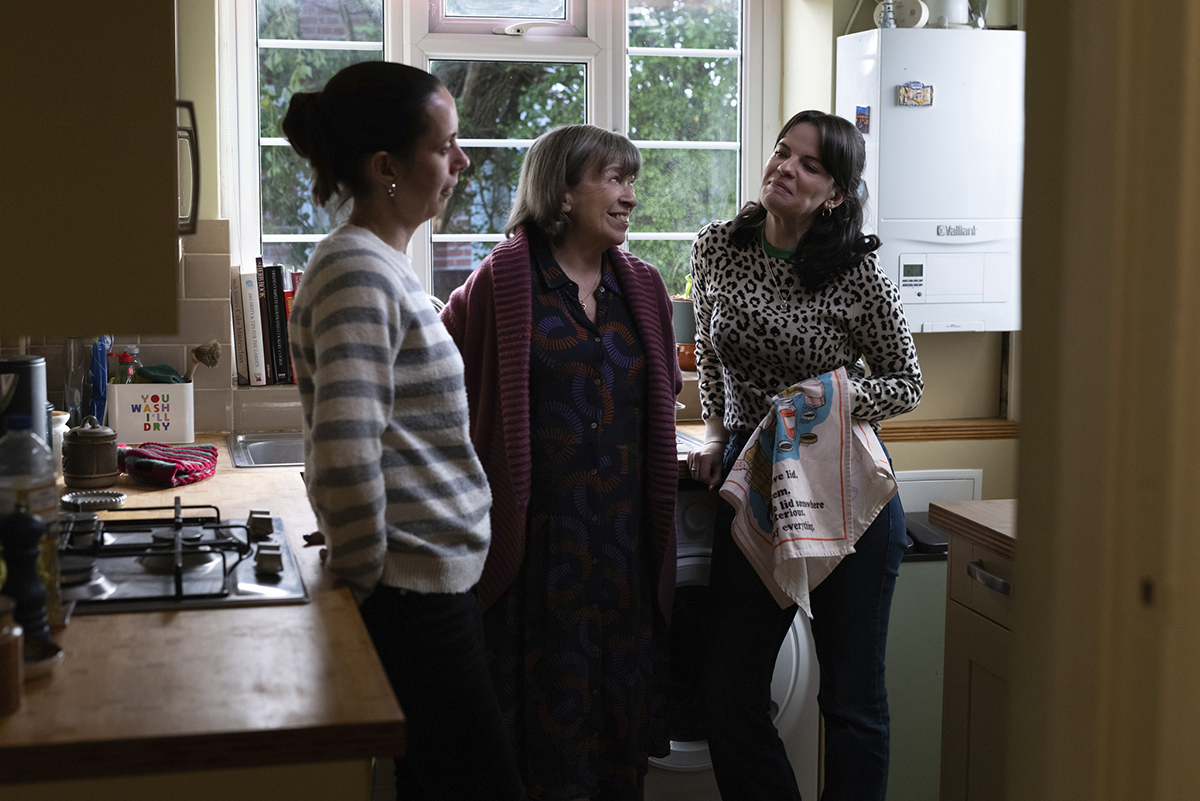
The subdued action, such as it is, starts in a hospital. Following a polite monologue in which social worker Rosie (Alice Bailey Johnson, the best performance among several equals, channeling Sally Hawkinsâ Poppy in âHappyâ) explains why the patient can no longer stay in the hospital. The patient, an older man whoâs either unable or unwilling to speak, gives her a thumbs up, which might as well be a middle finger directed at Rosieâs pep or her employerâs rigid handbook. Later on at home, Rosie unwinds, preparing a âWelcome Homeâ sign and popping a champagne bottle for her best friend Amy (Kate OâFlynn, Emmy winner for “Widowâs Bay”), who recently split from her husband. The ladies are textbook plutonic soulmates: a little annoying, heavy on inside jokes, constantly hyping each other (Amy: âBut youâre gorgeous!â Rosie: âI know!â) since their mostly-thankless day jobs and unreliable men chew them up.Â
Credible Emotion Amidst Sadness
When Amy admits that she canât face her parents alone, Rosie offers her services (âCheer up, you silly bitch!â), accompanying Amy to her childhood home, where she will surprise mum and dad with the break-up news. If Rosie and Kate provide the filmâs youthful zeal, Birdie (Marion Bailey) and her husband Geoff (Paul Jesson) are its wise, aspirational core. Birdie and Geoff privately celebrate Amyâs independence, while also worrying about her work stress (sheâs also a social worker) and happiness. Oh, but better believe Birdie and Geoff have their own problems, donât they, love? When Geoff exhibits early signs of dementia, the three women gather as if brought together by a magnetic forcefield. In a few grueling sequences (all inside Geoffâs bedroom), Leigh unobtrusively conveys Geoffâs confusion, Birdieâs voracious caretaking and the overriding finality that drifts over all four characters bearing witness.Â
Watching âTender,â it occurred to me that the film would be a fitting coda to an imaginary Leigh trilogy, with prior entrants âHappyâ and âYear.â Birdie and Geoff, like the happy couple in âYear,â defy the crotchety and/or cute-as-buttons old married couple trope, maintaining optimistic worldviews, private pleasures and social, public lives. Occasionally, of course, a friend shows up for tea. In a key sequence, a widowed friend (played by Tilly Vosburgh) breaks down at the mention of her husband and the estranged son who didnât show up to the funeral. The joint effort to lift the friendâs spirits (You were a great mom! And what a turn-out!) is credibly portrayed, a mixture of uncomfortable silences and solemn glances shared while the friend continues to weep.Â
Leigh’s Last… but Closer to Best
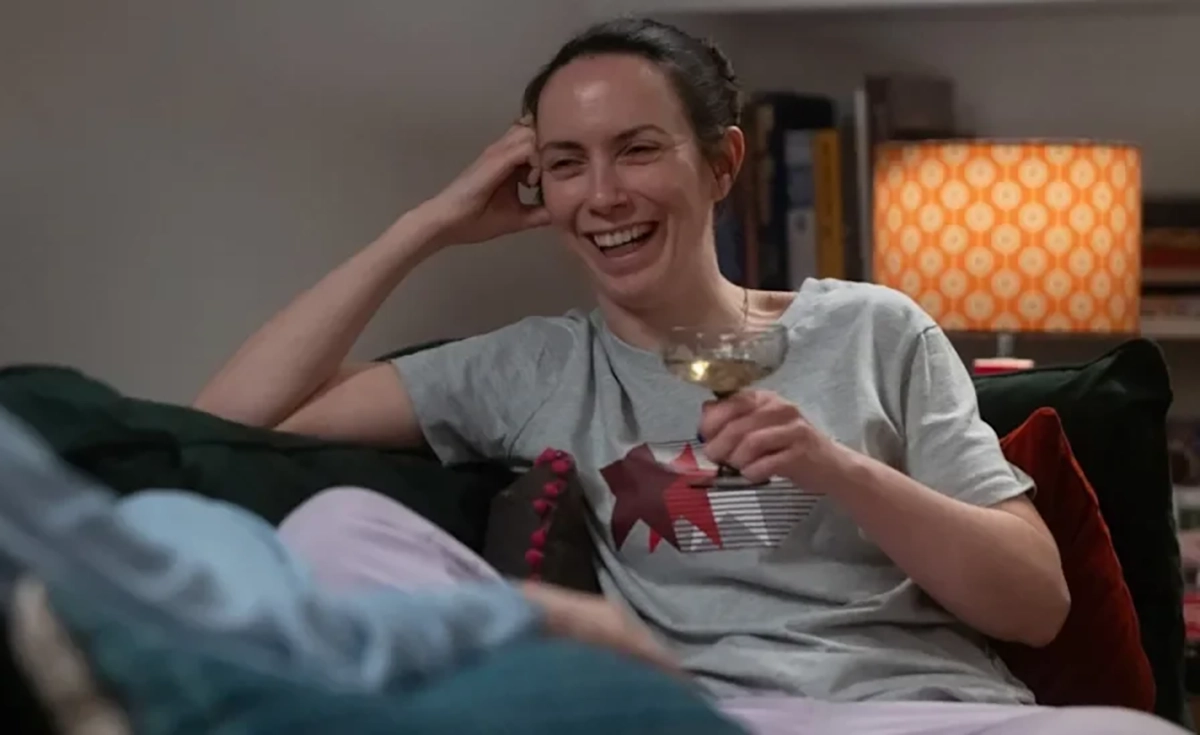
Soon after, Amy sings a eulogy of sorts to Geoff at his bedside, crooning through her tears in order to hit all the right notes ofâGreat Pretender,â their favorite song (â… pretending that Iâm doing well!â). Birdie and Rosie provide the ooh-ooh, because what would that songâor Amyâs lifeâbe without them? It would have been a great closing sceneâthe fearless foursome united in grief and acceptanceâbut Leigh doesnât allow mere greatness to be the enemy of perfection. For the final bow, Cinematographer Lucy Bristow (stepping in for the late Dick Pope, to whom âTenderâ is dedicated) fixes the camera on the bearded, reddened face of the same hospital patient who opened the film. Seated on a sidewalk stoopâpossibly his homeâBristow simply holds and observes for an extended, excruciating minute, zooming in closer and then fading to the credits.Â
Offering no judgment or solution, âTenderâ signs off on a note thatâs true to both the film and Leighâs loose artistic and rigid thematic principles. A startling and unabashedly political film, âTenderâ conjures Leighâs contemporary Ken Loach while remaining stubbornly independent, signaling towards the full suite of its creatorâs preoccupations: bleak moments, hard truths, secrets and lies. But also, flawed systems and the people who break first when a safety net tears open. Viva Mike Leigh! A canonical, unconventional humanist who once more has assembled a superb smattering of collaborators who rise to and above this bittersweet occasion. Leighâs âTenderâ might be his last, but itâs far closer to best than least.Â
âTender Loving Care,â a Bleecker Street release, is making its New York premiere at the New York Film Festival. For screening dates, follow the festival here.Â


