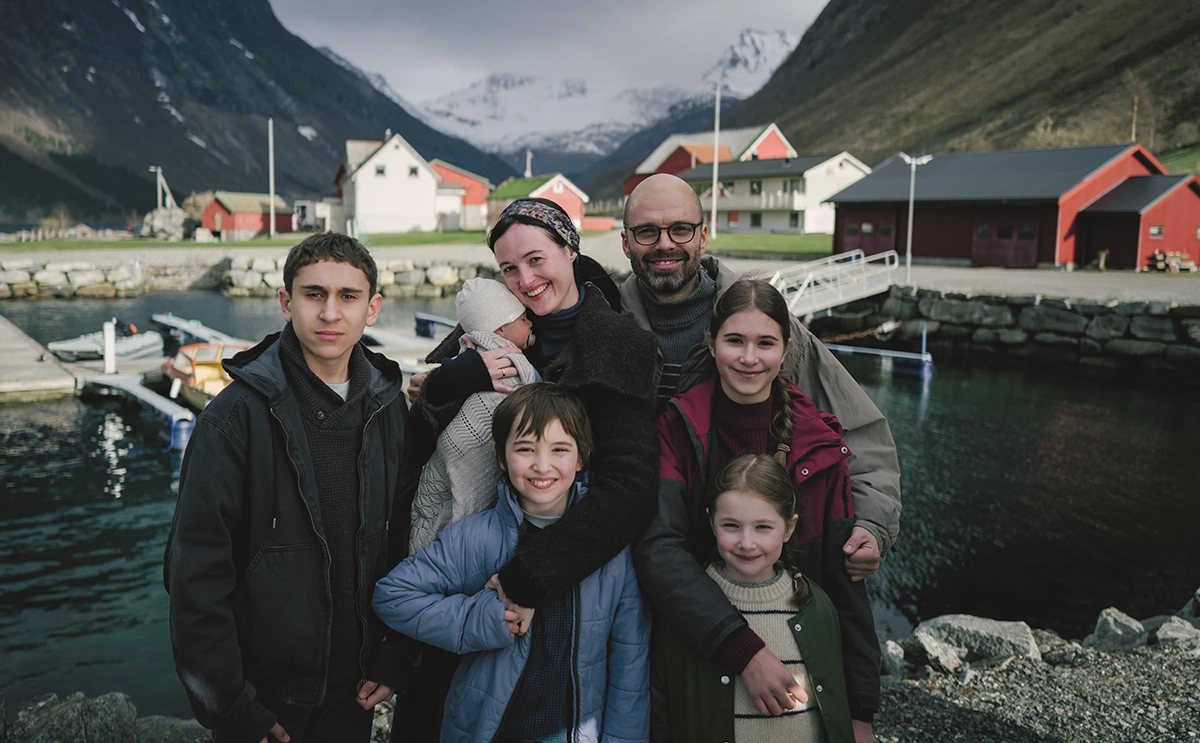
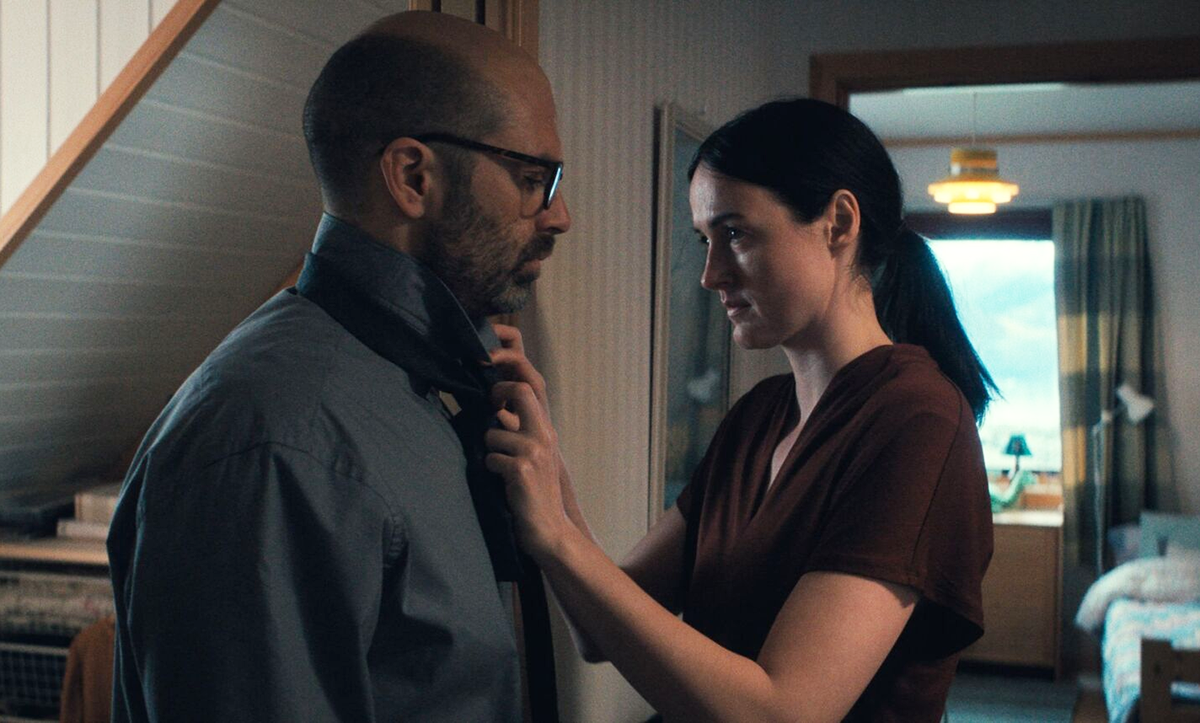
Midway through Cristian Mungiuâs âFjord,â a despondent Lisbet (Renate Reinsve) pleads to her husband, asking what more she can do to bring her children back from protective custody. âNothing,â Mihai Gheorghiu (Sebastian Stan) responds. An overhead shot pans up at a majestic, godlike Mihai, chopping wood and leaving the axe lodged into a tree stump. âYou did your best. Now I take over.â Now, that dialogue might belong in a Bruce Willis-headlined revenge thriller or a Hallmark soap opera, but thanks to Mungiuâs trademark narrative intricacy and rigorous visual construction, âFjordâ offers a cockeyed improvement on the disparate genres folded into its vast purview. Conjuring the giddy sociopolitical provocations of Lars von Trier (âDogvilleâ) and Michael Haneke (âFunny Gamesâ), âFjordâ takes few of the usual prisoners. Instead, Mungiu delivers a grim, enthralling saga that delights especially in demonizing the well-meaning bureaucratic foot soldiers perpetuating existential systemic threats.
Polemical, frightening and funny, âFjordâ is an old-fashioned cinematic firebrand. It treats thorny, taboo subjects – evangelism, assisted suicide, extremism on the left and right – with a disorienting mixture of skepticism and irreverence. As writer and director, Mungiu is an unrelenting trickster, creating suspense through layered character portrayals and hard-to-miss symbolism (i.e. Mihaiâs axe). An establishing shot of snow-capped mountains and unimaginably calm, blue seas sets a mood of rural tranquility that quickly evaporates. Moving out of the great outdoors, the camera zags inside a family home, rattling towards Lisbet holding her infant child and hugging her oldest daughter Elia (Vanessa Ceban). A nervy, routine sense of here we go again pervades when Lisbet demands that Elia hug Mihai, and a tightly-coiled anxiety eases up only after all four school-aged children depart for the day.
There Goes the Neighborhood
Rather than reciprocate Eliaâs apparent olive branch, Mihai kept his arms at his sides. Addressing Lisbet, he states, âShe just needs to admit when sheâs wrong.â Mihaiâs tough love and the familyâs devout principles raise eyebrows around town. Lisbet carries a spare Bible, and the children are punished if they donât pray. Having recently moved to this small Norwegian hamlet (called Fjord) from Romania, the family unit is decidedly other. They proudly submerge their private practices into a public setting. Mihai quizzes Eliaâs friend Noora (Henrikke Lund-Olsen) on Biblical studies and awards/deducts points based on his own childrenâs performance. Curiosity about the new kids in town turns to suspicion when Frida (Lisa Loven Kongsli), a counselor and bus driver, eavesdrops on a conversation between Elia and her brother Emmanuel (Jonathan Ciprian Breazu) about how Lisbet âpunished her for being stupid.â Then, Frida notices scars and bruises scattered around Eliaâs back.
And there goes the neighborhood. The dizzying descent from Mihaiâs arrest to the state seizing the children and placing them into protective custody and finally, a series of drawn-out courtroom scenes is objectively startling. Mungiu remains boldly partisan, heightening the humanity and struggle of the Gheorghiu family while sloganizing the prosecuting partiesâ associated concerns: everyone, at all times, concerned for the children. Sizing up the expert world-building techniques of the intimate â4 Months, 3 Weeks and 2 Daysâ (2007) and high-stakes withholding in âGraduationâ (2016), Mungiu peppers in substantive sub-plots involving Nooraâs troubling behavior and her grandfatherâs failing health to expand an already loaded script. Connecting Fjord to the wider world, Mungiu, Cinematographer Tudor Vladimir Panduru and the luminous duo of Reinsve and Stan (united again after the underrated âA Different Manâ) – light a fire that keeps blazing, to and through the enigmatic, lose/lose denouement.
Wagging a Finger at Misplaced Empathy
Joining a short list which includes Haneke, Mungiu bagged his second Palme dâOr in May for âFjord,â nearly twenty years after the oft-imitated and roundly praised â4 Monthsâ won, elevating the directorâs international stature. While âFjordâ lacks some of its predecessorsâ thematic subtlety or concision, Mungiuâs earned the right to take a two-and-half hour Nordic axe swing. Far meatier (and longer) than a culture-war hot-take, âFjordâ is a shit-stirrer on an epic scale that wags an admonishing finger directly at misplaced empathy and ruthless mob mentality. More than just a gentle poke, âFjordâ builds a convincing case for rational family values, and then gradually calls up for questioning all of the very fine people on both sides. No polite consensus can ever emerge for certain debate topics, and Mungiuâs scrupulous creativity has little room for tasteful crowd-pleasing.
âFjord,â a NEON release, is making its New York premiere at the New York Film Festival, during which it will screen on October 4, 5 and 7. It opens in theaters nationwide on October 9.