





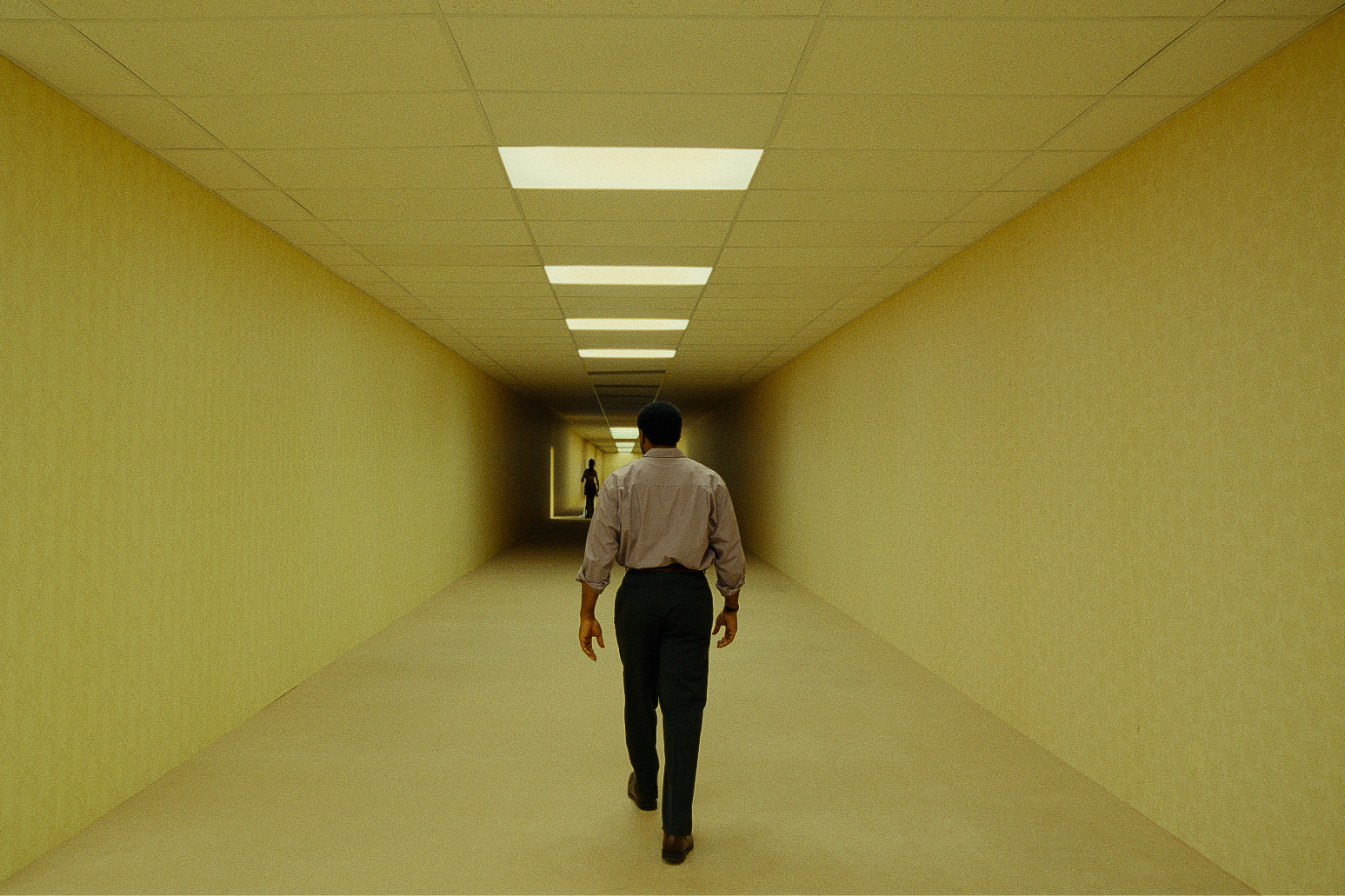
Ever since the mid-to-late 2000s, creepypastas have been all over YouTube and pop culture, with figures like ‘Slenderman’ and ‘Joe the Killer’ leading the pack of creepy creatures with ominous backstories. These horror stories have their own lore, highly detailed and rooted within the creatorsâ pain and sense of reality. They are meant to situate you in an isolated place in the middle of nowhere. These stories create a sense of dread at the unknown and of displacement through the sheer loneliness of the experience. I, myself, havenât partaken much in viewing media based on creepypastas. I never found them horrifying, although they did have something interesting. Yet I admired the lore and background, which are quite comprehensive and help avoid discrepancies or contradictions in these stories.
Thereâs a carefully captured lore that takes hours to explain thoroughly. That dedication to expand and analyze is what I like about creepypastas. One of the most recent phenomena in this world is the “The Backrooms,” created by Kane Parsons at a very young age. “The Backrooms” consist of an endless series of empty rooms that exist outside the boundaries of reality. Familiar spaces are transformed into something unsettling, beyond our understanding. Parsons plays with the idea of a person being completely alone in a place that feels recognizable yet distorted. What draws people to the backrooms is the blend between the ordinary and the inexplicable â reality versus fantasy. It is a room, within a room, within a room. It continues endlessly, with weird creatures lurking in the shadows, walls, and corners. The drone sounds and vast emptiness of the rooms evoke dread, causing hysteria as you long to escape.
A Room, Within a Room, Within a Room…
At the age of twenty, Parsons has been tasked with making his feature-length debut, but also bringing his world of rooms within rooms to the big screen. Parsons created the âBackroomsâ in his basement, and now, he sits in the directorâs chair â from an online sensation to a filmmaker. While his âBackroomsâ film has an immersive scenery and vastly creative set design, both contained with visual flash, his lack of experience shows in developing his characters and themes. In trying to explain or give meaning to his creation, Parsons loses himself in the very rooms his characters long to understand.
The film often repeats this line when referring to the backrooms: âItâs like explaining a dog to someone who has never seen one, and asking them to draw it.â Sure, the person may get some details right, but not precisely. No one can easily describe the backrooms. But this line proposes that these rooms are an endless void that one gives meaning or definition to. The memories, traumas, worries, and anguishes of a person who visits the backrooms are consumed and spat out to generate something alike, yet without the soul attached to them.
‘Itâs like explaining a dog to someone who has never seen one, and asking them to draw it.’
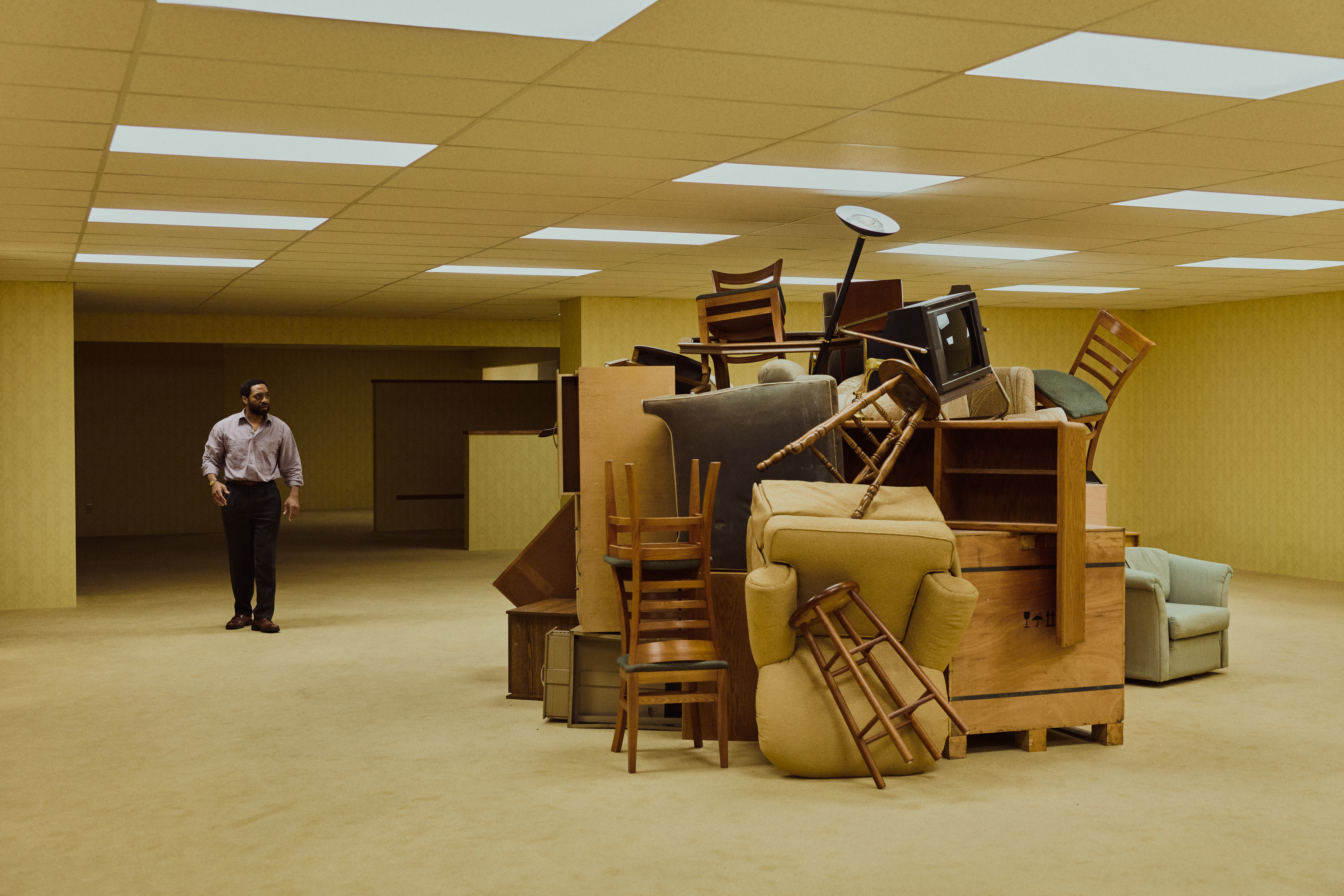
The backrooms remember places, objects, and even people, who are fractured replicants of those who traversed the rooms within rooms or loved ones that have been scarred or blurred in the visitorâs mind. The concept itself is very fascinating, playing with people’s recollections and personal foibles to shape what you see within the vacuous void of endlessness and restlessness, which are tied to the backrooms. It makes the viewer question what they would see if they ventured through the halls painted in light yellow. Your past, present, and future come to you â a visualization of a person in distress. The good hides in the shadows to give way for the band and the ugly; what the person is hiding deep inside, and their mind canât escape.
The thought of a dual consumption, one consumed by the backrooms and the backrooms consuming you, is haunting and eerie. One of these visitors affected by this is Clark (Chiwetel Ejiofor), the owner of a struggling furniture store who has spent months trying to figure things out after separating from his wife, Barbara. A faulty marriage, and an inability to communicate with and be there for his wife, are what made Clark lose what kept him sane. However, as the business kept dying and losing more sales, he became more unstable, throwing his anger towards Barbara, which, in later scenes, appears to ensure that physical abuse was part of his behavior, particularly after he drinks.
A Disorganized Maze, Which its Only Escape is Losing Yourself to the Void

To deal with the separation and frustrations of his career, Clark goes to a psychiatrist, Nora (Renate Reinsve), where he admits to her that heâs âwired like this,” inducing his derailment into the abyss, where he disappears into and never to get out of. But Nora also has some skeletons in her closet; she is hiding a past that has kept her troubled since she was a kid. As she tries to help others with their problems, Nora slowly continues to bury herself in the tumultuous grave of trauma and isolation. Both Clark and Nora are consumed by their loneliness and fractured relationships. This drowns them in the backrooms’ endlessness. Every corner is either a mystery or a half-remembered memory.
Parsons contrasts the backrooms and reality by giving the former a claustrophobic enclosure (while maintaining it eternally open) and the latter a vastness in which the characters feel like ants in the places they inhabit. But the two feel opposite upon entering. Reality is a prison, and the backrooms are a place where you can freely roam. However, as Nora and Clark learn more and dive deeper, the inescapable imprisonment changes their mental tides. It becomes a disorganized maze to which its only escape seems to be losing yourself to the void and letting it take over you.
A Scene to Introduce the Third Act Breaks the Film Entirely
Kane Parsonsâ creation is multifaceted and highly creative, with ample thematic depth to keep uncovering its meaning. Part of the fun and dread of the backrooms comes from the unknown. We donât know where we are going, where we are, or what this place is. And so, through the charactersâ travels through the rooms, we find meaning and have conversations about what affected us in this room-full void. However, a mistake Parsons makes in his film is trying to give the place meaning himself and, in hindsight, removing the ambiguity, uncertainty, and melancholy it had. In a scene that opens the third act of the film, Parsons decides to break down his concept by trying to explain to the audience what these rooms are about, but essentially says nothing at all through ripe, nonsensical dialogue.
(**Spoilers**) After Clark sends Nora down the rabbit hole, he kidnaps her to explain his findings and how he now views his condition and his opinion on the separation, based on these rooms. He tries to tell Nora that this place remembers and replicates (something the audience already figured out way before this scene occurs), and that it takes visitorsâ troubles and dilemmas and shapes them into physical manifestations. But then Clark keeps hammering away at a couple of topics to provide a proper explanation, yet confuses himself in the one-sided conversation, ending up saying nothing at all about the backrooms overall, other than that he is drawn to them because he has control and freedom there. The explanation does not add any emotional or philosophical weight to the film. It reduces the backrooms as a metaphor that feels overly constructed, stripping away the mystery that made it compelling.
Violence that Feels Disconnected from the Film’s Psychological Horror
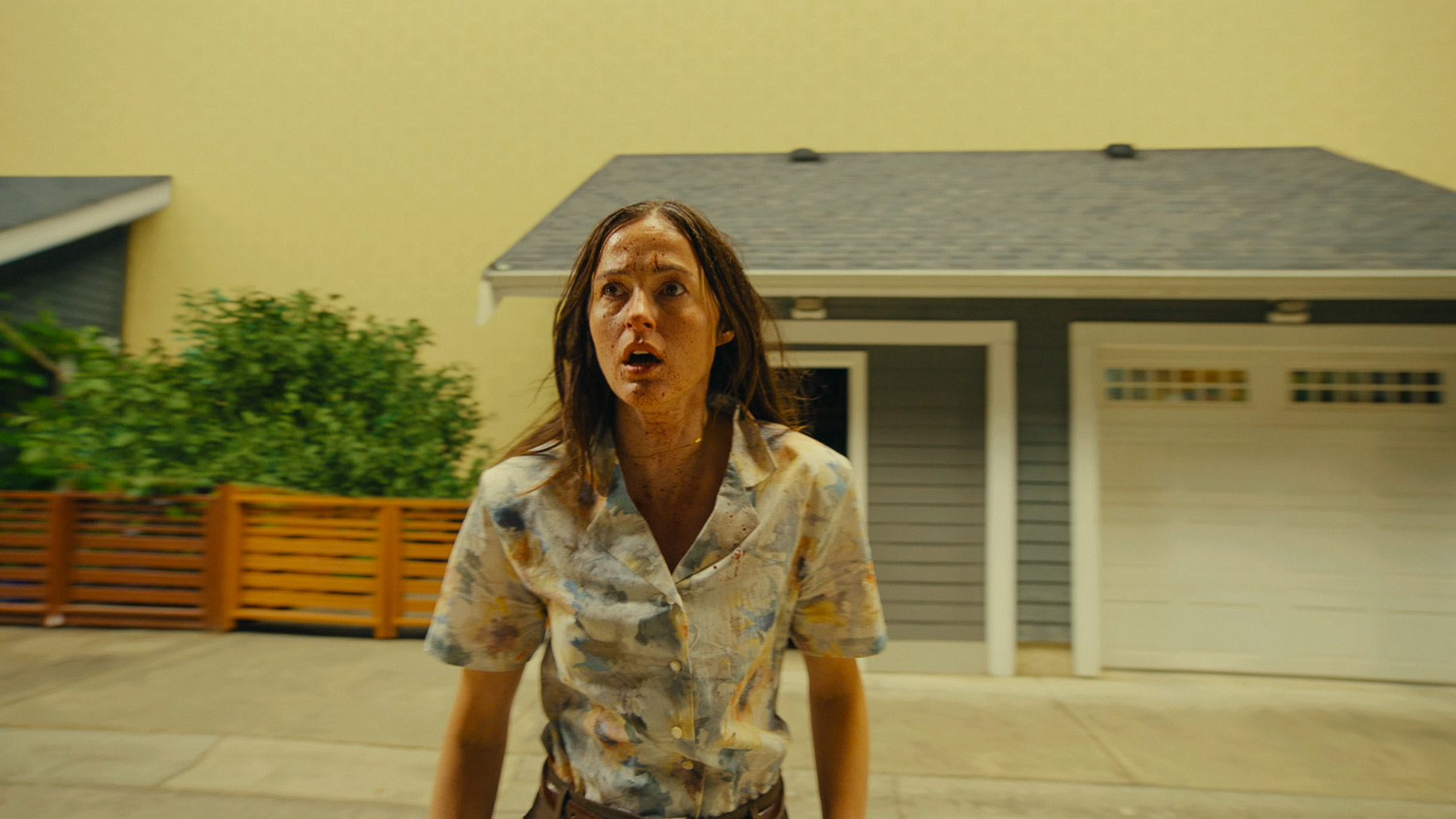
Parsons does not develop his characters properly by this point in the film. Much time is wasted on wandering around and moments of sheer silence instead of providing a perspective to Clark and Noraâs experiences with the backrooms, as it replicates their memories and traumasâbeing confronted by ghosts of the past and being unable to get rid of them. And in so little time, and at a rapid pace, Parsons wants to give them a deeper emotional connection without earning it. He wants us to understand the impact these rooms have on these characters. But it never spends enough time exploring their personal histories or their relationship with the endless space. Their struggles are explained rather than experienced, leaving the audience detached from their emotional journey.
Clark has a fascination with the backrooms, an attraction to this world that is not easily simplified as curiosity or obsession. The backrooms become a place where he can establish his own rules and limitations, where Clark has power and can escape the grievances of daily living. However, the film rarely investigates the consequences of such a desire. Parsons makes Clark a vessel for plot exposition, rendering him useless as a guide or character. In addition, that key third-act scene includes some cheap shock and provocation, which didnât even need to be there in the first place. Hinting at cannibalistic tendencies and cutting scalps didnât do anything for the movie. It didnât elevate its atmosphere or make the project scarier. Instead, it felt childish, as if Parsons wanted to push the boundaries of the concept simply to create a more disturbing image.
Last Minute Attempts to Shock Harm the Film
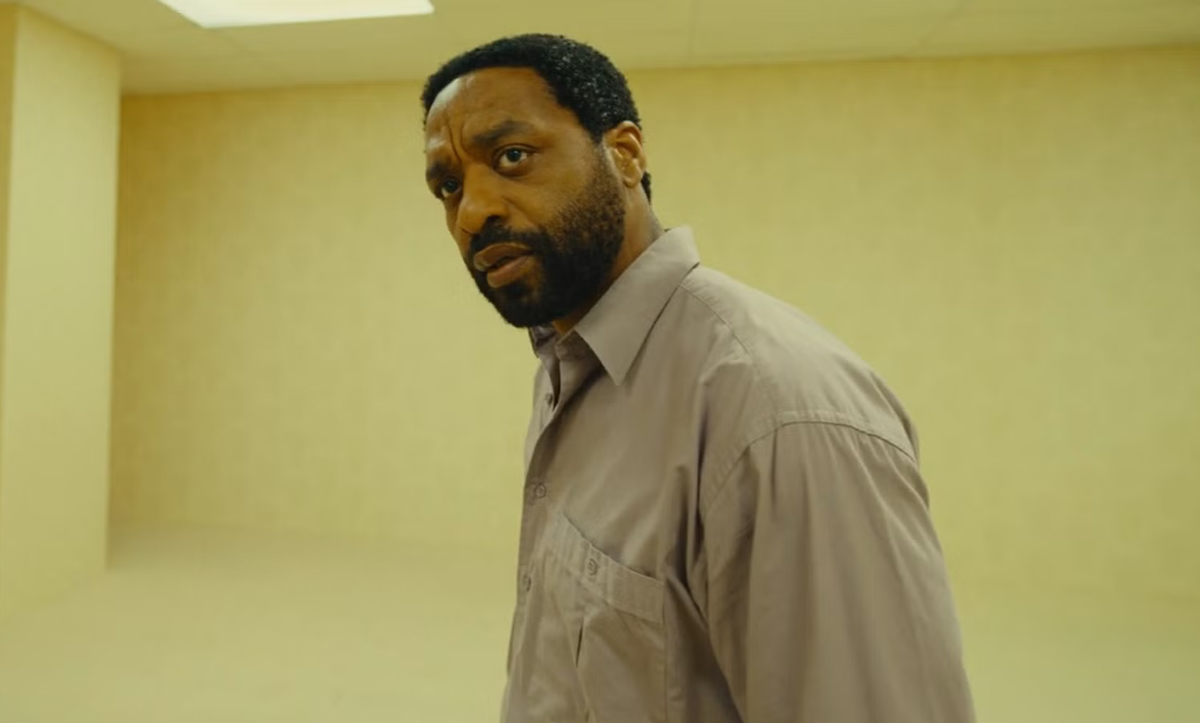
The violence feels disconnected from the psychological horror that the film had relied on before this scene. This maneuver is quite at odds with “Backrooms'” concept overall. Parsons misunderstands his own creation and what made it compelling. The horror was never about what the creature lurking in these rooms would physically do to the visitors, but rather the draining feeling of being trapped. By introducing these moments of provocation, Parsons misunderstands what made the concept compelling in the first place. Yet the filmâs attempts to shock the audience ultimately weaken the atmosphere, drawing attention away from the deeper anxieties that the backrooms naturally evoke. From there, the movie never picks up. It canât retrace its steps and becomes flimsier as it goes on. The effect is all gone; the allure has vanished. And the characters remain empty shells from beginning to end, which makes their trajectories uninteresting.
Read More: The Backrooms | Siren Head | Hokum




