





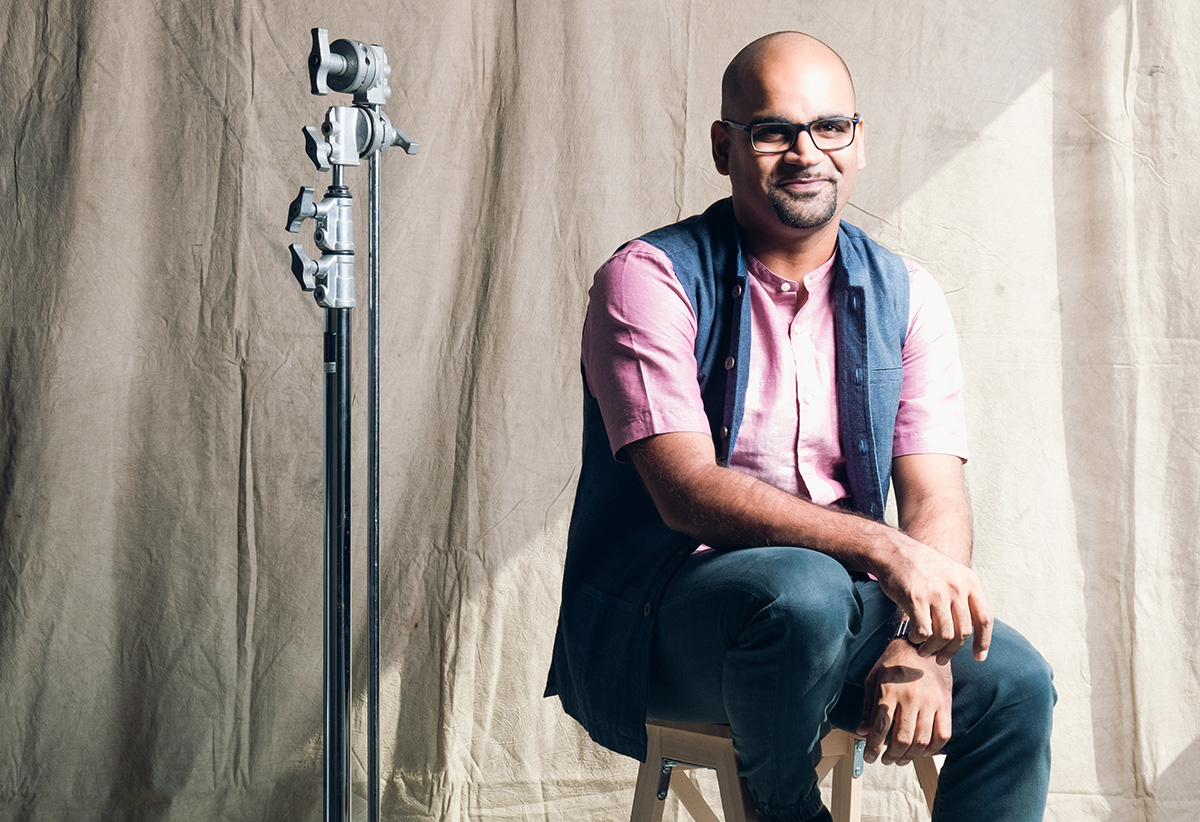
Set in the hills of Himachal and starring noted Indian actor Vinay Pathakâalong with Shalmalee Vaidya, and Rachita Arkeâfilmmaker Anshul Tiwariâs sophomore feature ‘Bayaar (Dust and the Wind)â is showing at the 2026 UK Asian Film Festival. It portrays life after death for a group of individuals, as they encounter sharp hairpin turns in the road to acceptance and eventually, the final stopâclosure.
In this interview, Tiwari (who debuted with “Before Life After Death” and previously helmed the Naseeruddin Shah-starrer “Bin Bulaaye”) delves into tapping into his own psyche following a personal tragedy. He also talks of the various auteurs and philosophies to shape the narrative and aesthetics of “Bayaar.”
*Note: this interview has been edited for clarity.
Vidal D’Costa for The Movie Buff: ‘Bayaarâ is about a journey. How did your own creative journey begin and who or what inspired you to take up filmmaking?
Anshul Tiwari: My filmmaking bedrock was the Parallel Cinema movement in India, through the seminal works of Shyam Benegal, Ketan Mehta, and Kundan Shah. I recall vivid Sunday afternoons and late nights watching their films with my mother. This spark led me to discover masters like Satyajit Ray, Mrinal Sen, and Girish Kasaravalli during my formative years. There is a specific tracking shot in “Pather Panchali” where Durga reaches for Apu that struck me with the force of a lightning bolt. That moment sealed my fate as a filmmaker. I jumped headlong into world cinema, watching two or three films a day for months. Through the works of Yasujiro Ozu, Ingmar Bergman, Abbas Kiarostami, and Andrei Tarkovsky, this love deepened into a spiritual fervour. It’s a practice that continues to define my work to this day.
VD: I found that the concept of the afterlife/limbo, and style of storytelling in “Bayaar” closely mirrored and reminded me of works in the psychological horror genre like “Dead End” and “The Others,” as well as the fantasy drama “What Dreams May Come.” What were your key influences behind this movie?
My filmmaking bedrock was the Parallel Cinema movement in India…”
Anshul Tiwari
AT: “Bayaar” is an allegory for the âin-between,â that threshold between death and beyond. It’s a metaphysical space remains tethered to the human experience. My aesthetic goal was to create this world with a grounded, day–to–day realism, yet imbued with the breathtaking beauty of nature. I drew deeply from the evocative, sensory landscapes of Oliver Laxe’s “Fire Will Come,” Nuri Bilge Ceylan’s “Winter Sleep,” and Michelangelo Frammartino’s Il “Buco.”
The psychological weight and a reverence for nature were informed by “The Power of the Dog” and “Brokeback Mountain.” The Director of Photography, Boban James and I took inspiration from Jane Campionâs early works for camera movements. To cultivate a persistent sense of suspense and tension, I channelled the unsettling, horror-inflected imagery found in Robin Aubert’s “Ravenous” (“Les Affamés”).
VD: The movie is heavy with visual metaphors. These include threadbare rooms with sparse furniture to characters such as the mystery woman in orange. Could you delve more into your artistic choices?
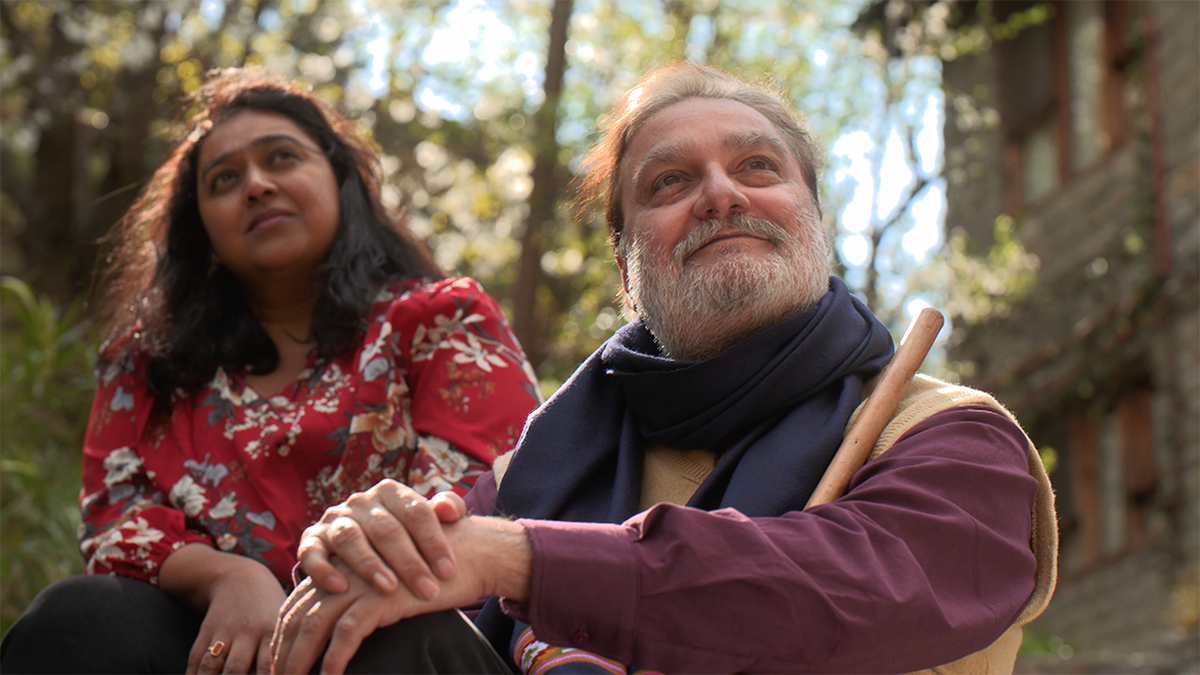
AT: Drawing inspiration from the existentialist philosophy of Jean-Paul Sartreâs “Huis Clos (No Exit)”âa study in minimalism and psychological frictionâ”Bayaar” mixes suspense, horror, psychological drama and visual poetry into a singular mood piece. In this world, the absence of mirrors leaves each characterâs soul laid bare by the gaze of others. A central leitmotif is the Celestial Dancer (the mystery woman in orange). She manifests as a recurring force of premonition, retribution, and celebration. Suspense and irony are sharpened alongside Malkiâs axe, a chilling reminder of the characters’ persistent, futile friction with death. The titular windâBayaarâis the landscape breathing, stripping the dust away. Through the deliberate use of silence, repetition, and stillness, the film creates a meditative atmosphere. Meanwhile the score heightens its emotional resonance.
VD: You had the pleasure of directing the veteran thespian Vinay Pathak in this movie. How was the experience working with him? Any creative input that you received from the ensemble cast which made it into the final cut?
AT: “Bayaar” got off of the ground as a result of my relationship with Shalmalee Vaidya and Rachita Arke, two formidable theatre actors whose craft and discipline sculpted the narrative during its formative days. After Vinay Pathak joined, the production reached a new level of confidence and commitment. He catalysed several fundamental rewrites of the screenplay. He brought specificity and clear-headed intention in his actions and dialogue. Over months of rigorous dialogue, we sculpted the characters of Ved Prakash (Vinay), Sreemoi (Shalmalee), and Sam (Rachita), exploring nuances of language, physicality, and playable actions.
Through the deliberate use of silence, repetition, and stillness, the film creates a meditative atmosphere…”
Anshul Tiwari
This extensive work cultivated trust and creative risk. [It gave] us freedom to make adjustments, try improvisations and even flip our original choices on set. Vinay Pathak created an atmosphere of play and freedom with me and his fellow co-actors. We workshopped key scenes and discovered interesting blocking choices during camera rehearsals. This work illuminated the screenplay with subtext, mystery and intention that deepened the emotion and unlocked its cinematic potential. Shalmalee and Rachita continued to play a vital role during the editing of the picture. Shalmalee gave myriads of useful suggestions to heighten the tension and suspense. Meanwhile Rachita counterbalanced this instinct by always being the âvoice of reasonâ amidst the chaos of editing.
VD: What’s next after “Bayaar?” Any works in progress our readers can look forward to? Also, are there any genres you wish to branch out in the near future?
AT: I have recently emerged from the production of my third feature film for Netflix, “The Ghost and the Gun,” a Bahasa/English WWII action-drama set in 1948 British Malaya. This film sheds new light on the impact of the war on Malaysia and is slated for a worldwide release in 2026.
“Bayaar” premiered at the UK Asian Film Festival 2026 on May 9.Â


