






Vikram Bhattâs “Shaapit: The Cursed” is a testament to the existence of âgreen flags’ as it follows Aman (Aditya Narayan), a young hopeless romantic in a race against time to free his comatose fiancée, Kaya (Shweta Agarwal) from the shackles of a generational curse.
Looking back at “Shaapit” through a nostalgia-tinged lens, I canât help but appreciate its abundance of positives and rewatch value in spite of flaws. Itâs also one of Bhattâs more unique and original works, second only to “Haunted 3D,” since the filmmaker otherwise gained popularity through a spate of unofficial Hollywood remakes such as “Raaz” (a decent reworking of “What Lies Beneath”) and “1920,” a shameless rip-off of “The Exorcist.”
Themes of Loyalty and Sacrifice
The latter also lifts plot points from “The Beguiled,” both of which later spawned a spate of seemingly endless standalone sequels. Bhatt’s filmography also emphasized themes of loyalty and sacrifice in matters of the heart, and “Shaapit” is no different. In fact, the themes are its driving force, executed with sincerity and not an ounce of superficiality. Thus, viewers are bound to root for the selfless protagonist in his various side quests like facing off against supernatural forces at a haunted library in the middle of the night, adamant to prove his bravado in the face of danger to Professor Pashupati (Rahul Dev), a paranormal expert and Amanâs mentor in this quest.
The innovative techniques utilized in hunting down the spirit which haunts Kaya add a layer of novelty. The bathtub that transports one of the characters back to the 18th Century in this movie is on par with the lemon that detects paranormal activity in “Raaz” (no, Iâm not making that up) and the time travel elements of “Haunted 3D.” The movie also squeezes the romantic portions into ballads, and this no-frills approach in storytelling hastens the pace too. Bhatt is best likened to a contemporary Ramsay Brother and one-ups the aforementioned pioneers of Indian B-grade horror with a shared penchant for foggy graveyards and ancient dungeons as backdrops. The locales and set design not only prove visually enriching but also enhance the eerie atmosphere.
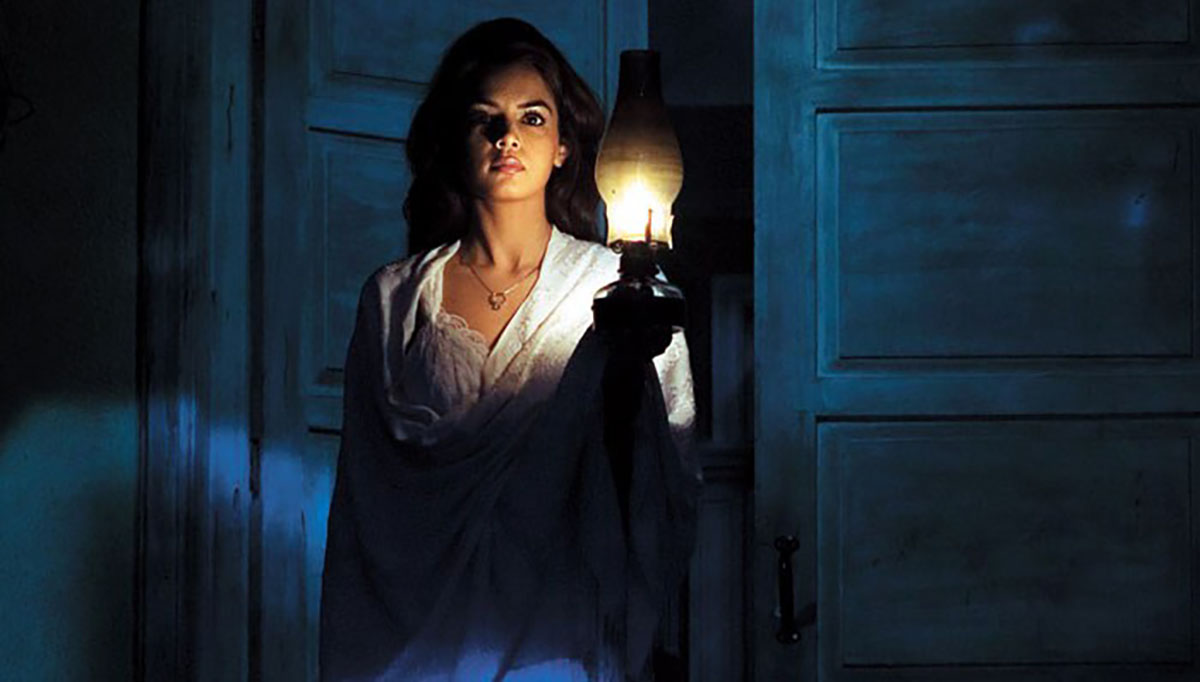
Addressing the film’s drawbacks, the visual effects are obviously a product of the early/mid 2000s and not the best. The character design for the specter is also quite generic. But the worst offender is a second backstory that appears out of nowhere towards its later half, coming across as needlessly tacked on. It left me scratching my head long after the rather wholesome photo montage in the end credits. It ruins the worldbuilding and lore which up until then was immersive and also leaves behind loose ends. Frankly speaking, merging both the backstories would have proved to be a better and more coherent option.
Double Plots Dent the Film’s Greatness
Debutantes Aditya Narayan and Shweta Agarwal share a natural chemistry together but donât have much else to offer. Narayan is inconsistent and under-acts, but fares better as a playback singer, lending his voice to the movieâs melodious tracks. Rahul Devâwho usually plays antagonistic rolesâis far more memorable in a supporting act as the heroic Professor Pashupati. His performance is on par with Rekhaâs turn as an exorcist in Ram Gopal Vermaâs possession horror classic “Bhoot.” I would have honestly preferred it if Shubh Joshi had been cast in the lead since he is more expressive than co-star Narayan, despite playing second fiddle as the loyal bestie. Murli Sharma and Prithvi Zutshi as Kayaâs stern father and Amanâs more supportive father respectively also deliver formidable performances.
Overlooking the overkill of two backstories when one would have sufficed, “Shaapit: The Cursed” is worth watching if youâre looking for a mildly spooky movie overloaded with a fair share of cheese, chivalry and daredevilry. Furthermore, it sets high albeit unrealistic standards for cinematic love interests as well as for men in general.
You can watch “Shaapit” in the window below or launch and watch on YouTube.


