





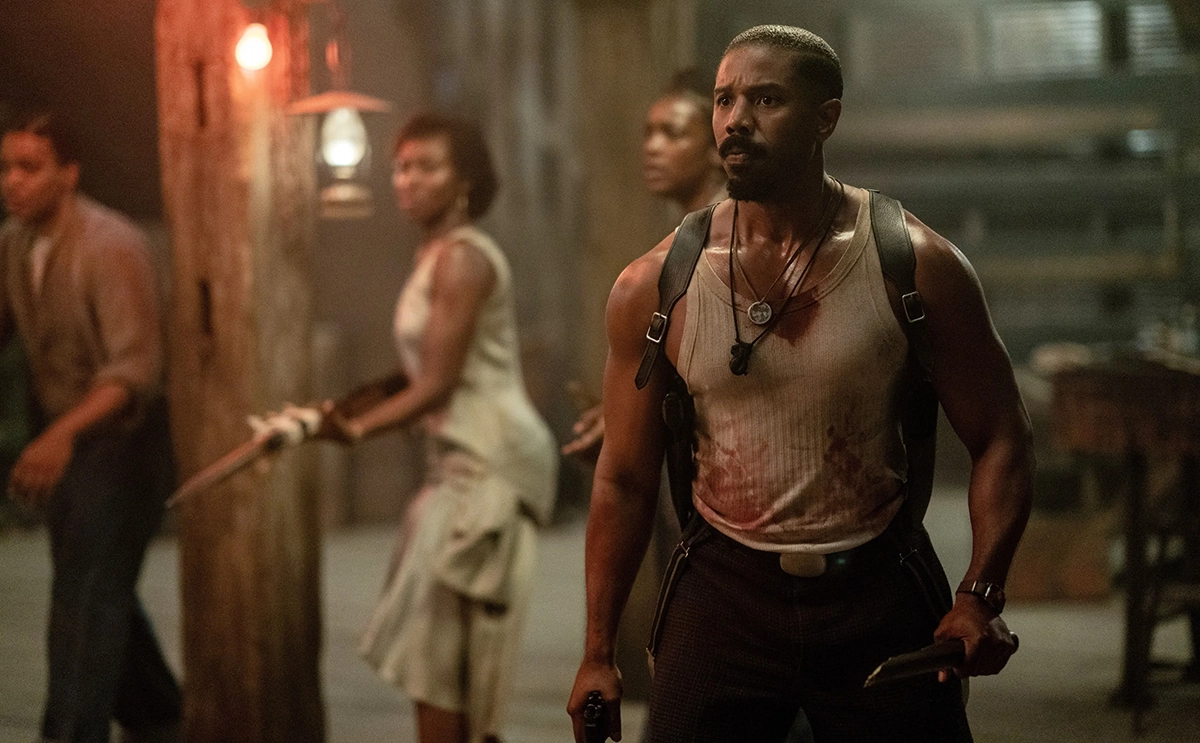
With the Oscars airing tomorrow night at 7 PM EST, I wonât pretend to âcallâ the winner for âBest Pictureâ as media is now abuzz with. I donât know which film that will be. But I do know the reason why I want it to be âSinnersââRyan Cooglerâs vampire/horror picture that is also a treatise on race, belonging, and true freedom. That Coogler mixes crime (the âSmokestack Twinsâ are ex-Chicago bootleggers), music (the film introduces Miles Canton as a soulful, blues player), and period (1930s Mississippi) make the film all that more appealing.Â
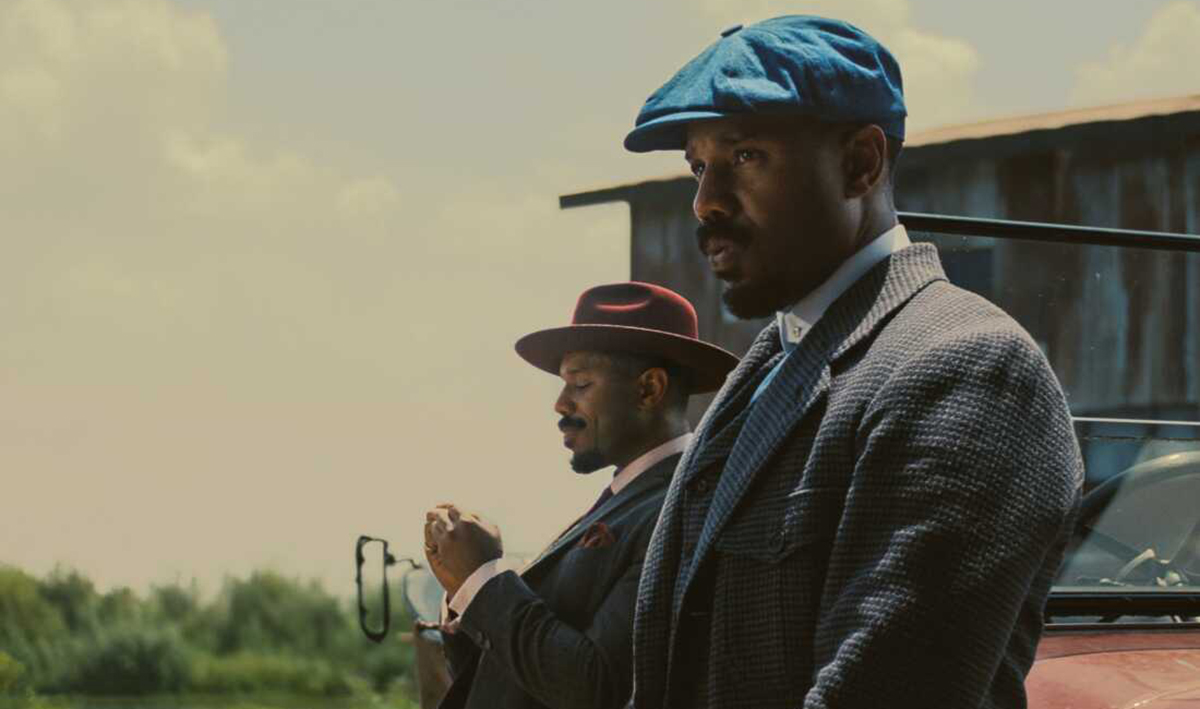
As both âSmokeâ and âStack,â Michael B. Jordan excels here. Heâs been nominated for âBest Actor in a Lead Roleâ and deserves it for his bi-fold personality. He plays each pair of the brothers, and Coogler and B. Jordanâs greatest accomplishment is that you feel Smoke and Stack are actually brothersâespecially towards the filmâs horror-explosion finale. He also carries the weight of two distinct personalities with no note that heâs ever aware of the other one when heâs the playing the opposite.Â
The Mississippi Delta and the 1930s
Stack is the crafty, business-oriented one while Smoke’s often the violent one. Well⦠theyâre both violent when the situation calls for it. In the filmâs near opening, Smoke shoots a guy trying to steal his car while heâs in the store. But heâs not heartlessâhe gives his friends money to go patch him up. Meanwhile, Stack and Sammie Moore (Canton) are taking care of necessary details in picking up alcohol, gathering a piano player, Delta Slim (the esteemed Delroy Lindo, great here), and opening up the juke. Along the way, Stack will meet up with his wife, Ruthie (Andrene Ward-Hammond) and share some tender moments while reliving the death of their child some time back. Smokeâs not immune from heartbreak either; heâll brush up with Mary (Hailee Steinfeld), whoâll remind him what he could have had. 1930s Mississippi is not an easy time, even less so for Black folks.Â
Yet what Coogler has done here is amazing. His recreation of â30s Mississippi is shown in muted colors, much like the hopes of its denizens often suffocating under its haze. Director of Photography Autumn Durald Arkapaw focuses his lens on town squares and cotton fields in equal measure. The settings always appear beautiful, sweeping, and, under Cooglerâs direction, unchaperoned. Glean the lighthearted bliss and camaraderie when Stack and Sammie pick up âCornbreadâ (Omar Benson Miller) to help them bounce that night at the juke. Thereâs a sense of family and instant love between any and all of the folks Smoke and Stack meet. I hadnât felt that kind of cultural bonding shown so excellently on-screen since Alejandro Monteverdeâs moving âBellaâ in 2006. We feel instantly drawn in and accepted by these people though weâve never met them.Â
Of course, not all is fun and games in the Mississippi Delta. An earlier scene shows the Twins buying the barn that will become the juke form a man with KKK ties. They appear to put him in his place. Only later will Smoke do that, in one of the best revenge scenes Iâve seen on film to date.
A Musical Salvation
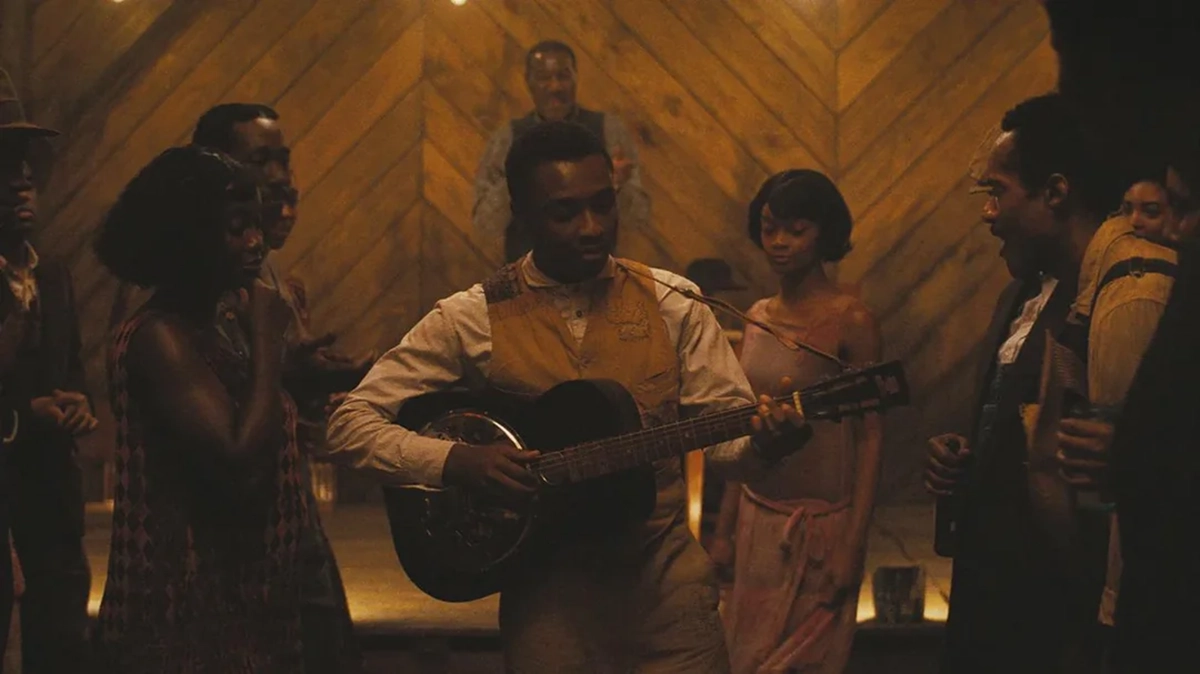
But âSinnersâ has much more in store. Itâs a musical havenâSammie is the best blues guitar player anyone has ever seen, and his guitarâcovered with metal and looking as majestic as the sounds that come out of itâfeels like a magic talisman rather than musical instrument. Weâre told earlier thereâs some lore behind Sammieâs abilityâhis father, a preacher, thinks he has the devil in himâand Coogler draws on the legend of Robert Johnson to explain why he might be so good at it. Coogler also explores a lore where playing of that magnitude can tear rifts in time, bringing together folks from all walks and times, along with bad elements that serve as a warning. In âSinners,â we see the former in a majestic, sweeping scene that bends space, music, and emotion, and should wishfully nab Durald Arkapaw an Oscar for âBest Cinematographyâ alone.Â
The bad elements also show up, here taking the shape of a vampire named Remmick. Heâs played charmingly by Jack OâConnell, an Irish vampire who quickly âturnsâ two KKK apologists to his vampire cause. Remmick will soon visit the jukeâas itâs in full swingâin an attempt to turn the revelrous Black folk into vampires as well. We infer itâs been centuries since Remmickâs been a mortal. He badly wants company. He promises Smoke, Stack, and the party eternal happiness and belonging.
Itâs not hard to note the commentary on American racism here: since the countryâs formation, minorities have been forcefully âaskedâ to assimilate into White culture. To keep oneâs own identityâpluralismâis shunned as refusing to become part of American society. Of course, the patrons of the juke were never meant to make it through the night. Had not the vampires shown up, the KKKâso fully put down by Smoke like the cancer they are at the film’s endâwere to come in the morning to kill every last one of them.Â
A Look at Pure Freedom

Yet somehow, during âSinnersââ 2 hours and 17 minutesâfull of horror, racism, gore, and oppressionâthey film becomes the opposite. Coogler shows usâas Stack states at the filmâs must-see post credit sceneââfor just a few hours, we was free.â And itâs impossible not to feel that freedom. No, itâs not a freedom of civil rights, politics, and equal opportunity. Itâs a freedom of living, of existing without the specter of explaining yourself and just being.
Here, the juke explodes into life: Durald Arkapaw and Coogler paint the night in majestic beauty, silhouetted by the murky dark of night and the warming cognac wood of the barn in which it takes place. Delta Slim and Sammie will play the blues, folks will dance and drink, and itâs a clever middle finger to the law and oppressive White culture that the Twinsâwho once worked for Caponeâstole the liquor and Irish beer they now drink as Whites have stolen from them since time immemorial.Â
It takes movies like thisâanother one was Regina Kingâs excellent âOne Night in Miamiââto allow Americans not part of the minority culture to understand and feel lockstep with the participants. I felt that watching Kingâs picture. I understood the discussions, empathized with their decisions, and wished none of it had to be so hard. âSinnersâ does that too, yet underlines it with music, dancing, and a love that is so big thereâs almost no room for sadness.
‘Best Picture’ Worthy?
Of course, sadness is there. But Coogler, B. Jordan, and company push it away as long as it will allow. But âSinnersâ moved me. I felt, watching it, a feeling of utter bliss and levity. It made me wish for a world where these folks didnât have to work so hard for this, nor for the achievement to feel so ephemeral. But that sadness is erased with what Coogler has accomplished here, washed away like a communion. Thereâs a deeply-spiritual picture within âSinnersâ that has nothing to do with religion. It has to do with the human spirt.Â
Tomorrow at the 98th Academy Awards, I truly hope that âSinnersâ takes home âBest Picture.â Even to have it nominated is an achievement, but a win would be as revelrous as the film itself. I know Iâm neglecting to comment on the filmâs action and horror (the scenes are plentiful and an experience of their own), but thatâs not what moved me about Cooglerâs picture. For that and more, you can click this link to read critic Paul Emmanuel Enicola’s excellent review. Yet I hope that in my words Iâve shown how and why this film touched me so, is such a deserving experience, and earns all the accolades that fall its way. In a climate of culture wars and divisiveness, âSinnersâ reminds you of what itâs like to belong. Itâs hard to find a better thesisâor takeaway messageâthan that.Â


