





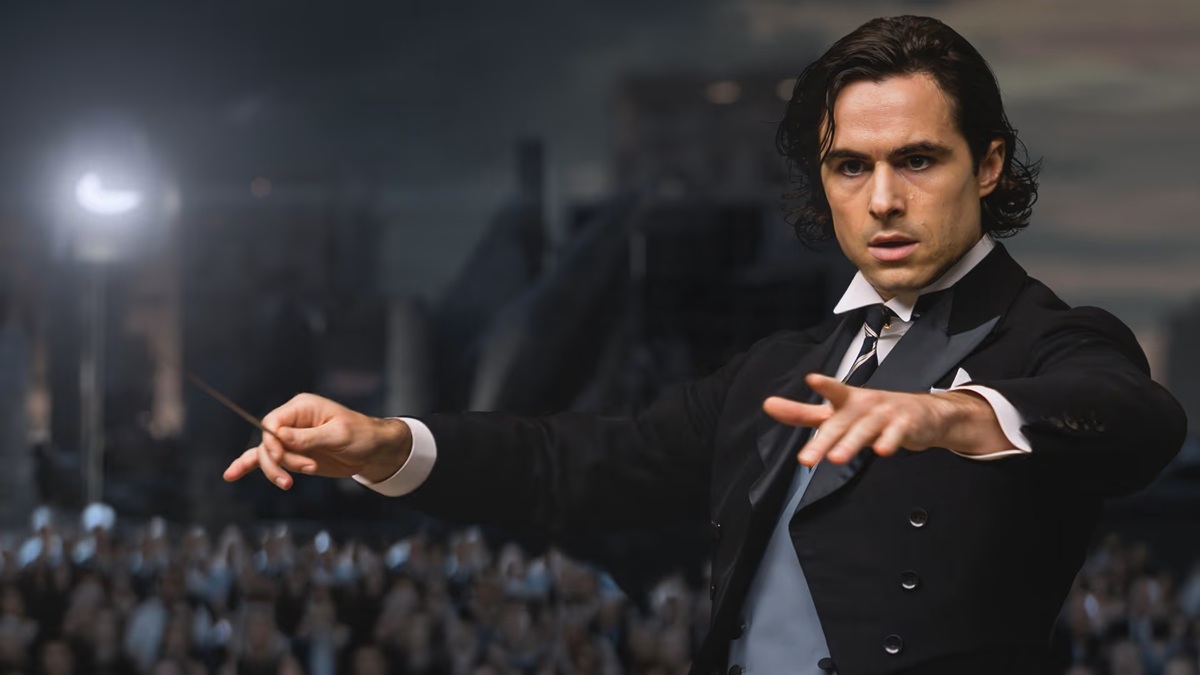
Thereâs a version of âThe Yellow Tieâ that plays like a straightforward biopic: childhood hardship, artistic awakening, the long climb toward greatness. And for stretches, thatâs exactly what Serge Ioan Celebidachiâs film settles into. It plays out as a sweeping, handsomely mounted account of Sergiu Celibidacheâs life, told with reverence and a clear sense of purpose.
This biographical film honors a towering figure in music, even as it leans too often on familiar notes. But thereâs something else running underneath it. And while not always fully explored and not always in focus, itâs nonetheless present enough to shape how the film lands. Through and through, this is a son trying to understand his father.
Reconciling National History with Individual Identity
The tension mentioned above gives âThe Yellow Tieâ its most interesting edges. Celebidachi never turns the story into outright mythmaking, even if it occasionally brushes up against it. Thereâs admiration here, no question, but also a quiet awareness of distanceâof a life lived in pursuit of something so exacting that it leaves little room for anything else. The film doesnât press too hard on that idea, but it doesnât ignore it either. It zeroes in on the pauses, in the silences between the music.
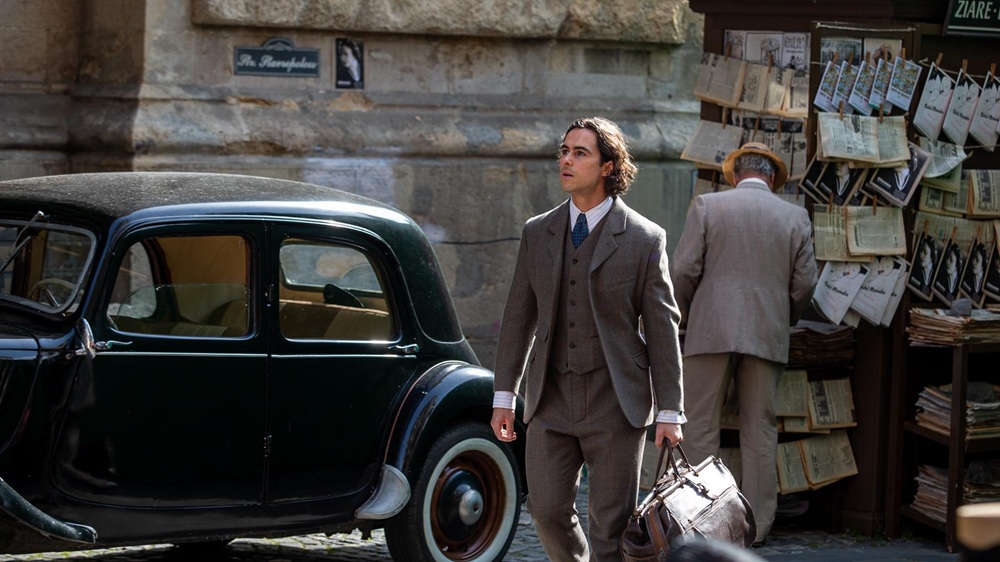
The film traces the life of Romanian conductor Sergiu Celibidache (Ben Schnetzer), following his journey from a difficult upbringing and wartime displacement to his rise as one of the most uncompromising figures in classical music. Directed by his son Serge, the movie frames this story with a sense of personal reckoningâmoving across decades and continents while reflecting on questions of identity, exile, and inheritance. As it charts Celibidacheâs refusal to conform, both in his art and in his life, the narrative carries the imprint of a son trying to understand the man behind the legend, and the cost of a life devoted to a singular vision.
Told largely in English, âThe Yellow Tieâ makes a choice that might raise eyebrows for a story so rooted in Romanian history. But I would argue that the decision makes sense within the filmâs broader reach. This isnât just about national identity; itâs about inheritance: what gets passed down, what gets left behind, and what it means to carry both across borders, across time. The language becomes secondary to that larger intent.
Interesting Filmmaking Choices That Quite Donât Take
Where the film finds its footing is in how it frames the manâs refusal to compromise. His resistance to recordings, his insistence on the fleeting, unrepeatable nature of live performanceâthese arenât treated as quirks, but as extensions of a worldview. Art, for Celibidache, isnât something to be preserved. It has to be experienced, in the moment, or not at all. You donât have to agree with him to feel the conviction behind it.
At the same time, the film doesnât always trust that conviction to carry the narrative on its own. It leans into familiar biographical rhythms: moments shaped to stir, conflicts that arrive on cue, a sense that the story is being guided toward emotional payoff rather than discovered along the way. You feel it most in the length. At 145 minutes, the film stretches, occasionally losing momentum when a tighter cut might have sharpened its focus.
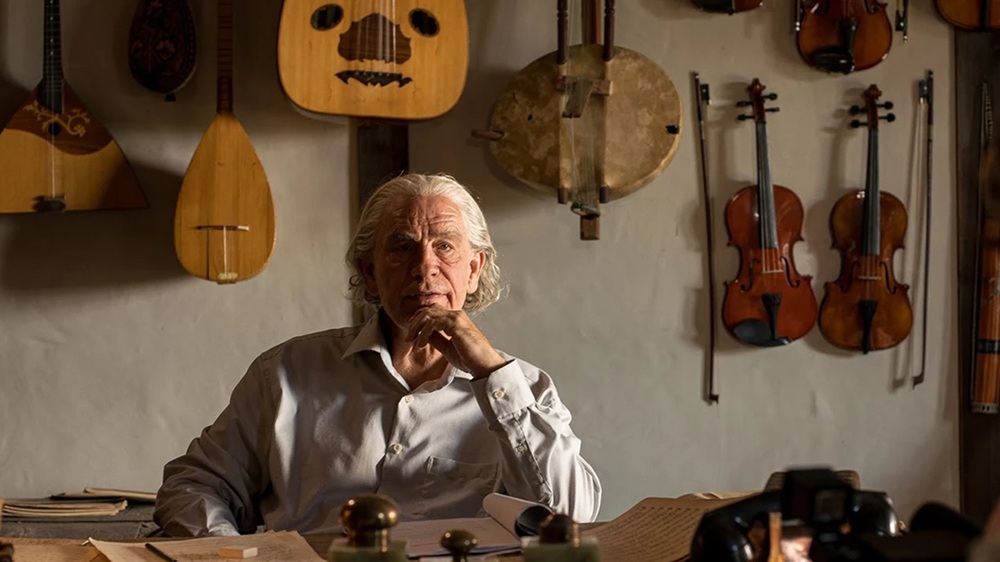
The casting adds another layer to that push and pull. John Malkovich brings weight to the older Celibidache, but his presence can feel curiously detached from the material. For me, itâs a recognizably âMalkovichâ performance, in a way thatâs controlled, imposing, and sometimes more about the actorâs persona than the man himself. The film holds together regardless, which speaks as much to the screenplayâs structure as it does to the limitations of that casting choice.
More SBIFF Coverage:Â âTough Old Broadsâ: Reclaiming the Words That Once Tried to Diminish Women
How âThe Yellow Tieâ Sparks Interest in Romanian Cinema
Still, thereâs something undeniably compelling in the filmâs ambition, and in what it represents. For Romanian cinema, âThe Yellow Tieâ sits in an interesting spaceâcaught between the austerity of the New Wave and a more audience-facing, emotionally direct kind of storytelling. It doesnât fully reconcile those impulses, often leaning toward accessibility; but the attempt itself feels meaningful. As someone watching from the other side of the world, I find that tension very familiar. After all, itâs the same push and pull many national cinemas are negotiating right now.
And maybe thatâs where the film ultimately lands. The younger Celibidache has made a film that serves, not as a definitive portrait of a genius, but as a sincere, sometimes uneven attempt to bridge gapsâbetween father and son, between past and present, between art as lived experience and art as something shaped for an audience.
You get the sense that Sergiu Celibidache, fiercely protective of the purity of music, might have bristled at parts of this. One imagines he wouldnât have had much patience for streaming platforms, or for the flattening effect of technology on art. The film doesnât go that far, but the idea hovers there anyway. (I mean, can you imagine Sergiuâs reaction upon listening to AI slop on Spotify?)
Whatever the case, âThe Yellow Tieâ is a worthwhile watch. Because, granted, what it leaves behind might not be perfection; but itâs something closer to persistence. And for a story built on a life that refused to compromise, that feels like the more honest note to end on.


Serge Ioan Celebidachi’s “The Yellow Tie” had its United States premiere at the Santa Barbara International Film Festival (SBIFF) on February 6, 2026. The festival ran from February 4 to February 14, 2026. Follow us for more coverage.




