





You don’t walk into a Kelly Reichardt picture expecting fast-paced action, so it’s one of the cleverest gambits in âThe Mastermindâ that she takes a genre practically built on adrenaline and kinetic energy and slows it down to hell. This isn’t âOcean’s Elevenâ with its swagger and precisely choreographed cons. This isn’t even the gritty desperation of âHeat.âÂ
Reichardt’s take on the heist film is something closer to watching paint dry in 1970s Massachusettsâexcept the paint is stolen, the guy who took it has no idea what to do with it, and he’s about to screw up his entire life because he can’t stop centering himself in a world that’s already moved on without him.
A Bumbling Mastermind with Half-Baked Plans for a Heist
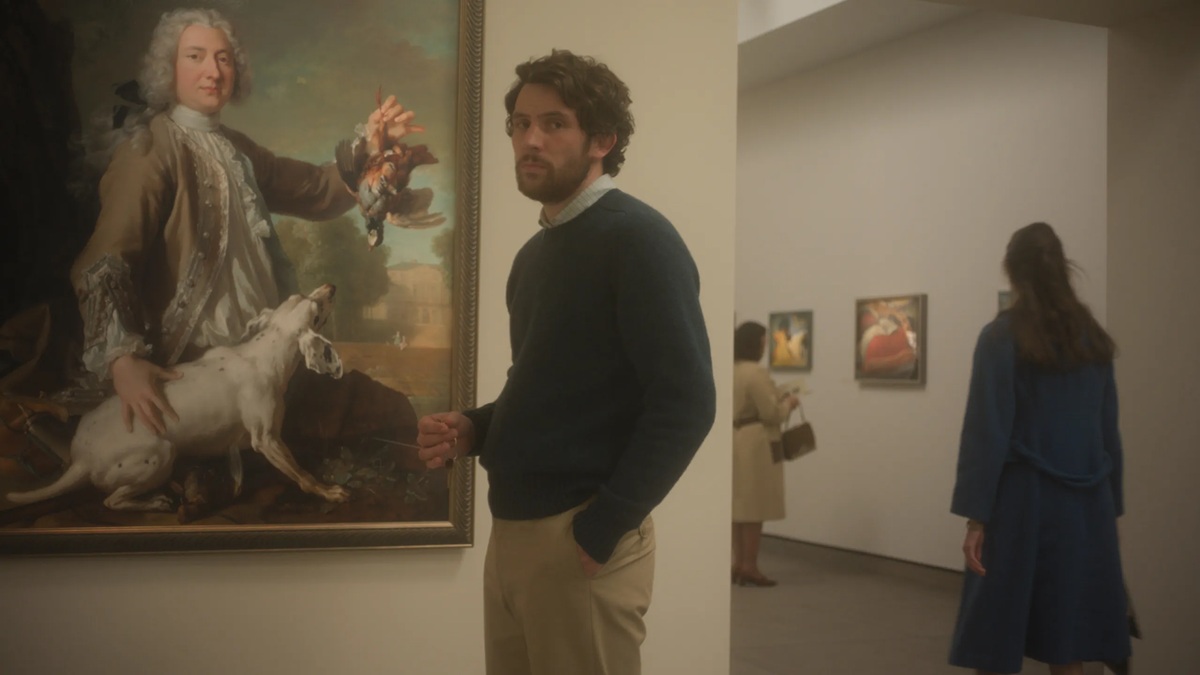
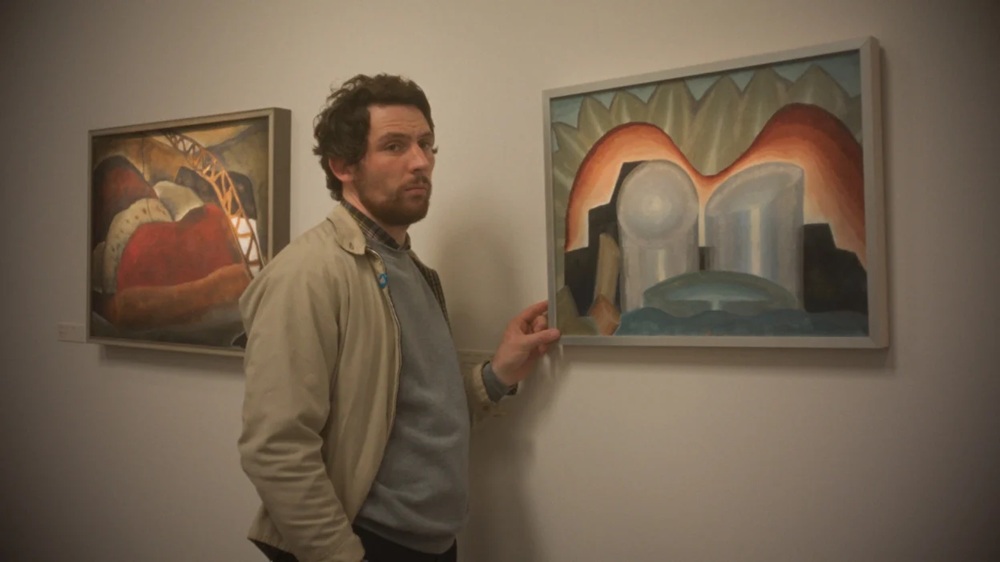
Josh O’Connor plays James Blaine “J.B.” Mooney, the titular mastermind who, as an unemployed carpenter, schemes to steal Arthur Dove paintings from the local Framingham art museum. The heist itself? Successful. Almost too easy. It’s everything after that becomes the slow-motion car crash Reichardt is really interested in. Here’s a guy with leading-man looks and the posture of someone who should have his act together.
And O’Connor, to his enormous credit, makes him a complete aimless loser. Not a charming rogue, not a misunderstood antihero. Just a self-absorbed fool from a bygone era who can’t connect with his wife, barely registers his kids, and somehow thinks displaying stolen art in his living room is a good idea until his judge father shows up and makes him feel small.
We see J.B. borrowing money from his mother Sarah (Hope Davis) under false pretenses, hiring three men for the job only to have the getaway driver bail after stealing the car. So J.B. drives the thieves himself to the museum where they successfully nab the paintings. He brings one of the Dove paintings home and hangs it up like a trophy, proud as hell, until his father (Bill Camp) walks in and dismisses the whole operation as small-time. That’s when you realize J.B. isn’t just a thief; he’s a man perpetually seeking validation he’ll never get, from people who’ve already written him off.

A Scheming Thief with Poor Social Skills
When an organized crime outfit abducts J.B. and forces him to reveal the paintings’ location, that should have been a wake-up call. But even then, he’s still scheming. He goes into hiding with Fred and Maude (John Magaro and Gaby Hoffmann), old friends from art school. Fred is delighted by the whole mess, living vicariously through J.B.’s criminality, but Maude sees right through him. What follows is a series of miscalculations and mounting desperation as J.B. tries to outrun consequences that were always going to catch up with him. Reichardt tracks his unraveling with the same unhurried precision she brings to the heist itself, making every wrong turn feel both inevitable and pathetic.
What Reichardt understands (and what makes âThe Mastermindâ such a sneaky, observant film) is that J.B. isn’t bad at stealing. He’s bad at being a person. Sure, he can pull off the mechanics of a heist, but he can’t read people. He assumes too much, and misses every social cue. When Gibson gets arrested robbing a bank and immediately rats him out to the FBI, J.B. looks genuinely shocked, as if loyalty among thieves who barely know each other is some kind of a given.
Meanwhile, his wife Terri (Alana Haim, doing a lot with a little screen time) is furious, and rightfully so. His kids, Carl and Tommy are just background noise to him, except when Tommy refuses to leave with his mother and tags along to a meeting that turns out to be a setup. J.B. drags his own son into danger because he’s too absorbed in his crumbling plan to think about anyone else.
Capturing Nostalgia with Color and JazzÂ
Reichardt’s approach here is almost perverse in how it refuses to glamorize any of this. The heist genre lives and dies on style, on the thrill of watching smart people execute intricate plans. Instead, Reichardt strips all that away.
Christopher Blauvelt‘s cinematography is gorgeous: warm, naturalistic, soaking in the muted tones of early ’70s America. However, it zeroes in on a man who doesn’t deserve the visual poetry. Every frame looks like it could be a painting, which reeks of irony considering J.B. steals paintings and doesn’t seem to understand or care about them beyond their monetary value. The film never tells us why he chose Dove specifically, though it gives hints that the art means something to him. But in his relentless self-involvement, even that remains opaque. No one in his life knows him, and we don’t either. Heck, even I am not convinced J.B. knows himself.
And then there’s the soundtrack. Rob Mazurek‘s score is this loungey, jazzy thing that borders on muzakâsometimes so generic it sounds like it’s piped into a dentist’s waiting room or an elevator going 50 floors up. It’s a deliberate choice, and it fits J.B. perfectly. He’s a guy who thinks he’s operating on some higher plane, planning art heists like he’s a character in a French New Wave film, but really he’s just background music. Forgettable. Interchangeable. The score underlines his mediocrity without rubbing your face in it, and that’s a tricky balance to strike.
Reichardt and OâConnorâs Collaboration Makes Wonderful [Jazz] Music
O’Connor’s performance is the engine that makes all of this work. He’s got that classic matinee idol thing going: square jaw, intense eyes, the kind of face that should be selling you something aspirational. Instead, he’s selling you a man in arrested development, someone who peaked in school (if he ever peaked at all) and has been coasting on delusions ever since. There’s no winking at the camera, no indication that J.B. is in on the joke. O’Connor plays him straight, and that’s what makes it painful and funny in equal measure.
When he tries to rationalize his actions to Terri over the phoneâafter everything has collapsed, after the paintings are returned, after his family has been dragged through hellâyou can hear the gears turning in his head, trying to make himself the hero of this story. He can’t do it. The movie won’t let him, and O’Connor doesn’t try to make us sympathize with him beyond acknowledging that, yeah, this guy is human, and humans are capable of spectacular self-sabotage.
Is this Reichardt’s best film? Letâs put it this way. In a filmography that includes âMeek’s Cutoff,â âCertain Women,â and âFirst Cow,â âThe Mastermindâ sits closer to âNight Movesâ: solid, accomplished, but not reaching the transcendent register of her best work. And that’s not a knock. Reichardt working at 85% is still more interesting than most directors firing on all cylinders.
But there’s something about the pacing here that might alienate even her fans. Reichardt’s trademarksâlong takes, minimal dialogue, scenes that breathe and stretch and refuse to hurryâare all present, and if you’re coming in expecting a heist movie with even a modicum of propulsion, you’re going to feel every minute of the runtime. I’d be lying if I said the film doesn’t lag in spots. There are stretches where you’re waiting for something to happen, and Reichardt is content to just observe J.B. failing in slow motion. It’s intentional, but intention doesn’t always translate to engagement.
Reichardt Makes a Heist Film Look Unsexyâand Thatâs the Point
Reichardt’s decision to end the film the way it did is darkly comic. In the end, we see J.B. still objecting, still insisting he doesn’t belong there, still missing the point. It’s a fitting conclusion for a character who’s spent the entire movie trying to assert control over a situation that was never in his control to begin with. The mastermind of the title is a joke, and the film knows it. If Reichardt ever decided to make a superhero movie just for the hell of it, I’d book the best seat in the house. Imagine her glacial pacing applied to someone in a cape trying to save the world. It would be maddening and brilliant.
But I digress. âThe Mastermindâ is textbook Reichardt: patient, observant, more interested in failure than success, and completely uninterested in giving you what you expect. It’s both a heist movie where the heist is the least interesting part, and a character study of a man who isn’t interesting enough to deserve one. And somehow it all works. Not perfectly, but enough to remind you that Reichardt is one of the few filmmakers working today who can take a tired genre and make it feel new again, just by refusing to play by its rules.


“The Mastermind” had its world premiere at the 2025 Cannes Film Festival on May 23, 2025. It screened in this year’s International Film Festival, which ran from November 14 to 23, 2025. Follow us for more coverage.




