





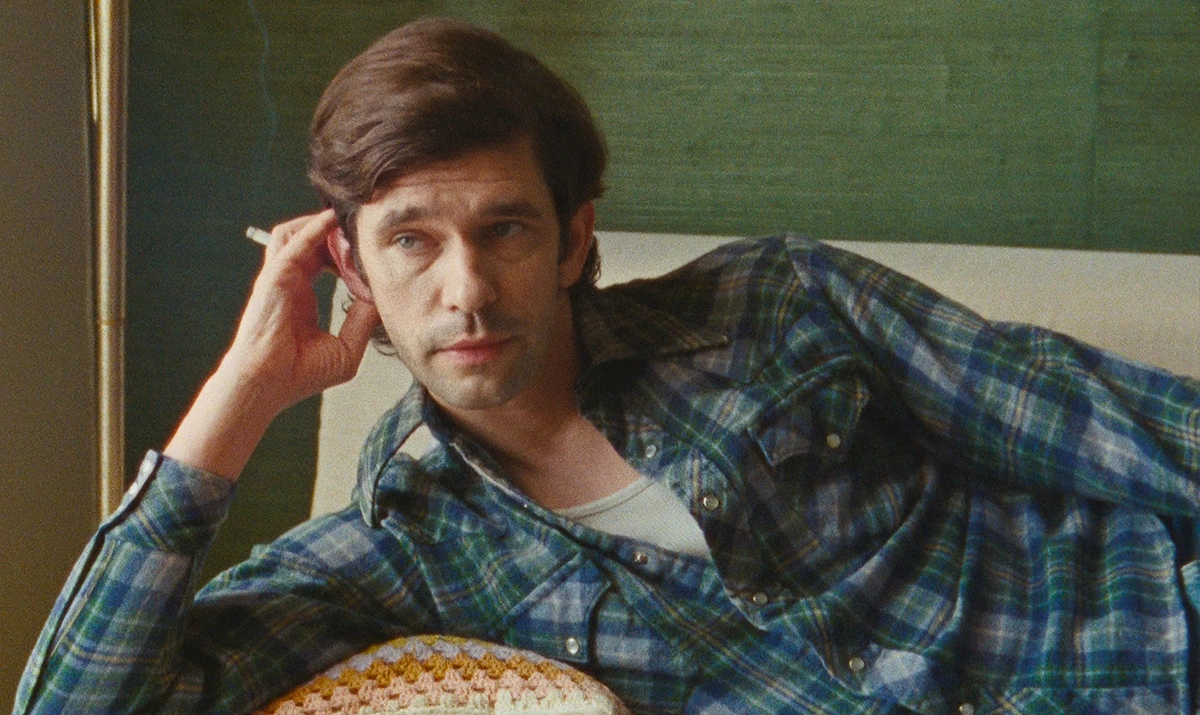
Long live the New York auteur! But, where have they all gone? Curiously, Michael Atkinsonâs essay, âWhatever Happened to the New York Auteur?â omitted the dynamic Ira Sachs, whose eclectic cinematic universe is often rooted in Brooklyn, Manhattan, or sister boroughs. Sachsâ âPeter Hujarâs Dayâ (2025) had its New York premiere at the New York Film Festival, and itâs a return home for the director after a couple overseas detours, most recently he rambunctious, horny roundelay âPassagesâ (2023). But unlike the kinetic French energy in âPassagesâ or the shattering heartbreaker âLove is Strangeâ (2014), Sachsâ latest is a claustrophobic affair, keeping the cityâs chaos at a remove, confining the only two characters to a space that is, admittedly, luxurious by Manhattan standards. And so this stylish two-hander coasts through a surprisingly strained hour-plus run-time, looking and sounding (those accents!) like a genuine artifact, but never quite justifying a feature-length close-up.Â
A scroll of onscreen text introduces the filmâs conceit and source material: in 1974, the writer Linda Rosenkrantz (Rebecca Hall, nailing the phlegmy, guttural nuances of Bronx-ese) interviewed her friend, the star photographer Peter Hujar (Ben Whishaw) for what she intended to be part of a larger anthology profiling how extraordinary artists spend their mostly ordinary days. Of course, even the lunch plans of a famous New York photographer in the 1970s might necessitate some name-dropping, and Sachsâ screenplay (based on a Rosenkrantzâs transcript) gleefully rattles off the copious luminaries (Allen Ginsberg, William Burroughs, Susan Sontag) who crossed and deflected off Hujarâs daily orbit. While Whishawâs droll delivery and effortlessly slinky physicality (not to mention his accent) grabs each frame and commands attention, the scriptâs reliance on starry gossip becomes a crutch, wearing off its warm welcome and shrinking Hujar in relation to his anecdotes.Â
A Credible New York Guide
As a hang-out film, itâs a joy to witness Hall and Whishaw dishing. When Hujarâs mind wanders off topic or Rosenkratz completes his sentence, thereâs a tender glimpse of mutual love, and genuine care for the other personâs health and hygiene. (âI think youâre malnourished,â says Linda to Peter after he relays that heâd only had a liverwurst sandwich for lunch.) An arresting backdrop is a given, and Cinematographer Alex Ashe bathes the city in a stripped down, wintry haze, which to me, stirred up anxiety for the colder months ahead. But, besides Rosenkrantzâs passion project, the film doesn’t establish well its emotional stakes, and the meandering conversation strives more for entertainment than enlightenment. Granted, thatâs not to diminish the storyâs worth or complain that itâs being told, I just found myself wondering if a more suitable format might have been an Off-Broadway stage or a smaller screen.Â
Atkinsonâs essay called out John Cassavetesâ rule-shattering âShadowsâ (1959) for speaking to âwhat life was like right here.â Sachsâ newest New York film weds a bit too much to that idea, amounting to an lengthy journal entry rather than an attempt to define an eraâor at least a time and place. The title doesnât lie, but it sets a ceiling on the filmâs ambition. So while âHujarâs Dayâ is faithful to its subjects, Sachs seems to settle at that accomplishment: to dictate, instead of recreate. And so âHujarâs Dayâ disappoints compared to Sachsâ own high standards, which rose after a decade-long winning streak of skillfully and humanely blending the light and dark (âLove is Strange,â âFrankieâ), sexy and ugly (âPassagesâ). Still, for a zoom back in on what the downtown arts scene looked like on a micro level, Sachs is a credible guide, a consummate New York auteur.
âPeter Hujarâs Day,â a Janus Films release, screens at the New York Film Festival on September 27th and 28th. It opens in theaters on November 7th.




