



Despite featuring a villain who shares a similar modus operandi to the antagonist of another Ajay Devgn home production “Shaitaan” as well as the direction of Vishal Furia whose previous films (“Chhorii” and its sequel) dealt with themes of female infanticide within a folk horror vein similar to this movie; ‘Maa’ doesn’t ride on the coat tails of its predecessors, distancing itself with enough merits to stand on its own. It also doesn’t play it safe and showcases how men can weaponize religion and spirituality to satiate their egos or exercise superiority over other individuals. And in this particular scenario, men also treat women as human vessels or puppets.
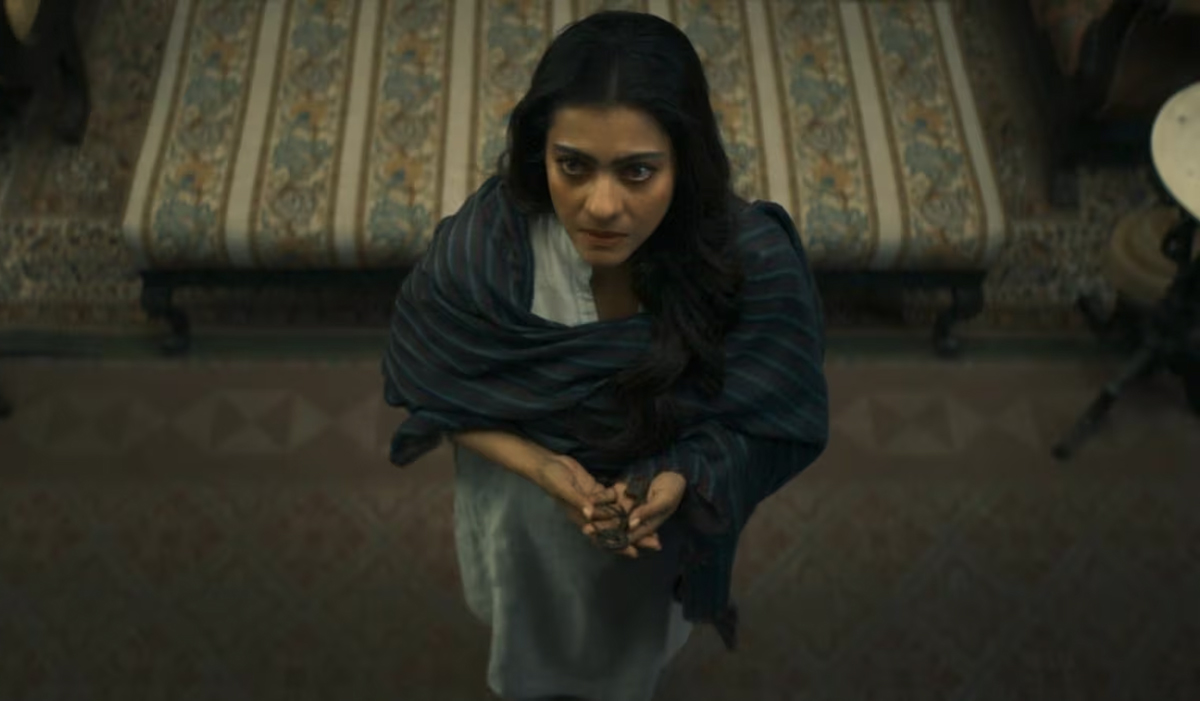
After cutting off ties with his hometown of Chandanpur, a rural locality deep rooted in superstition and an oppressive patriarchal structure, Shuvankar (Indraneil Sengupta) settles down in the city with his wife Ambika (Kajol). And for good reason: in his hometown, even something as women’s menstrual cycle is deemed as ominous/dirty in itself; cases of missing girls are promptly swept under the carpet even by the village head; and a newborn girl child is offered as a sacrifice to the local demon. Meanwhile, Ambika prides herself on educating students about the lore of brave Indian goddesses and their various avatars. However, tragedy strikes when Shuvankar meets a fiery early grave during a brief return home for an elderly patriarch’s funeral (a gory death that eerily resembles a funeral pyre in itself).
Escaping a Misogynistic and Superstitious Hometown
Three months later, Ambika still gets nightmarish visions of her deceased husband. She then decides to visit his hometown along with their only daughter Shweta who is adamant to see her late father’s ancestral home. Ambika finds herself drawn to and simultaneously haunted by the local customs such as a long-held belief of the Goddess Durga, an avatar of Goddess Paravati bestowing the honor of The Chosen One upon a strong woman (visually and thematically similar to the May Queen title in “Midsommar“) and thus throwing open the doors of a temple that’s been shut for the past four decades.
Soon after her arrival, an evil being that lay dormant in the nearby jungle which was once the site of the aforementioned sacrifices/infanticides, unleashes itself upon pubescent girls, and the practical and headstrong mom finds herself morphing into an all-vanquishing goddess herself.
‘Maa’: A Study of Patriarchy Through the Folk-Horror Lens
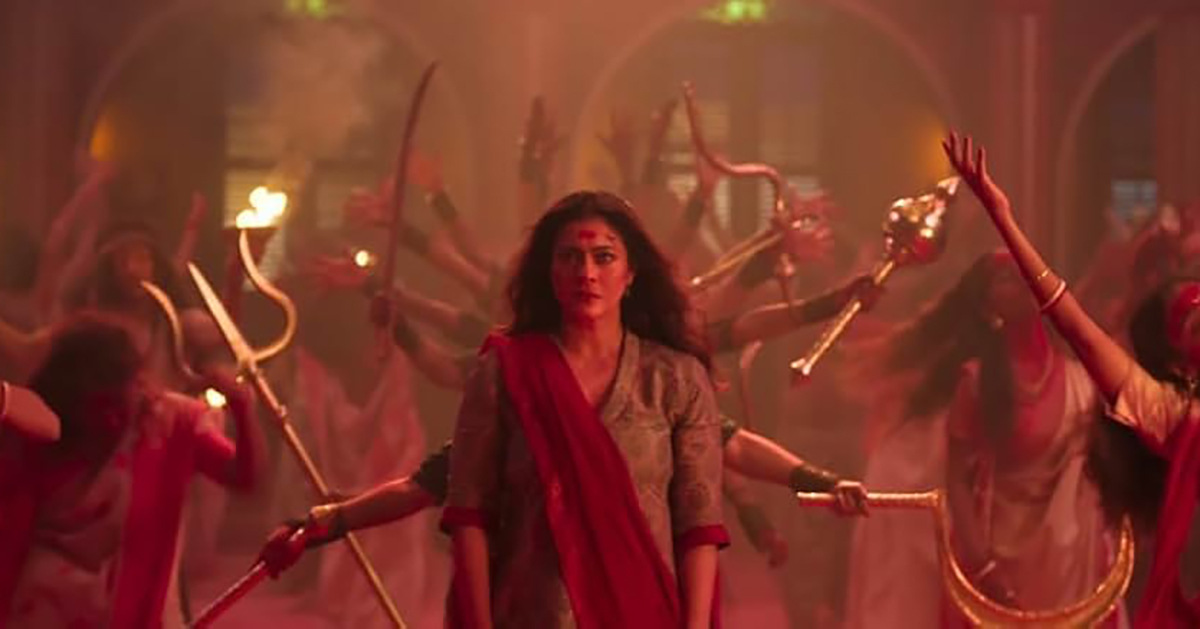
As noted at the beginning, ‘Maa’ doesn’t ride on the coat tails of its predecessors, distancing itself with enough merits to stand on its own. Here, the film doubles as a showcase of the revelry of rich Indian culture, religious texts, and rituals involving divinity and devotion, while also exposing the horrors of archaic practices, thus paving the way for a progressive attitude toward the fair sex. It does so through the motif of the temple that has been sullied in the name of religion. Now turned into a sacrificial altar, purification can only take place with the entry of a modern woman with kindness in her heart who is bold enough to hold the demons of patriarchy accountable and usher in a new age, one which celebrates women and safeguards their rights.
“Maa” also portrays this very real evil entity known as the patriarchy through the birth of a baby girl which sets off alarms. In fact, Shuvankar and Ambika themselves go to great lengths to protect their only daughter; even lying about her gender at birth, so the demons disguised as humans won’t snatch her away. A scene at the hospital where the new parents even swap cribs just to safekeep Shweta from her own grandfather who visits unexpectedly especially leaves one aghast.
The demon’s backstory also ties in with the monstrous tendencies of men who, while anointed as heroes of the village, nonetheless develop a bloodlust as they can never escape from under the thumb of patriarchy. What’s more, their own ingrained insecurities feel like seeds deeply embedded within them.
Potent Direction in Staging Dread, Despite Oversimplified Storytelling
Due to his background in horror, Furia excels in crafting a suspenseful and eerie atmosphere. Here, he makes smart use of framing and timing of jump scares, silhouettes, misdirection to amplify the scares, mysterious statues, and ghostly young girls whose eyes follow and keep watch over Ambika and Shweta.
In the director’s staging of dread, the lens does its magic, too, panning around the room for gradual reveals that cause the heart to skip a few beats. The movie also boasts some great visuals such as the demon’s face reflected in the rearview mirror of Shuvankar’s car. It is also highly creative with the deaths, executing the “killer trees” trope far better than M Night Shyamalan’s “The Happening.”
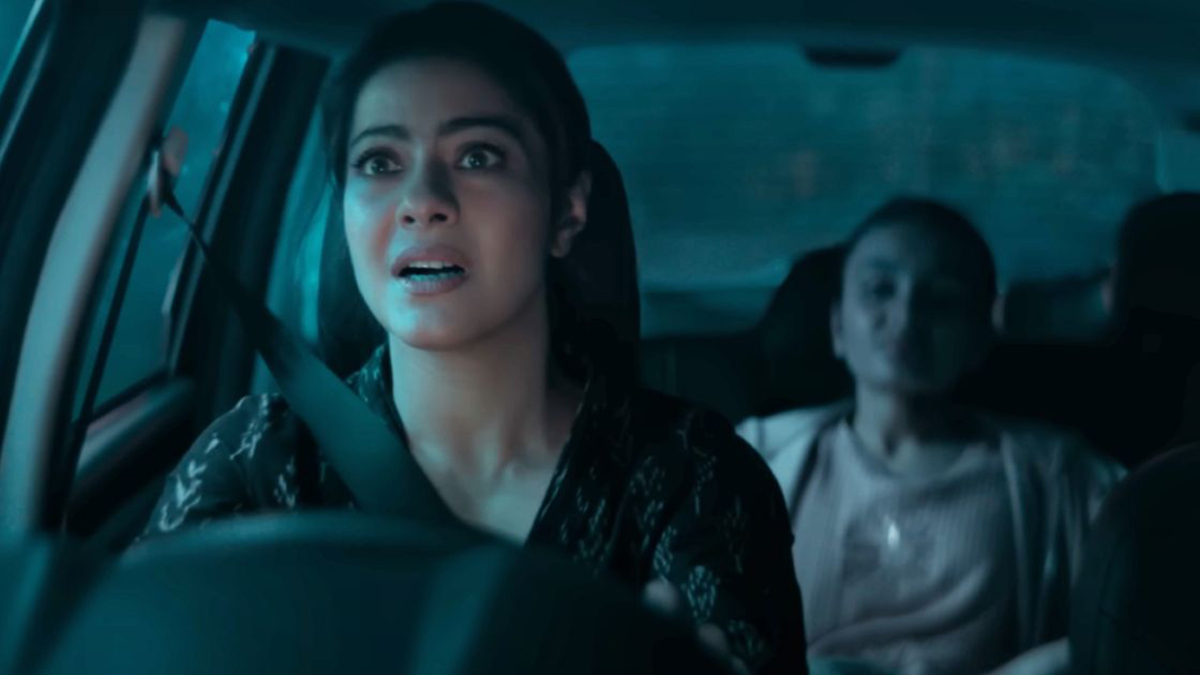
There is no beating around the bush either with sparse use of songs, particularly a cover of ‘Humnava Mere’ by Shreya Ghoshal that reinvents the original ballad from Jubin Nautiyal. In this rendition, the song provides musical subtext to demonstrate and amplify the mother-daughter bond in a tender, poignant fashion.
However, the interesting concept occasionally unravels due to oversimplified storytelling. This isn’t even mentioning a secondary ending involving a ‘plot twist’ that feels shoehorned, dragging an otherwise satisfactory final act. In addition, the CGI looks rough around the edges, save for the animated backstory of the demon which is an exception to the rule. Usha Uthup lends her iconic fiery voice to the emotionally charged, fast-paced anthem ‘Kali Shakti’ during the well-choreographed Puja sequence, although the scene itself feels slightly misplaced due to the uneven structure of the movie.
Top-Notch Performances That Elevate the Film
Kajol impresses as the final girl vanquishing an ancient, patriarchal evil, and the movie affords her space for a lot of fiery ‘dialogue-baazi’, particularly in the final battle. Her chemistry with co-star Sengupta (who plays Shuvankar) is another bonus, and a major reason why his character’s death probably feels like a gut punch, too. The supporting cast also deliver formidable performances. These include Yaaneea Bharadwaj as a priestess; Jitin Gulati as a like-minded inspector who aids Ambika in her investigation into the disappearances of the girls; Dibyendu Bhattacharya as the senile groundskeeper Bimal; and Ronit Roy as village head Joydev.
Overall, “Maa” proves to be a good, timely watch for fans of both folklore and feminist horror, as well as a step in the right direction for hopefully more female-backed commercial ventures in the future. Despite its flaws which one can overlook, it’s worth the theatre visit, since it also gives the audiences the opportunity to learn a lot about Indian mythology in the process.


Vishal Furia’s film “Maa” had its theatrical release on June 27, 2025. Follow us for more coverage.




