





In the past five years, only a handful of movies have really earned the label âblockbusterâ in spirit, not just budget. âTop Gun: Maverickâ is one of those rare exceptionsâa film that understood the cinematic thrill of movement, speed, and emotional momentum. So when director Joseph Kosinski returned with âF1,â his latest ode to speed, the question wasnât whether it would look good. Of course it would. The real question was whether it would make you feel anything.
The result is a mixed bag, albeit one lined with chrome. âF1â is loud, shiny, and flush with well-executed spectacle. It delivers exactly what a big summer movie promises: adrenaline, volume, and movie stars in motion. But once the final lap is done and the cars stop spinning, there isnât a whole lot left to hold onto. This is a high-gloss thrill ride that too often mistakes momentum for meaning.
Still, itâs hard to stay mad at a movie that looks this good and moves this well. For all its shortcomingsâsome of them frustratingly avoidableââF1â is an engaging watch, especially on the biggest screen you can find. Itâs not âMaverickâ on wheels, though it certainly wants to be. But for two-and-a-half hours, I let it take me for a ride. And I mostly enjoyed the view.
A Summer Blockbuster That Remembers What the Word Means
The film begins with a jolt: a dream-like montage of a crash from the driverâs perspective, followed by the roar of ocean waves. Itâs not immediately clear whether weâre in a flashback or a nightmare, but it sets the toneâdeath is always around the corner in this world.
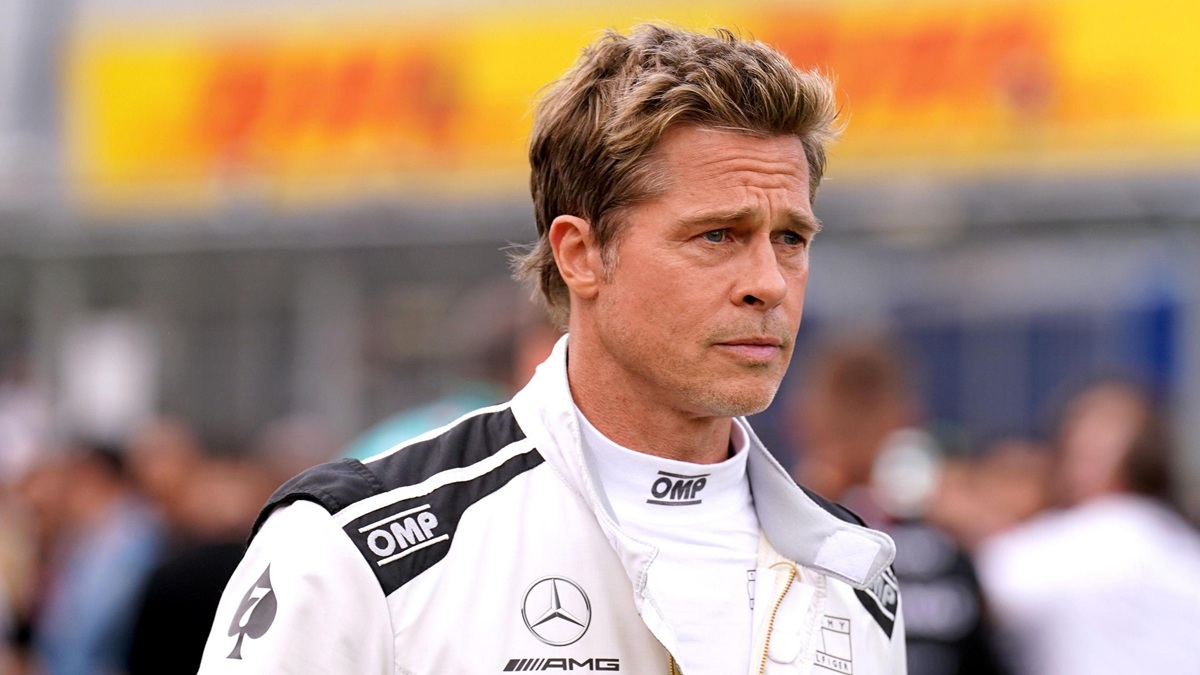
That driver is Sonny Hayes, played by Brad Pitt with the kind of sun-weathered charisma heâs perfected over the years. A former F1 star who flamed out in a brutal crash decades ago, Sonny now scrapes by as a racer-for-hire, bouncing between endurance races and money-making gigs in his beat-up camper van.
Kosinski packs a lot into this early stretch. We see Sonnyâs superstitions (he wears mismatched socks and picks a random playing card before each race), his ego (after winning a leg of the 24 Hours of Daytona, he tells a teammate, âYou lose that lead, Iâll kill youâ), and his restlessness. Heâs a man on the move, but Kosinski drives the main point for his protagonist: thereâs nowhere to go.
A Familiar Story Told at 220 MPH
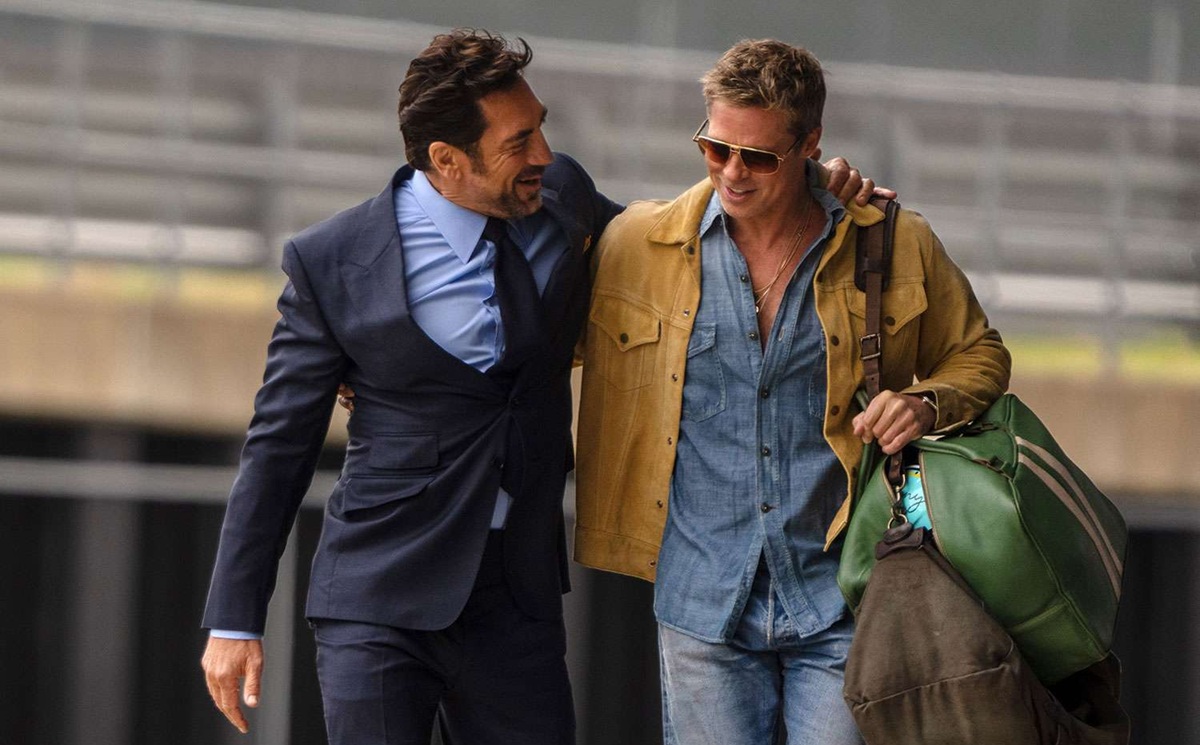
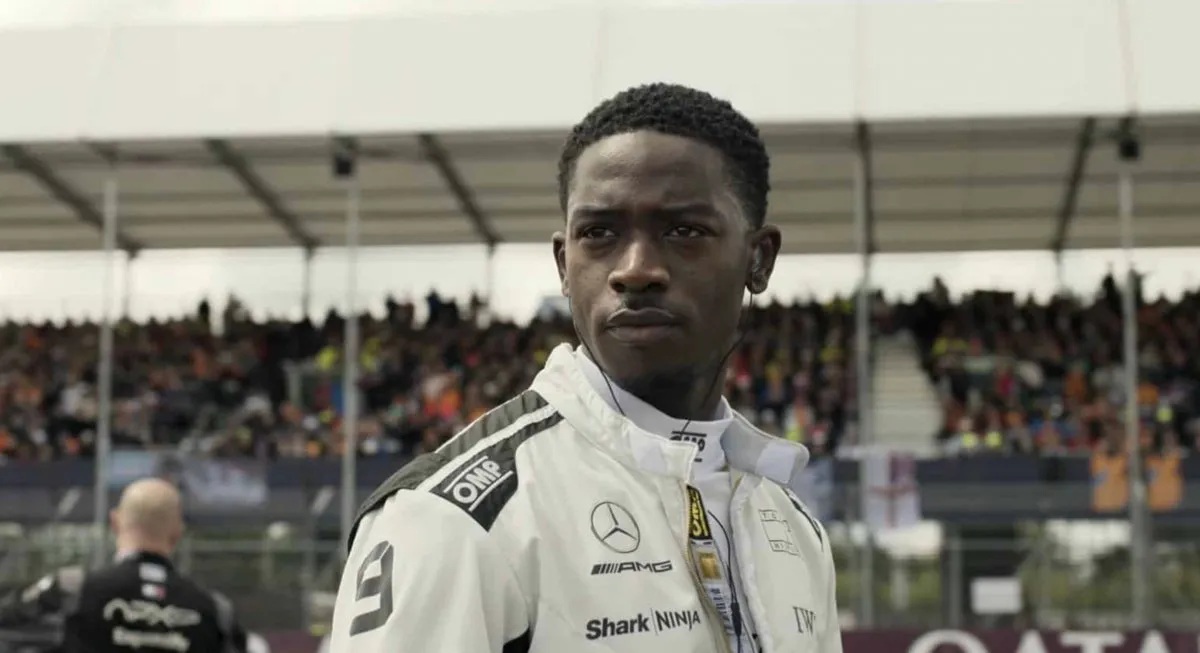
Things shift when his old friend and former teammate, Ruben Cervantes (a scene-stealing Javier Bardem), tracks him down. Ruben now runs APXGP, a cash-strapped F1 team teetering on bankruptcy and without any wins to show for their existence. He wants Sonny to help save the franchiseânot just as a driver, but as a mentor to their hotshot rookie, Joshua Pearce (Damson Idris), a gifted but undisciplined driver with more followers than wins.
Against his better judgment, Sonny agrees and flies to England. There he meets Kate McKenna (Kerry Condon), APXGPâs whip-smart technical director and the first woman to hold such a post in F1. Together, this mismatched crew sets out to do the impossible: claw their way up from dead last in the world championship.
The plot, such as it is, sticks to the underdog-sports-movie playbook. Sonny, long out of practice, gets his ass handed to him in the early races. He crashes, burns out, and bends the rules to stay competitive. Joshua resents him. Kate is skeptical. The press mocks him. But you can guess where this is goingâand sure enough, by the filmâs final act, Sonny has found his rhythm again, Joshua has evolved into a teammate worthy of the name, and the APXGP garage hums like a machine built on second chances.
Does it all feel a little too easy? Definitely. But thatâs part of the charmâand the frustration.
Speed, Sound, and the Power of the Big Screen
The technical craft in âF1â is its biggest selling point, and itâs here that Kosinski, cinematographer Claudio Miranda, and composer Hans Zimmer show off their chemistry. The trio previously collaborated on âTop Gun: Maverick,â and you can feel that same syncopation in every turn and tire screech here. This movie deserves the largest screen you can find, with a sound system that can shake your bones.
The racing sequences are breathlessly cut, with cameras mounted on the cars for an in-the-seat perspective that genuinely stirs the senses. Credits go to Stephen Mirrioneâs editing as well as the filmâs sound mixing and editing team. Their work goes hand in hand with Zimmerâs score: all synth swells and dramatic builds, it elevates even the transitional scenes. Itâs not subtle, but thatâs the pointâitâs meant to throb in your chest.
‘F1’ doesnât have much to say, but when the rubber hits the road, it says it with style.
As for the movieâs soundtrack, the classic rock needle drops range from effective to indulgent. While kicking things off with Led Zeppelinâs âWhole Lotta Loveâ during the Daytona sequence is an electrifyingly smart choice, I canât say the same for the original Ed Sheeran track âDrive.â
Standout Performances All Across the Board
In terms of performances, Pitt is right at home. He has made a career out of playing beautiful bastards with an inner wound, and Sonny fits snugly into that archetype. He doesnât overplay itâif anything, he coasts a little too comfortablyâbut he brings enough depth to keep things afloat. His best scenes are with Bardem, whose comic timing and bruised warmth make Ruben the most human character in the film. Their dynamic has texture, a lived-in messiness that suggests decades of history.
Condon, meanwhile, does what she can with a part thatâs underserved by the script. As Kate, sheâs tasked with being the brains of the team and a potential love interest. She excels at the former and sidesteps the latter, giving the role more grit than it deserves.
But the real breakout here is Damson Idris. His Joshua is cocky and frustrating, but thereâs a brittleness underneathâhe knows how easily it could all slip away. Idris finds that tension and rides it, especially in the second half of the film.

A Hollow Core Beneath the Hood
As easy as it is to get swept up in the filmâs momentum, you eventually start to notice whatâs missing. For starters, this is a movie that desperately wants to be âMaverickâ on four wheels, but it hasnât earned the emotional payoff. Where âMaverickâ built its stakes across two films and 30 years of cultural memory, âF1â tries to cram a similar arc into a single script. And it shows.
Co-writer Ehren Kruger offers just enough backstory to sketch Sonnyâs fall from graceâa crash, divorce, gambling, some bad choicesâbut never digs into who he is beyond the wheel. Weâre told heâs haunted, but we rarely feel it. Kosinski, who previously managed to balance spectacle and pathos so deftly, seems more reluctant here. He keeps the focus on the track, even when it might benefit from slowing down.
The mentor-rival trope between Sonny and Joshua is well-worn and doesnât get a fresh coat of paint. Their inevitable reconciliation feels rushed, like a plot requirement rather than a natural evolution. Also, the film flirts with deeper themes (aging, relevance, regret) but never commits. Itâs too busy revving the engine.
Then thereâs the elephant on the racetrack: the filmâs relationship with Formula One as a brand. With Lewis Hamilton as a producer and full access to real circuits, teams, and drivers, the film feels at times like a glossy infomercial. Thankfully, it doesnât go full âUnited Passions,â but the absence of any critical perspective on the sportâthe politics, business, and consequencesâgives âF1â a sanitized, corporate sheen.
Oh, and the runtime. At 156 minutes(!), âF1â overstays its welcome. Given how thin the characters are, itâs hard to justify the bloat. For comparison, Ron Howardâs âRushâ told a richer, more human story. And that was half an hour shorter.

âF1â is More Popcorn, Less PoetryâAnd Thatâs Okay
It might sound like Iâm being hard on âF1,â and maybe I am. But thatâs only because it couldâve been more. It had all the piecesâPitt, Kosinski, Miranda, Zimmer, a world-class sport brimming with narrative potential. What we got is the yearâs best popcorn movie, but not one youâll still be thinking about the next morning.
And yet, maybe thatâs enough. For what itâs worth, thereâs value in a film that delivers a collective adrenaline rush. You know, one that gives your senses a workout and reminds you what the theatrical experience is for. âF1â doesnât have much to say, but when the rubber hits the road, it says it with style.
Would I have liked more depth? Of course. Would I watch it again in IMAX? In a heartbeat. Some movies aim for your soul. Others go for your pulse. âF1â is firmly in the second camp. And for the life of me, thatâll do.


“F1” is scheduled to be released in the United States on June 27, during the weekend of the Austrian Grand Prix. Follow us for more coverage.




