A palpable rage slowly creeps up from beneath the hardened surface of âOn Becoming A Guinea Fowl,â Rungano Nyoniâs fiery and expansive second feature. True to any family story, absurdity, humor and grief commingle to present a full and messy history, and itâs not often clear where the joke ends and the tragedy begins. An edgy, nervy mix of farcical romp and blunt cautionary tale, writer/director Nyoni (âI Am Not a Witchâ) centers the narrative in the steady hands of Shula (Susan Chardy), whose stern face and stiff posture suggests a bendable humanity incapable of breaking. Chardyâreserved and engagingâeffectively conveys the contradictions of her flexible familial loyalty and its associated limitations. Allowing buried emotions to rise and finallyâin an enigmatic, haunting climaxâexplode, âGuinea Fowlâ matches Ousmene Sembèneâs cheeky, caustic satire âXalaâ (1975) in depicting the baffling, maddening and backwards wisdom of comfortably-entrenched crowds.Â
The most revealing momentsâcomic and otherwiseâof âGuinea Fowlâ avoid simplified, sharp punchlines and takeaways. Similar to âWitch,â Nyoni frames characters as both victims and perpetrators of a broader, broken system, whose rules are disproportionately in favor of (and dictated by) delusional, destructive men. Exhibit A: Shulaâs late Uncle Fred (Roy Chisa), whose corpse is introduced in a bravura opening sequence, when Shula is driving home from a costume party. Despite his predatory misdeeds and outright criminal behavior, Uncle Fred holds major sway over his entire Zambian family from beyond the grave. Shula delivers the news about Fredâs deathâfirst to her aloof father, who asks her to stay in her car and also, to please send more money for rentâwith a sullen indifference and frustration.Â
A Narrative Like an Exposé
Gradually, Shulaâs low opinion of Fred is substantiated not just through Shulaâs own experience, but the disturbing and overlapping revelations from her older cousin Nsansa (Elizabeth Chisela, marvelous) and the much-younger cousin Bupe (Esther Singini). Nyoniâs narrative works like an exposé, deliberately building a case by presenting evidence in support of these once-powerless girls. What should be, however, an open/shut case against Uncle Fred and his enablers is exactly the opposite. This severe moral imbalance is made manifest in the final scene, when a group of Fredâs presumed advocates gather after his funeral to shout accusations at Fredâs teenage widow, ruling that sheâs responsible for Fredâs untimely death. Here, again, Nyoni (born in Zambia but resides in the U.K.) summons the dry wit and clear-eyed cultural cynicism of the great Senegalese auteur Sembène, grounding in reality a story that, like âWitch,â might seemâto an optimistâlike a grim fable.
Each of these layered performances conveys the conflicting, impossible demands of the business of family life, but âGuinea Fowlâ does wobble when weaving in the cumulative suffering of these women across generations. Shula and Nsansa are rounded, intricate characters, but oftenâespecially in Shulaâs caseâNyoniâs script foregrounds the past in favor of allowing any private lives and potential pleasures to shine. Those fleeting moments when Nsansa is twerking and taunting, or Shula is drinking and giggling in the pantry among allies (away from the mourning family), function as both tender portrayals and profound acts of rebellion. Shula, in particular, deserved more of them. (I also couldnât help but want more of the great Henry B.J. Phiri. As Shulaâs bumbling, manipulative father, Phiri conjures the sinister Mr. Banda, that despicable, goofball bureaucrat he made a meal of in âWitchâ).
A Keen Eye for Evocative Details
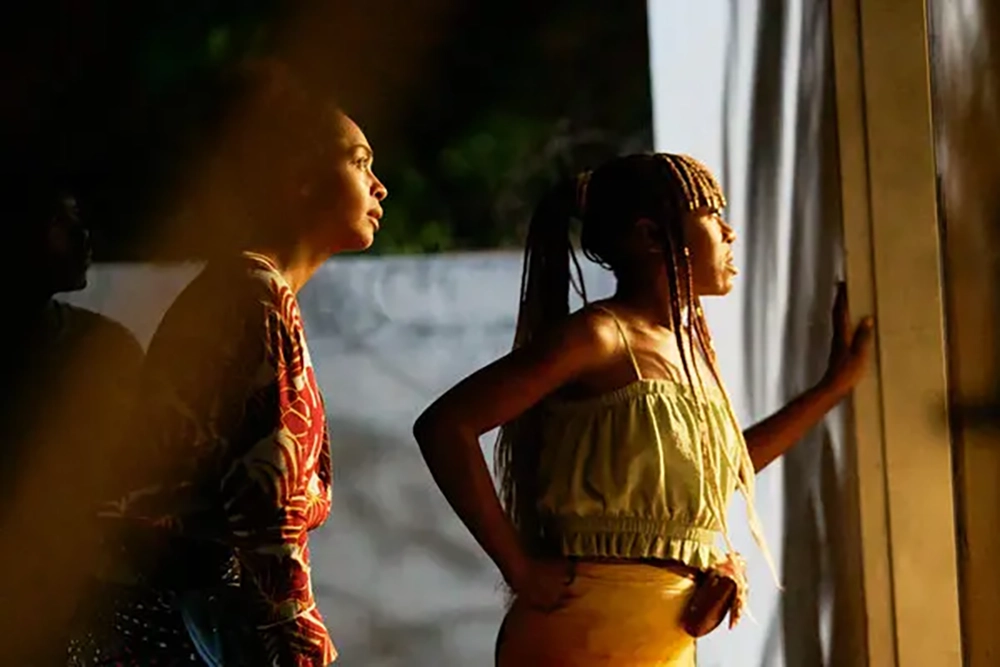
To want more from a film is a compliment to its creator, and in just two films, Nyoni has established herself as a fiercely independent and unapologetically political filmmaker. Here as before, Nyoni expresses a keen eye for evocative visual details and is uniquely skilled at knowing when to turn down the humor volume and crank up the protest anthems, elements which should work against each other but often meld seamlessly. âGuinea Fowlâ is far from sentimental, but it doesnât apologize for aligning with Shula, signaling that her story is representative of the broader power structure not just in her family but the country, too. That âGuinea Fowlââthe film-length explanation of the title is somewhat strainedâleans heavily on symbolism and light on resolutions suggests that although Uncle Fredâs body was buried, his tarnished legacy continues to fester, fostering necessary companionship among the lives he failed to ruin.
An A24 release, “On Becoming A Guinea Fowl” is now out in theaters.