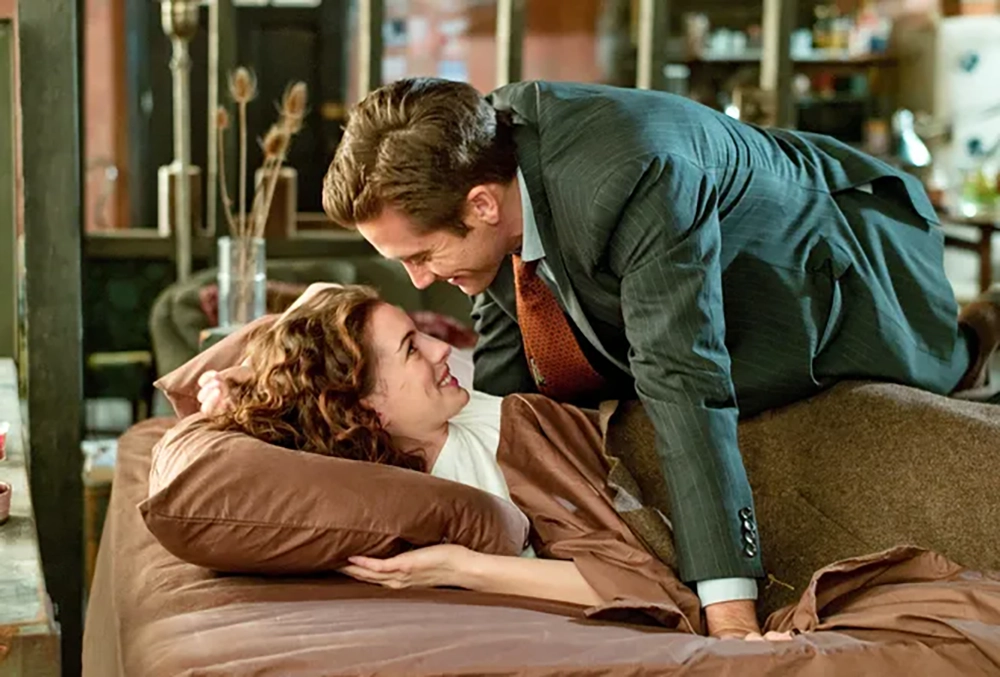
Buried under the traditional rom-com formula of âLove & Other Drugs,â thereâs a heartwarming film thatâs better than it ought to be. It features likable performances: Anne Hathaway as a young woman stricken with Parkinson’s and Jake Gyllenhaal as a hot-shot pharmaceutical salesman who enjoys all the perks, but was probably never in it for the money. I canât recall the last time Iâve seen a romantic comedy that didnât set up quirky but almost perfect characters, but real, flawed characters and explored their pain. However, by the end of this filmâdirected with heart by âThe Last Samuraiâsâ Edward Zwickâwe see a film that tries harder. Itâs not charm or theatrics that win the day, but vulnerability.Â
With its inclusion of heavier material, it would have been easy for âLove & Other Drugsâ to become a melodrama like any of a handful of Nicholas Sparks films, most notably âA Walk to Remember.â Except Zwick and writers Charles Randolph and Marshall Herskovitz remember they are making a rom-com, but also paint their characters as adults who know the landscape. Gyllenhaal plays Jamie, something of the black sheep of his family who once had the potential to go to med school, but opted out due to ADHD. A disappointment to his physician father, itâs no surprise he becomes at first a womanizer (he is good at something) and then a pharmaceutical rep. He starts succeeding when his company, Pfizer, creates Viagra. After all, who better than him could sell a sex drug?
Hathaway and Gyllenhaal Are Likable
As Maggie, Hathaway is written beautifully as well, and when she agrees to hook up with Jamie after an untoward encounter, sheâs up-front about what she wants: sex, and no messy attachments. She keeps him at bay with statements like, âIâll be disappointed if you turn out to not be a shithead,â etc. Sheâs had a failed relationship before with the wrong man who viewed her disease as pity (Gabriel Macht), and she doesnât want it again. Hathaway sells the character to us with wit and realism. She makes us believe sheâs a fiercely independent woman with walls all the way up, but not in a way that begs a knight in armor to break them down. Smartly, in âLove & Other Drugs,â she does the opposite.
The movie is full of the familiar stuff. Zwick marches us down scenes of Jamie training for his new job at Pfizer after an opening mintage that shows him able to sell any piece of low-end electronics equipmentâand bed any womanâwith seeming ease. Probably because he think so low of himself, he can deliver any line to any woman with the zeal of detaching himself from the situation and his knowledge of the way it works. As his Pfizer mentor Bruce trains him (a semi-wasted Oliver Platt), the machinations of schmoozing one doctorâs office (Hank Azaria) lead to success for Jamie. Heâs on the fast track to Chicago, which Bruce dangles before him as a prize full of culture, women, and riches.
A Rom-Com that Tries Harder

The scenes between Jamie and Maggie are the meat of the movie, and the way Jamie comes to the realization that he loves somebody for the first time is written with dead perfection. It occurred to me watching this film once again what an absolute talent Gylenhaal is. âLove & Other Drugsâ was four years before âNightcrawlerâ and five years before Anton Fuquaâs âSouthpaw,â but heâs as skilled as ever. Equally skilled is Hathaway, who charmed audiences with her performances in âInterstellarâ (deeply believing in love) and âLes Miserablesâ (as the epitome of pain and suffering). Sheâs relatable and likable here, dispelling any helplessness a less intelligent film would make of her condition.
Amidst this, âLove & Other Drugsâ is also keen to make observations on the greed and avarice of the pharmaceutical industryâJamieâs orientation at Pfizer the most egregiousâand the for-profit American healthcare system in a way I found refreshing. I also like that the film used a real company and real drugs (Zoloft, Xanax, Viagra) instead of basking the proceedings in anonymity. A scene that makes everything stick is when Maggieâgreat at looking after others but not herselfâtakes a group of elderly people on a bus trip to Canada to get medications at a rate they can afford due to the high cost in the U.S. I canât remember the last time a rom-com made such intricate points. Weâve already seen that Jamie knows the harm of some of the drugsâhe points out suicidal ideation in teenagers taking Zoloftâwhich makes the proceedings more believable.
Convention, but Welcome

The ups and downs of Maggie and Jamieâs relationship is built on familiar material. They will bond, they will fight, and one or both will attempt to push the other way before the end. A sad scene of a Parkinsonâs caregiver at a conference telling him to run puts the seed in Jamieâs head. Perhaps Maggie’s own expectations and feelings of inadequacy put the seed in hers’. A fight the two have in her apartment is real and hurtful. Itâs resolution, though, defies convention. As does the filmâs ending. Sure, it includes the obligatory chase scene and the obligatory speeches. However, this time I felt it. Both Jamie and Maggie have carried years of hurt. Thereâs no good guy and bad guy in the situation, just people trying to push through trauma to be with each other. Gyllenhaalâs closing words touched me, as did Maggieâs fight. Letting go is harder than fighting, a point Zwick and the filmâs writers depict well.Â
âLove & Other Drugsâ is not a perfect movie. Itâs conventional, the story of its lead on an arc from denial to self-discovery along with the usual cliched ending. However, this time it felt more truthful. The movie works because we want Maggie and Jamie to be together and believe they are good for each other. The supporting castâespecially Hank Azaria as a thoughtful doctor and Josh Gad as Jamieâs brotherâmake this is fun movie, along with an ending we could all use more of in todayâs cynical day and age.