With the release of the latest film in the MCU, âCaptain America: Brave New World,” Â many questions arise concerning the superhero and comic-book pictures. We all know these movies changed the business landscape for the worse, in my opinion. Studios rushed to build their slate of caped crusader blockbusters. Most didnât have Box Office success, for example, Sonyâs Spider-Verse. Others tried a new, fresh start after a complete mishandling and terrible marketing, Warner Bros. and DC Comics. Only one has managed to have its cake and eat it, too. And that is the Disney and Marvel collaboration. They are two juggernauts that donât seem to crumble down, yet the cracks are easily seen.
Until recent history, now a decade plus into their endless worldbuilding, interest seems to be dwindling, at least in some regard. Since âAvengers: Endgame,” and the departure of their biggest stars (Chris Evans, Robert Downey Jr., Scarlett Johansson), whose characters passed away (or passed the torch) in the climax of that saga, the MCU has been struggling to maintain audiences interested with what they have to offer in the long run. The aforementioned film was a great conclusion to the saga Kevin Feige and company wanted to construct. Both old and new fans were pleased. However, the reason for the current disinterest in their new slate does not relate solely to these outings.Â
The Post-‘Endgame’ World of the MCU
I say “solely” because, as an act of desperation from Disney and Marvel to capture attention and make headlines, they hired back some of them (Downey Jr., Evans) to either play new roles or rehearse what they did before. Artistically, it is bankrupt and disrespects the fans who care for their characters. Monetary-wise, they will be making bank. (Hopefully, with that money, they can produce independent projects and fund the works of new or upcoming artistic voices. But, as the business goes, I know they wonât.) The main reason it is failing is that the MCU does not have a story. There seems to be no payoff for the many films they have produced since âEndgame.”
I know it is hard to top what âEndgameâ did. Thanos killed most of the heroes, only for them to be brought from the dead in a crowd-pleasing climatic fight against an almost unbeatable villain. I would have waited longer between âInfinity Warâ and âEndgame.” It would create further anticipation and cause hopelessness for the fallen heroes and those left to deal with the situation. But I never expect Marvel to explore the psychological side of heroes and villains fully. Only paper-thin dissections are âallowed.” Nevertheless, the feeling that this last act of âEndgameâ made to fans and cinemagoers was energetic, enthusiastic, and, somehow, powerful. You canât deny the effect this film had. However, with these new phases, Feige and company seem out of ideas for what to do next.Â
A New Mantle and a New Political Climate
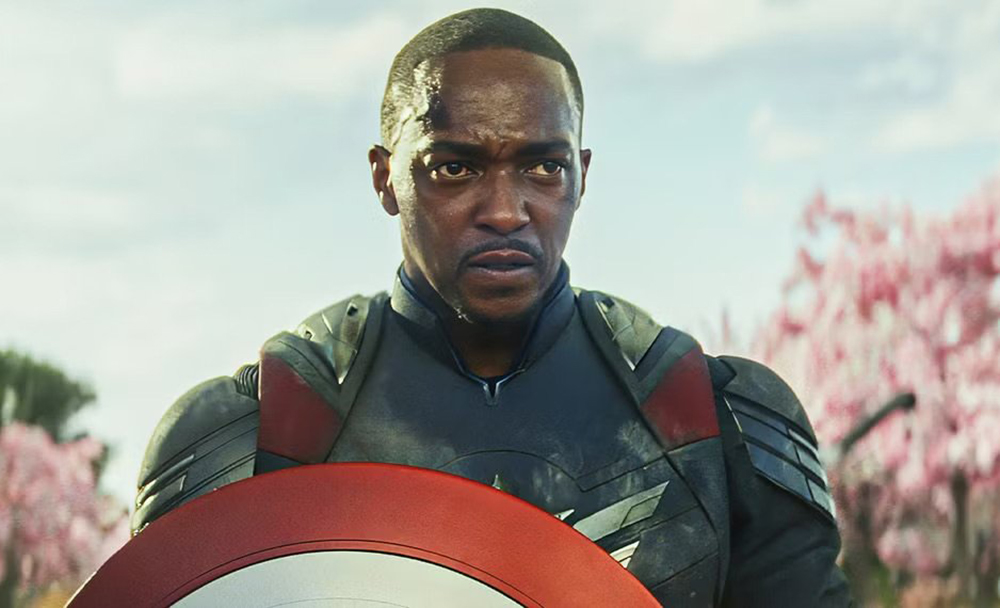
Feige may say that all of this was planned. But the product shows the truth. Nothing is on the horizon for now. How can you care for something when the story is wounded? Even though Iâm not a fan, Phases 1, 2, and 3 had an arc. There were many bad films. But at least they had their trajectory, which âCaptain America: Brave New Worldâ does not have, a similarity the film has with its post-âEndgameâ contemporaries. The mantle of Captain America has been passed onto Falcon, Sam Wilson (Anthony Mackie), and he is still learning how to proceed with the weight of this new role. Within that change of role and dynamic for Wilson, a new political world surges from the latest, sketchy president that has been elected.
Captain America, as its name suggests, is the hero of the people. Where does the new one, helmed by Wilson, stand concerning this new political climate? Will he follow the president’s orders or go his own way and protect the American citizens? On paper, there is a slightly interesting idea. The âFalcon and Winter Soldierâ series slightly explores this theme. Yet, here, there is a more evident emphasis on the meaning and definition behind the shield and politics. The issue lies in that, in execution, there is none of that. When you think âBrave New Worldâ will take an edgier, more psychological route, director Julius Onah takes the same path as the rest of this phase: colorless action set-pieces above storytelling and narrative coherence. Not even the appearance of Harrison Ford can brighten up the scenery.Â
A Sketchy President in Thaddeus “Thunderbolt” Ross
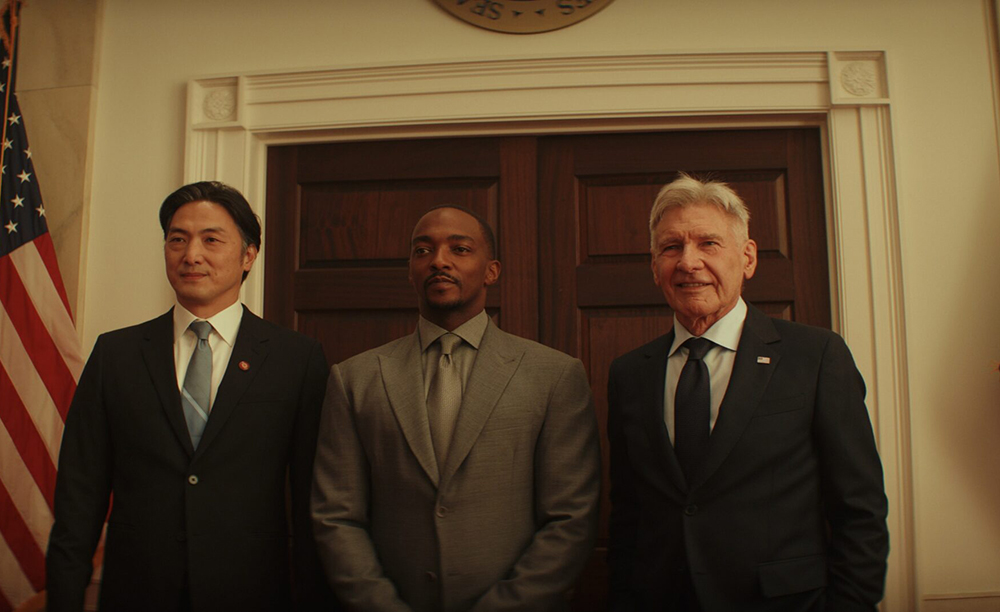
In âCaptain America: Brave New World,” ust like in reality, a new president has been elected: Thaddeus âThunderboltâ Ross (Harrison Ford). He is a man with a very troubled past. Ross tried to divide the country (not once, but twice). And still, the people elect him as president. Ross antagonizes allies, bashes reporters, is easily manipulated, and is destructive enough to put the countryâs future at stake for his own gain. (It is weird that there are a few connections between this fictitious world and our own, with Rossâ election oddly similar to the current presidentâs. I do not know if this is intentional or just a coincidence.) The film introduces Ross during the celebration of his election.Â
Ross then clamored about âtogethernessâ as his antics and past behavior do not preach such collective dynamism. Rather, it separates and distances everyone, both those who live in the country and the heroes who save it. Then, Captain America, Sam Wilson (Mackie), and his group of U.S. Army soldiers, which Joaquin Torres (Danny Ramirez)ââa young recruit following in Wilsonâs footstepsâis a part of, are tasked with extracting a premier package. Wilson and Torres suspect something is wrong with the missionâs outcome. They notice it in the open pickup area and the appearance of the S.E.R.P.E.N.T. group led by Sidewinder (Giancarlo Esposito). Wilson has a hunch that something will go wrong. And it all has to do with the new president-elect, Ross.Â
There is some capitulation on Wilsonâs part in the beginning, saying that he has to answer Rossâ calls because he is the president. However, Wilsonâs longtime friend, Isaiah Bradley (Carl Lumbly, with easily the best performance in the film), questions his loyalty to Ross. Consider that Ross was one of the heads hunting Wilson back then, alongside Steve Rogers and Natasha Romanoff. In addition, Bradley has not forgotten what the government did to him during his super-soldier trials. The government incarcerated him after experimenting on his body with the serum. From there lie the initial ways of tension that make âBrave New Worldâ feel like a political thriller. It was a move I was on board with.
Political-Thriller Elements in the Latest ‘Captain America’ Picture
An exploration of what it means to be a superhero amidst a rampaging president full of treachery and lies? I never would have expected that from the current MCU. My interest grew during those first few minutes, even if the action set-pieces were not up to par with today’s standards of spectacle. This interest fades rapidly upon the tons of MCU lore and film tie-ins. A villainous figure from the past comes back to hypnotize army men, all trying to reveal the dark secrets that Ross is hiding: double-crossings, corruption, manipulation, and treaties with sketchy figures.
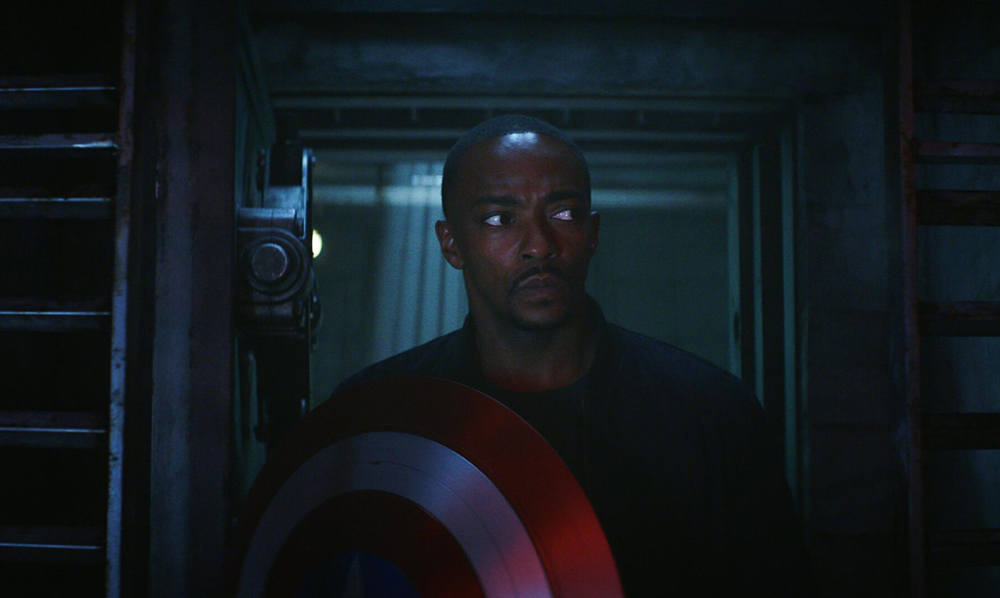
Then, it got perilous, almost nearing the brink of war. Wilson and Torres team up to uncover the secrets this figure is hiding as they contemplate the people in charge of the world and their roles as heroes. The political angle sounds more interesting when you say it out loud than when watching it. In execution, that is a whole other story, with an even bigger ordeal that Onah cannot seem to handle in the least. Those initial moments that weirdly comment on the government of today add substance to âBrave New World.” Things occur in this film during the first ten to fifteen minutes that refer to comments, remarks, and executive orders that the current president has said and done a few weeks back, even days.
Is this a stretch on my part, or just what Onah and Feige wanted to do? Since the storyâs development after the cold open threads of murky, bland watersâdistanced from the âedgyâ attempt at political anglesâmy curiosity switched to boredom and annoyance that Onah didnât go all out with the critique or reflection of todayâs leading government party, who rips everyone out of their rights and disrupts a country for personal gain, all through the eyes of three generations of heroes: the old, forgotten one, the young rook learning the ropes, and the current mantle, establishing himself in the eyes of the public.
Dependent on Tying Loose Ends Over Creating New Stories
When the most interesting side of the story flounders right out of the gate, the rest of âBrave New Worldâ has to offer the same old stuff. Rapid-fire action and unconvincing CGI becomes the main attraction. As far as popcorn entertainment goes, you could hear a pin drop in the IMAX theater I watched the film in. Usually, youâd listen to the crowd laugh, be excited, or worry for the heroes. It took me by surprise that everyone was in the same boat for the first time in a long time. Many were beside me speculating the optics of âBrave New Worldâ and its modern-day political-thriller angle, just like me, curious and weirded out by the similarities.
Many started losing interest once the Marvel train began running into a collision course with Red Hulk. The political angle was the only thing giving âBrave New Worldâ a personality. Aside from tying some loose ends, the film does not prompt anything exciting for the future of the MCU. It again tells you that other worlds exist amongst the galaxies and stars. And that there will be a war between them someday. Didn’t another movie hint at this already? If so, why tell the audience again? Is Marvel that afraid to lose the audience? I donât know the answer; one can speculate. But you canât bother the audience to do even that with the latest “Captain America” picture.Â