





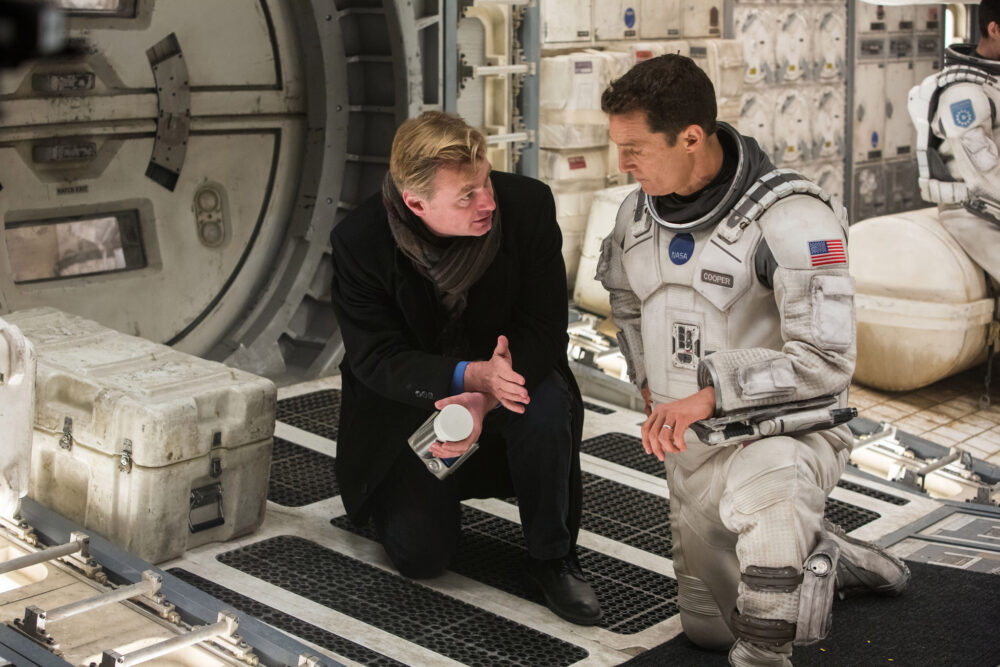
When Christopher Nolanâs âInterstellarâ premiered in 2014, its reception wasnât anything like the previous Nolan films. While it received widespread acclaim for its technical achievements, narrative ambition, and emotional core, the film also attracted its share of pointed criticism. Audiences and critics alike, even those who admitted being fans of the director, found issues with the movieâs overwhelming emotional beats, clunky dialogue, and scientific expositions. Our original review even bemoaned Nolanâs penchant for over-exposition.
I understood both sides. In fact, I still do. After all, âInterstellarâ is dense, almost operatic in its ambition, and not all its moving parts harmonize seamlessly. Many viewers questioned its philosophical aspirations and heavy-handed dialogue, while others saw it as evidence of Nolanâs increasing âiciness,â an observation that first emerged with 2010âs “Inception.”
A decade later, it remains my favorite Nolan film; not because itâs his most polished, but because it is his most vulnerable. As a deeply personal cinematic experience, this is not the work of an icy, detached auteur preoccupied with puzzles; this is a story driven by the messy, ineffable love between a father and his daughter. And while detractors have often accused Nolan of being all brains and no heart, âInterstellarâ shows that his intellect and his emotions are not at oddsâthey are inextricably linked.
A Parent’s Perspective
Nolanâs oeuvre is often described as intellectually driven, full of intricate structures and narrative trickery. Yet âInterstellarâ breaks from this mold in profound ways. While its story is rich with scientific rigorâunderpinned by theoretical physicist Kip Thorneâs expertiseâits emotional heart lies in the relationship between Cooper (Matthew McConaughey) and his daughter, Murph (played by Mackenzie Foy as a child and Jessica Chastain as an adult).
For all its cosmic grandeur, âInterstellarâ is a story of parental love, and this is what gives the film its emotional weight. The Earth is dying, ravaged by ecological collapse, and humanityâs survival depends on finding a new home among the stars. Cooper, a former pilot turned farmer, is recruited for a mission to explore planets in another galaxy, leaving his two children behind. While his son Tom (Timothée Chalamet) reluctantly accepts his fatherâs departure, his daughter Murph feels betrayed.
What grounds the story is Cooperâs relationship with Murph. The opening scenes establish their bond in tender, deeply human terms. Their shared fascination with scienceâexemplified by their discussions about gravity and the mysterious âghostâ in her roomâsets the stage for the filmâs exploration of love and time. When Cooper decides to leave for the mission, the fallout is shattering. Murph refuses to say goodbye, clutching her anger like armor against the pain. Their final exchange is heartbreakingly unresolved; Cooper promises to return, but his words hang in the air, weighed down by the uncertainty of the mission. Itâs the kind of promise every parent makes to their child, but here it takes on existential significance.
This emotional rupture is one of the most relatable aspects of the film. As a parent, Cooper finds himself torn between his duty to humanity and his love for his children. He knows his decision will cost him precious years with them, but he also understands that their survival depends on his sacrifice. This tension is one of the filmâs most compelling dynamics, and itâs brought to life by McConaugheyâs nuanced performance.
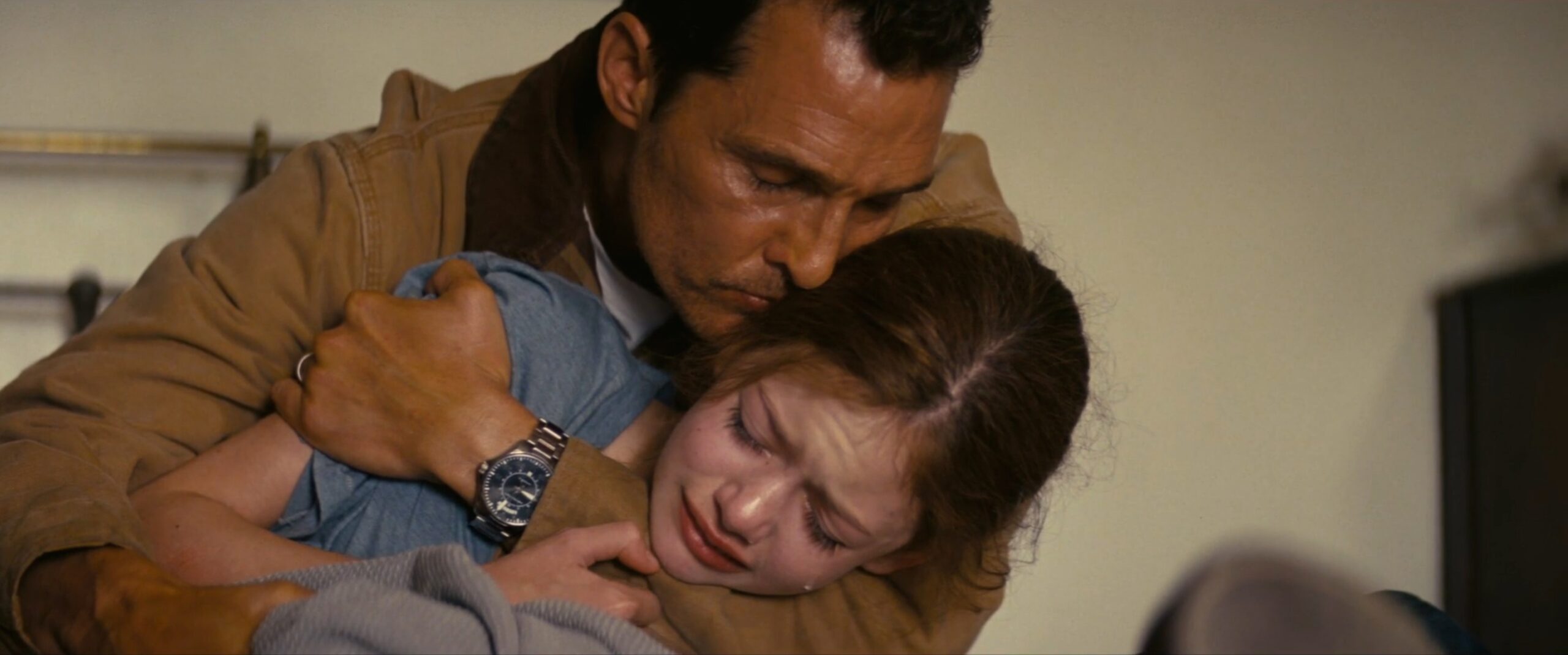
âWeâve got years of messages stored.â
The pivotal emotional moment comes when Cooper watches decades of video messages from his children, realizing how much time he has lost. Itâs a scene that, even now, never fails to break me. After a disastrous visit to the scientist Millerâs planetâwhere time dilation causes hours to become decades on EarthâCooper returns to the ship to find yearsâ worth of video messages from his children. Watching McConaughey crumble as he sees his son grow up and Murph grow distant is gut-wrenching.
McConaugheyâs raw, unfiltered grief is a masterclass in acting, and Hans Zimmerâs haunting score amplifies the devastating reality of time slipping away. For critics who accuse Nolan of being emotionally aloof, this scene is proof that he is capable of deep, heartfelt storytelling. Here, Nolan displays a rare moment of unfiltered vulnerability underscoring the personal cost of exploration. He dares to take these emotions seriously, even at the risk of seeming maudlin. Nolan doesnât apologize for being earnest, and neither should we.
Murphâs arc, too, is integral to the storyâs emotional resonance. As an adult (Jessica Chastain), she becomes a scientist working to solve the equation that could save humanity. Her anger toward her father lingers, but so does her belief in his promise to return. The climax, in which Cooper communicates with her across time and space through the tesseractâa realization of the âghostâ she encountered as a childâties their story together in a deeply satisfying way.
On the Transcendent Force of Love
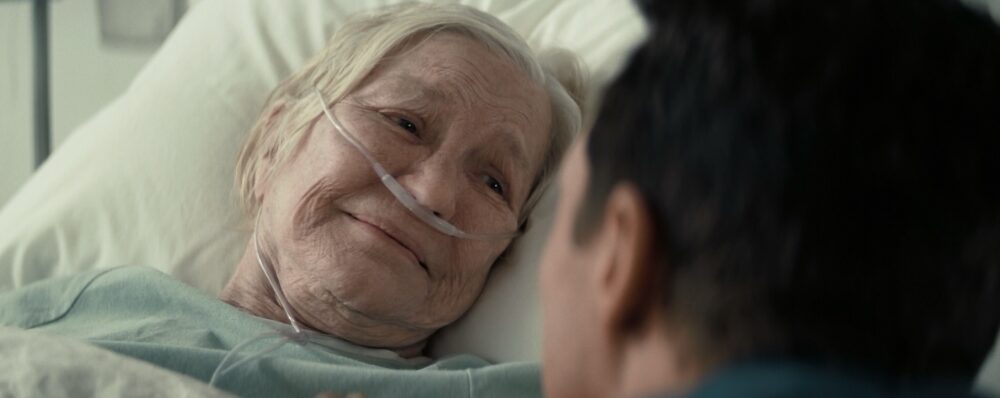
Decades later, when an elderly Murph (Ellen Burstyn) finally reunites with her father on a space station, she reveals the depth of her faith: âBecause my dad promised me,â she says, her voice fragile but full of conviction. The line is a gut punch, capturing the enduring strength of a childâs belief in their parent. Zimmerâs music, understated yet poignant, swells gently in the background, reinforcing the momentâs quiet power.
Murphâs faith is what makes the filmâs climax so cathartic. When Cooper communicates with her across time and space from within the tesseractâa surreal representation of a black holeâs higher dimensionsâhe doesnât use equations or logic. He uses love, sending her the data she needs to save humanity through the same bookshelf where she once believed in ghosts. Itâs a beautifully circular resolution, one that marries the filmâs scientific ambitions with its emotional core.
Hereâs addressing the elephant in the room. Is the movieâs handling of love as a transcendent force heavy-handed? Sure. Dr. Amelia Brandâs (Anne Hathaway) monologue about loveâs capacity to transcend dimensions drew ridicule from some quarters. But to dismiss this as hokey is, I think, to miss the point. Love, like gravity, is not something that can be easily quantified or explained. It operates on a level that defies logic, and itâs that very intangibility that makes it so powerful. For what itâs worth, itâs what drives Cooper to risk everything, what fuels Murphâs determination to save humanity, and what ultimately redeems their fractured relationship.
Realizing Nolanâs Vision
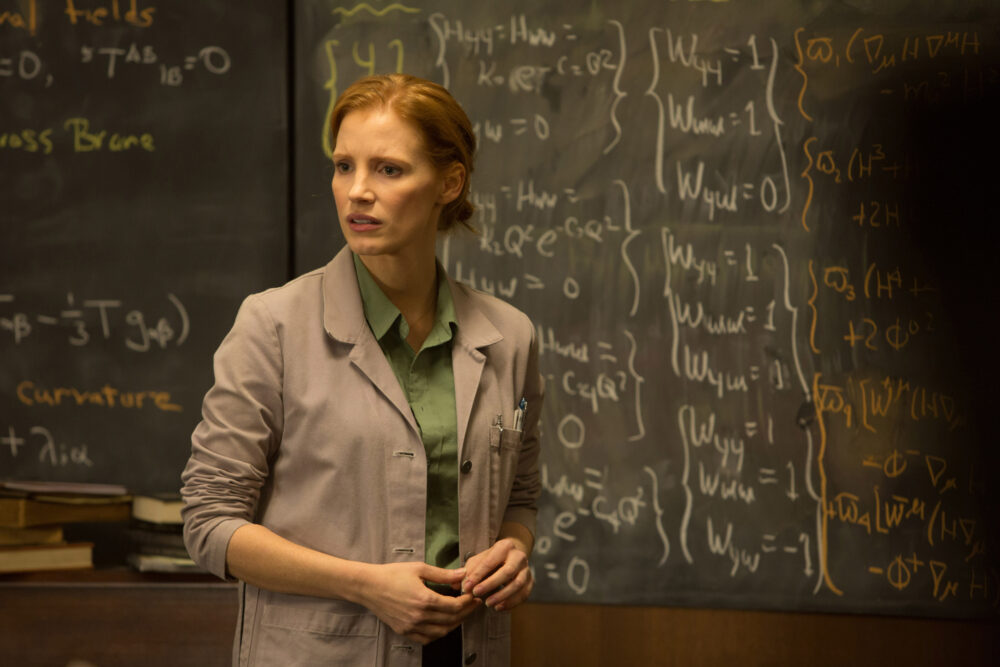
While âInterstellarâsâ emotional depth is its foundation, its technical achievements amplify its impact. Nolan assembled an extraordinary team to bring his vision to life, and their contributions make the film as much a marvel of craftsmanship as it is a work of storytelling.
Cinematographer Hoyte van Hoytema, in his first collaboration with Nolan, brings a tactile, immersive quality to the visuals. Known for his naturalistic approach, van Hoytema captures both the stark desolation of Earth and the otherworldly beauty of space with equal mastery. The dusty, sun-bleached landscapes of Earthâs failing ecosystem are a study in visual contrast to the glossy, inky blackness of the cosmos. His use of IMAX cameras enhances the sense of scale, pulling the audience into the vastness of the universe while maintaining a sense of intimacy during quieter moments.
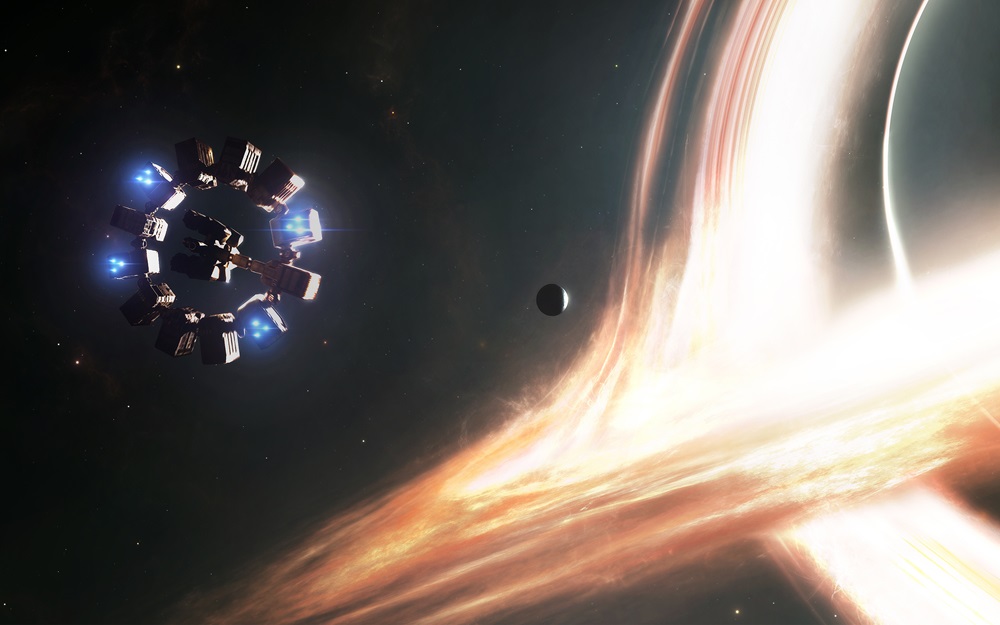
The filmâs design, too, is a triumph of practical effects and meticulous planning. The spacecraft Endurance, with its modular, circular design, feels plausible and lived-in, a far cry from the sleek, improbable ships often seen in science fiction. The black hole Gargantua is a visual masterpiece, with its depiction (having a luminous accretion disk) based on real scientific equations provided by Kip Thorne.
Finally, Zimmerâs score, built around the haunting resonance of a pipe organ, is another defining feature of the movie. Nolan asked Zimmer to write music inspired not by space, but by the bond between a father and his child. The result is a minimalistic suite that evokes the works of Philip Glass; the music feels both grand and deeply personal, its crescendoing chords capturing the filmâs duality: the infinite scale of the cosmos and the intimate emotions driving the story.
Addressing the Criticisms
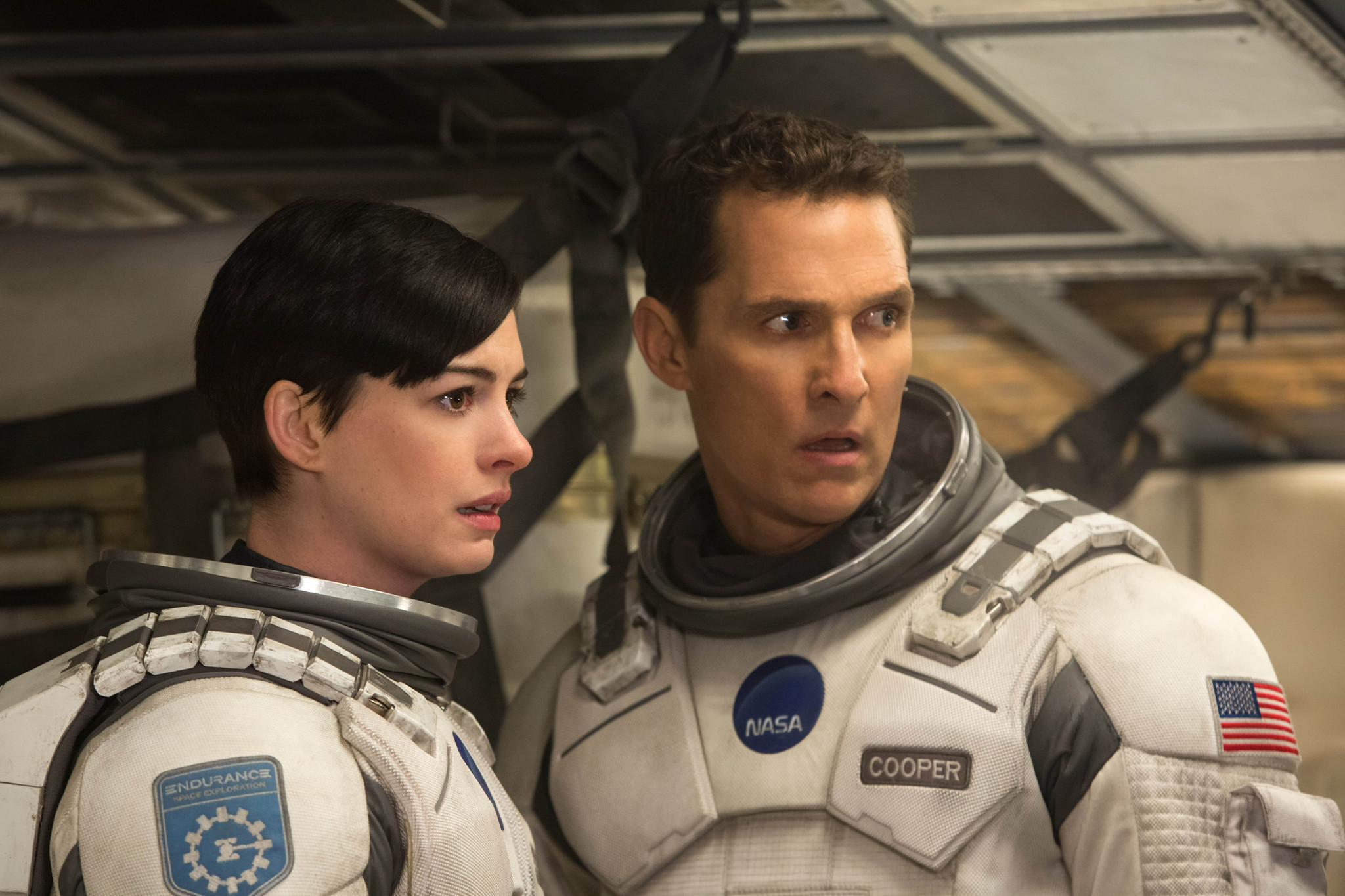
Even as I defend its status as a masterpiece, the film is not without its flaws. Its detractors have raised valid points, and it would be disingenuous to ignore the criticisms leveled at it.
Excessive Exposition
One of the most frequent complaints is that the movie relies too heavily on exposition. Yes, âInterstellarâ is verbose. Characters like Dr. Brand and Romilly (David Gyasi) frequently explain complex scientific concepts to one another, and some of this dialogue feels more like a lecture than natural conversation. While this criticism has merit, I see it as a necessary tradeoff. The film grapples with ideas like time dilation, wormholes, and black hole singularitiesâconcepts that are not immediately intuitive to most viewers. Without these explanations, much of the narrative would be inaccessible.
Moreover, this expository dialogue is balanced by moments of profound visual storytelling. Consider the scene on Millerâs planet, where the ticking of the score zeroes in on the terrifying reality that every second spent there costs years on Earth. That sequence communicates the stakes of relativity far more visceral than any dialogue ever could. In moments like this, Nolan (and, in this case, Zimmer) lets the visuals do the talking, proving that he knows when to step back and let the medium speak for itself.
The “Love Conquers All” Theme
Last night, I talked to a good friend over dinner who, as a casual moviegoer, found this narrative plot point off-putting. âIt couldnât have been just that!â she said, hinting that it felt like Nolanâs cop-out to the labyrinth he had created himself. The notion that love is a universal force capable of transcending dimensions has been derided as corny or hokey. Some critics took issue with the assertion that love is a universal force akin to gravity. To them, this idea felt incongruous with the filmâs otherwise science-driven approach.
But isnât this criticism missing the point? âInterstellarâ doesnât present love as a scientific fact; itâs a thematic counterweight to the cold rationality of the filmâs scientific elements. Nolan isnât claiming that love can literally bend space-time; heâs suggesting that our emotional connections are as fundamental to our humanity as our intellect. Simply put, the director argues that itâs not about proving that love transcends time and spaceâitâs about showing that our humanity cannot be reduced to equations and data. In a story about survival, both personal and species-wide, this balance between reason and emotion feels essential.
Underdeveloped Supporting Characters
This, I can agree with. Characters like Romilly and Doyle (Wes Bentley) are underwritten. While itâs true that these characters are more functional than fully realized, this choice reflects Nolanâs priorities, and to expect âInterstellarâ to function as an ensemble drama is to misunderstand its focus.
The film is not an ensemble pieceâitâs a deeply personal story about Cooper and Murph. Based on a screenplay Nolan co-wrote with his brother Jonathan, âInterstellarâ is populated by supporting characters who exist to serve the central narrative. And while they may lack depth, they are not without purpose.
The âKubrickianâ Conundrum: A Comparison and a Rebuttal
Comparisons between âInterstellarâ and Stanley Kubrickâs â2001: A Space Odysseyâ were inevitable. Both tackle humanityâs place in the universe, confront the unknown, and blend philosophical musings with groundbreaking visual effects. But I would argue that âInterstellarâ is not Kubrickian in the traditional sense. Kubrick approached “2001″ with a detached, almost anthropological perspective. His film invites awe but keeps the audience at armâs length, leaving much of its narrative deliberately opaque.
Where Kubrickâs work is deliberately opaque and emotionally distant, Nolanâs picture is unabashedly sentimental. By contrast, the latter wears his heart on his sleeve. He doesnât shy away from sentimentality, nor does he mask his intentions in ambiguity. Indeed, when âInterstellarâ was released 10 years ago, some critics saw this as a weakness, lambasting Nolan as a clunky storyteller whose love for exposition couldnât save him from writing an emotional scene. Even so, I saw it as a strength. Nolanâs vulnerability and imperfect way of expressing his feelings through his characters are keys to setting âInterstellarâ apart. It invites us not just to marvel at the universe but to feel its impact on our lives.
If anything, the movie is closer in spirit to Andrei Tarkovskyâs âSolaris,â which also blends cosmic exploration with intimate human drama. Like Tarkovsky, Nolan is more interested in the emotional and philosophical implications of space travel than in its technological aspects. This is not to say Nolan rejects Kubrickâs influence; rather, he uses it as a foundation to chart his own path. Another more appropriate comparison is to Steven Spielbergâs brand of emotional storytelling. Remember, Spielberg was initially attached to the project, and his influence lingers in the way the film prioritizes familial bonds over cosmic abstractions. Nonetheless, Nolan is no mere imitator; âInterstellarâ sees him forging his own path, one that balances rigorous scientific concepts with an emotional immediacy that Kubrick likely would have avoided.
All these, however, arenât to say that the movie is a rejection of Kubrick. If anything, itâs an evolution. Think of it as a step forward, not a homage. Nolanâs vision may lack Kubrickâs cold precision, but it compensates with warmth and humanity. This is not a sterile exercise in philosophical inquiryâitâs a full-throated celebration of what the filmmaker considers that which makes us human. While Nolan draws from Kubrickâs legacy, he forges his own path, one that is as much about emotional resonance as intellectual curiosity. And as “2001” probes, What is our place in the universe? Nolanâs film conversely asks, How do we hold on to the things that matter as the universe changes around us?
Why âInterstellarâ Still Resonates
What elevates the movie above its perceived flaws is its ambition. This is a movie that refuses to play it safe. It takes big risks, both narratively and emotionally, and while not all of them pay off, the sheer scope of its vision is breathtaking. With its willingness to embrace contradictions, âInterstellarâ becomes an epic story about the vastness of space, yet its heart lies in the intimacy of human relationships. It is rooted in scientific theory, yet it dares to explore the unquantifiable mysteries of love and sacrifice.
Visually, the film is a marvel. The depiction of Gargantua, the black hole at the center of the story, is both scientifically accurate and breathtakingly beautiful. Nolanâs collaboration with Thorne ensured that the portrayal of cosmic phenomena was grounded in real physics, lending an authenticity that few other sci-fi films can claim. And yet, for all its technical rigor, the most enduring moments are the simplest: a fatherâs tears, a daughterâs anger, a shared memory of an old bookshelf.
âInterstellarâ also speaks to our anxieties about the future. Its vision of a dying Earth, plagued by environmental collapse and dwindling resources, feels alarmingly prescient. But where many dystopian films revel in despair, this one offers hope. Itâs this tensionâbetween the infinite and the intimateâthat makes the movie so special. It reminds us that humanityâs greatest strength lies in its capacity to adapt, to explore, and to endure.
Post-âInterstellarâ: A Legacy of Originality
Looking back, the movie marked a turning point in Nolanâs career. By 2014, he had already proven himself as a blockbuster auteur with âThe Dark Knightâ trilogy and âInception.â But with âInterstellar,â it solidified his status as a brand, armed with a reputation as one of the few filmmakers capable of delivering original, ambitious stories on a grand scaleâeven at the risk of alienating some viewers.
This trend continued with “Dunkirk” (2017), an unconventional war drama that eschewed traditional narrative structure in favor of an experiential approach. Despite its experimental nature, âDunkirkâ was a Box Office success, grossing over $500 million worldwide. Nolan followed this with “Tenet” (2020), a high-concept sci-fi thriller released during the height of the Covid-19 pandemic. While its reception was more divisive, it still earned over $350 million globallyâa testament to Nolanâs ability to draw audiences even under unprecedented circumstances.
Most recently, 2023âs “Oppenheimer” demonstrated that Nolanâs name alone is enough to turn a three-hour biopic about a physicist into a global phenomenon. The film earned over $900 million worldwide, making it one of the highest-grossing R-rated movies of all time. Together, these films prove that Nolanâs commitment to originality and storytelling continues to resonate with audiences, even in an era dominated by franchise filmmaking.
âInterstellarâ: A Masterpiece Beyond the Stars
Ten years later, âInterstellarâ stands as a testament to Christopher Nolanâs ability to marry technical innovation with emotional storytelling. And yes, Iâll be the first in line to say that while it isnât a perfect film, it is nevertheless a profoundly human one. Its flawsâwhether they lie in its heavy-handed dialogue or its philosophical aspirationsâare part of what makes it so compelling. This is not the work of a detached craftsman, but of an artist unafraid to bare his soul.
Ultimately, âInterstellarâ is about more than wormholes and black holes. Fundamentally, itâs a film about loveâmessy, irrational, and utterly essential. It dares to ask questions that science cannot answer, and in doing so, it becomes something greater than the sum of its parts. For all its imperfections, Nolanâs personal love letter to his kids is a masterpiece, and it will always have a special place in my heart.
“Interstellar” is available for streaming, rental, and purchase on Max and Apple TV. Follow us for more coverage.




