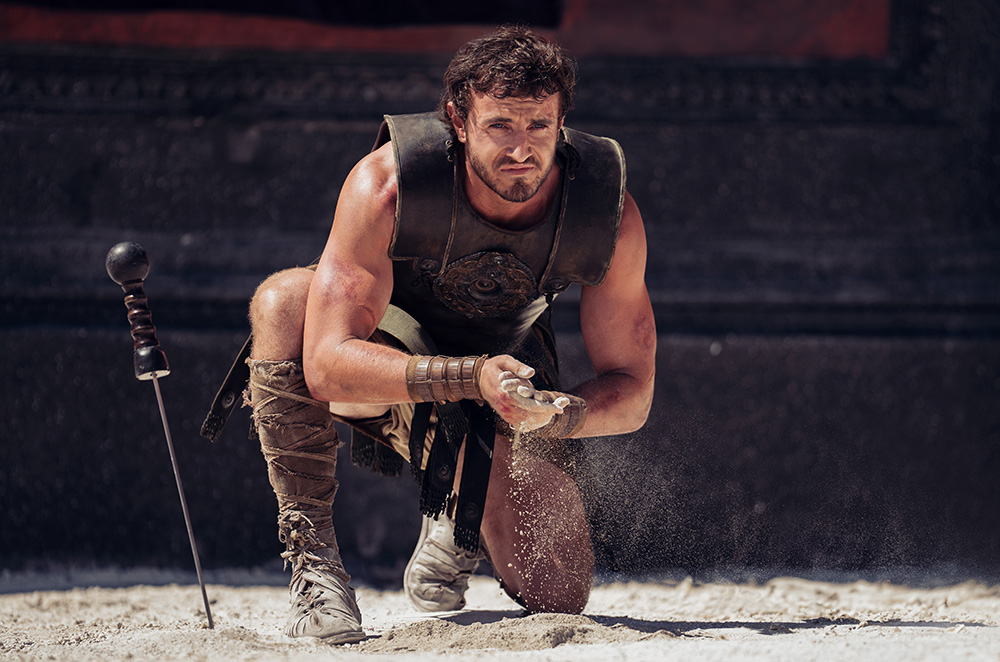
 Ridley Scottâs âGladiator IIâ was bound to be compared to his 2000 blockbusterâand it has. But honestly the two have little in common with the other. Yes, this film follows Lucius, who was a young boy in the original, and re-casts Connie Nielsenâhis motherâwho had an affair with Russell Croweâs âMaximus.â And it features a return to the Colosseum, gladiatorial fights, and tyrannical defiance. However, the Rome of the original film is not the Rome of Scottâs sequel. And as suchâfeaturing twin, despotic emperorsâthe film ultimately drops the ball in showing the cityâs decadence and what living in such a frivolous and dangerous time is like. The film instead focuses too much time on political debauchery and power struggles, alongside a performance from Paul Mescal as Lucius which is the filmâs greatest asset. Â
When we first met Lucius, he is living in the African kingdom of Numidia under the name Han-no, fighting alongside his wife (Yuval Gonen) to protect his home from an invading Roman fleet. Leading the charge is General Acacius (a good Pedro Pascal), and the film takes on a violent tone. The battle sequence is enthrallingâScott is clearly showing off the filmâs $250M budget. But what I found the most interesting is the way Han-no criticizes the Romans as barbarians who only own things they have taken by force. Heâs not wrong. It makes it hard to align with Pescalâs Acacius later in the film when itâs shown he’s a decent man trying to undo a tyranny. But these are complicated times, and nothing is simple.Â
Bigger Cinematography and Scope
Han-no is of course captured, and his wife killed. It sets up a rage and blood-lust to kill Acacius he can barely contain. Heâs now a slave, and is purchased by an interested party, Macrinus (Denzel Washington), who recognizes his rage as something he can profit from. A gladiatorial fight or two later, and Han-no is in Macrinusâ good graces. He promises him Acaciusâ head; and later, when we see he has the power to deliver, it lands in an odd way. Who is Macrinus and what is his story? âGladiator IIâ will later explain, but I found the proceedings a little too convenient and ambitious for the filmâs scope.Â
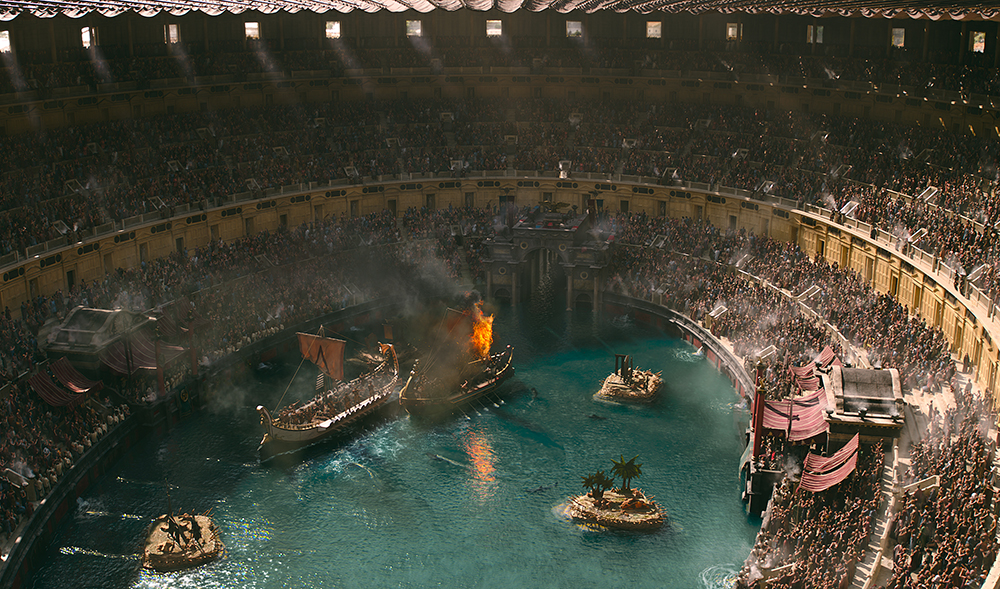
What works about âGladiator IIâ is the cinematography and scope, which goes bigger on some things, but not necessarily better. The opening gladiatorial fight I found ludicrous, pitting the slaves against a horde of CGI baboons, which looked more like mythical monsters in a fantasy epic than flesh-and-blood animals. The same over-the-top treatment is given to a subsequent battle where the Roman Colosseum is filled with water for a ship battle. Sharks infest the waters, and I couldnât help but become distracted by how fictitious this was. I had to look to be sure, but Romans would not have been able to transport sharks to an arena for a number of reasons. The scenes are obviously meant to top the feats of âGladiator,â but the very real and dangerous lions and tigers were a better fit.Â
Overly Ambitious this Time
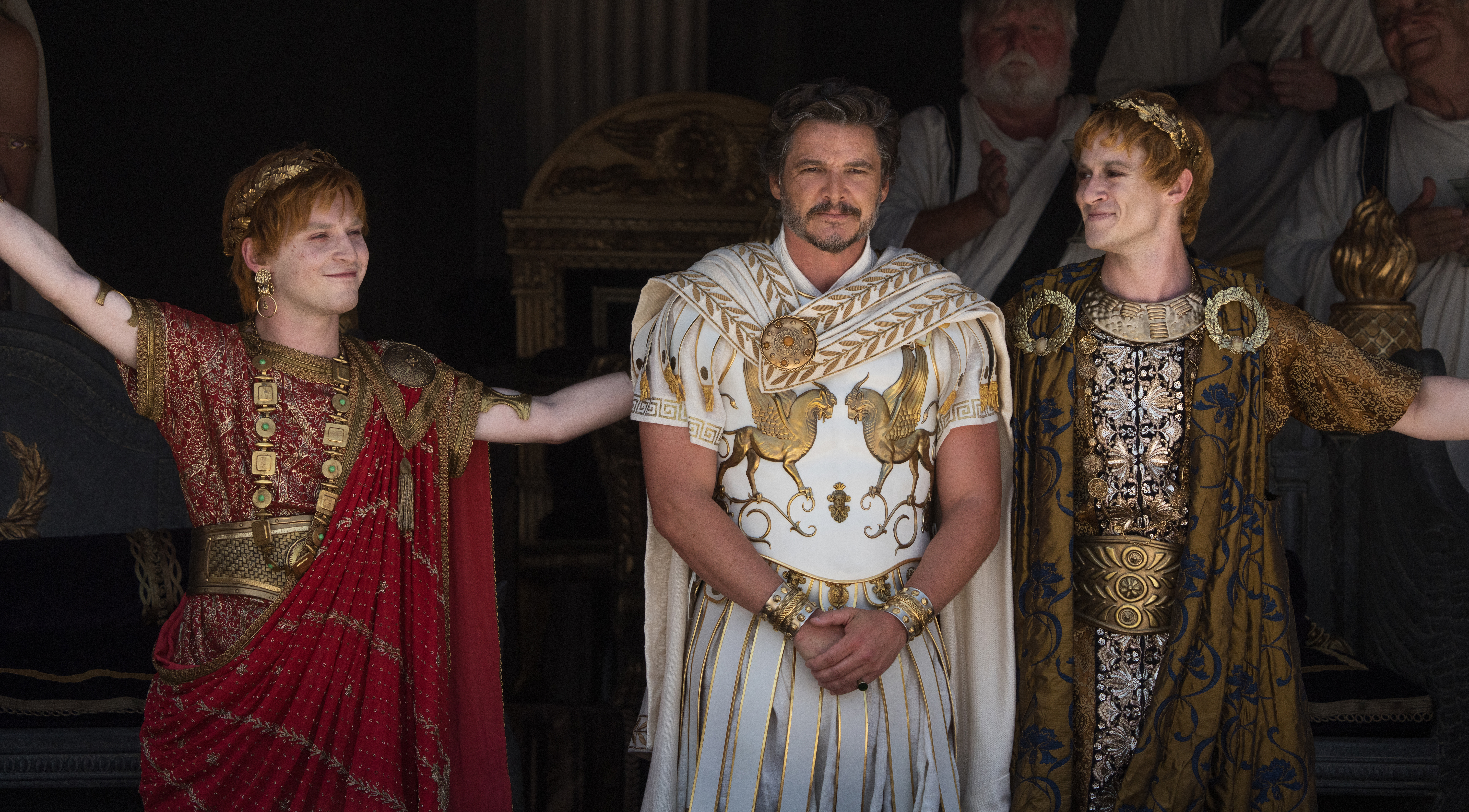
I found it all too ambitious, and the run-time (7 minutes shorter than Scottâs first, âGladiatorâ) to be too short. In Scottâs first foray there was the quest of a husband to avenge his slain family, with a minor plot to save Rome somewhere in its longings. The run-time was adequate, and the characters aptly built. Here, however, thereâs simply too much happening and not enough time to cover it. But worseâto meâwas the missed opportunity to show the horror for ordinary men and women to live under tyranny. The film focuses on the decadence of its emperors Geta and Caracalla (Joseph Quinn, Fred Hechinger) and the mischievousness of Macrinus, with side plots devoted to Acacius and Lucius. As a result thereâs too much going on to invest in the characters, a lot of which is distracting and hits less emotionally than I imagine Scott hoped.Â
Mescal Brings the Power

Quinn and Hechinger are apt; as callous, bloodthirsty-for-their-amusement emperors, they felt more authentic to me than Joaquin Phoenixâs character from “Gladiator.â In history there were monstrous Roman leadersâNero and Caligula come to mindâand they embody that horror. They both act well, but unfortunately Scott has other ideas for his narrative than to outline Roman barbarism, to the filmâs detriment. Alongside them, Pascal does the best he can with the material, which starts him as a weapon of an empire and has him later fighting for its soul. His scenes with Mescal are filled with tensenessârightlyâbut his scenes with his wife, Lucilla (Nielsen) are filled with love and joy. Heâs tasked with a lot, and delivers. A scene toward the end with Lucius is believable, even if a similar scene between Nielsen and Mescal later in the film feels forced.Â
Of Missed Opportunities
Much critical buzz has been aligned with Denzel Washingtonâs performance here. And while it’s adequateâthe actor is pleasing as alwaysâI found Macrinusâ character given too much screen-time and conflict. He plays chess with the Roman Empire; and while it is always fun to see evildoers get their comeuppance, when you realize Macrinus is just as badâor worseâit loses its effect. It also felt hamstrung and forced. I took pause at some commentary from film critics claiming the film spent too much time on the âslave to heroâs journeyââaimed at Mescalâs characterâbut failed to see its applicability to Macrinus. The whole thing was a bit much to me, and lost believability. The closing scenes between Mescal and Washington are powerful but constrained. This is not the actors’ fault, I feel, but the script and cram-packed plot elements.Â
All-in-all âGladiator IIâ is a fine film. Itâs good entertainment, and a loud, thrilling time at the cinema. It features only one of the original screenwritersâPaul Franzoniâwhich might be to blame for part of its overstuffed nature. Thereâs many stories online these days about the inputâalbeit harshâRussell Crowe added to the first filmâs writing. And despite his scathing comments, maybe his input helped elevate that film. Or perhaps âGladiator IIâ was a film Scott felt he had to make rather than one he wanted to. It has the battles, it has the clashes, soundtrack, and majesty. However it lacks the heart. With a more dedicated focus on the tyranny of ancient Romeâand less a redux of the first filmââGladiator IIâ could have made a definitive statement.Â