





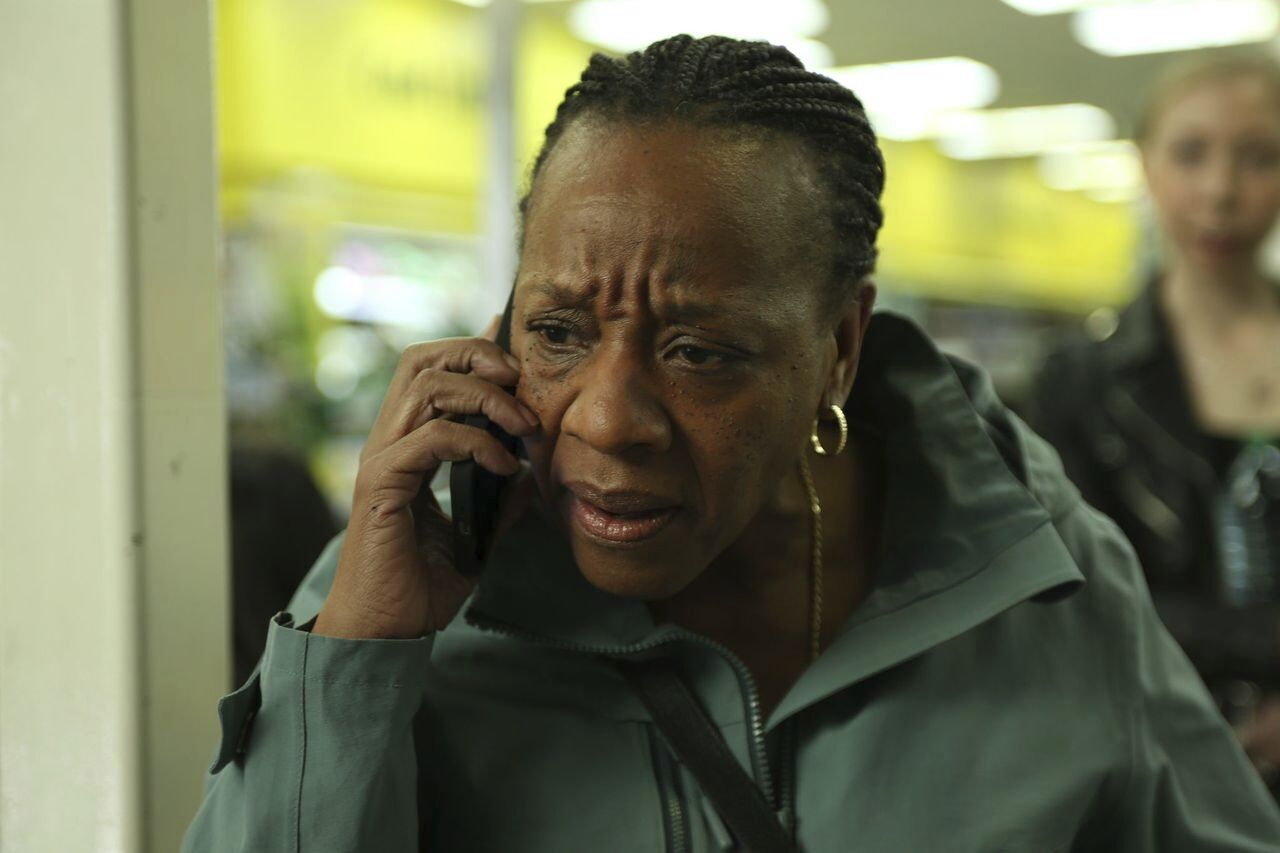
Pansy (Marianne Jean-Baptiste), the confrontational, cantankerous and miserable spitfire in Mike Leighâs âHard Truthsâ is so relentlessly combative that many of her diatribes are funny. Not like, funny âcause itâs true, more like funny as a defense mechanism. Pansyâs perspective is so hardened and unyielding, her despair so deep, the only way to create some distance from her vortex is to allow for a laugh (from a comfortable distance). Deploying adjectives to describe her is insufficient, so, an example: sheâs the type of person who will shout at a happy couple in a furniture store, telling them to keep their feet off the couches. You donât own that couch, take it somewhere else! Â Itâs not her store, let alone her couch, but this is all Pansyâs world, and since itâs a Mike Leigh film, itâs more complicated and spacious than what Pansyâs purported maladies and endless complaining reduce it to.Â
Linking up for the first time since the Palme dâOr winner âSecrets & Liesâ (1996), Jean-Baptiste and Leigh conspire to test and subvert viewersâ sympathies, daring them to imagine life as or living with Pansy. Famously, Leigh doesnât start a film off with a script, or even a concept, preferring first to find people and let them rehearse. That has, by his own admission, made it terribly difficult to make films, at least in the way heâs done it for fifty-plus years. Leighâs previous film âPeterlooâ (2018) was a period drama financed by Amazon. It received mixed reviews, and at a budget of $18 million, was a veritable Marvel movie compared to the intimate human dramas that Leigh has mastered for decades. Returning to middle-class, modern-day London, Leigh might be blowing off some steam, unleashing Pansy as an avatar of dejection, pleading her case to anyone willing or unwilling to listen.Â
Overwhelming and Sudden Emotions
For all that Pansy puts out in the world, sheâs unable to articulate the root cause of her suffering. She alludes to health problems (âIâm a sick woman!â), and spends time on the couch or in bed, but those arenât necessarily red flags for severe sickness. And her doctors donât seem overly concernedâunless they just want to get her out of the office, which her dentist (Hiral Varsani) politely and passive-aggressively suggests she do. Leigh keeps grinding away, taking a small hammer to a giant nail to reveal the sources that clearly contribute to Pansyâs anger and depression. Her husband Curtley (David Webber) barely speaks to her, and interrupts a midday nap (Pansy jolts awake as if someone is there to murder her) to tell her that the kitchenâs a mess. When Pansy shouts at him to clean it, Curtley doubles down, asking if sheâll be cooking dinner.Â
On the topic of mealtime: in a callback to âSecrets & Lies,â Leigh takes a scalpel to Pansyâs troubles during an especially strained Motherâs Day brunch. After Pansy visits her motherâs gravestone with her sister Chantelle (Michele Austin), they go back to Chantelleâs to eat. Curtley and their son Moses (Tuwaine Barrett) are already there, chewing in silence, staring into a void. Itâs a startling and uncomfortable scene, less shrill than the high-pitched score-settling in âSecretsâ but matching its intensity and unspoken disappointment. For once, Pansy smiles (when Moses says he bought her flowers), but that turns to laughter and then sobbing, which no oneâexcept for the kind and doting Chantelleâattempts to understand in the moment. The emotions are overwhelming and sudden, and for all the complaints about Pansyâs attitude, only Chantelle bothers to propose an alternative, or at least consider itâs not all manufactured in her head.
Somber, Yet Hopeful
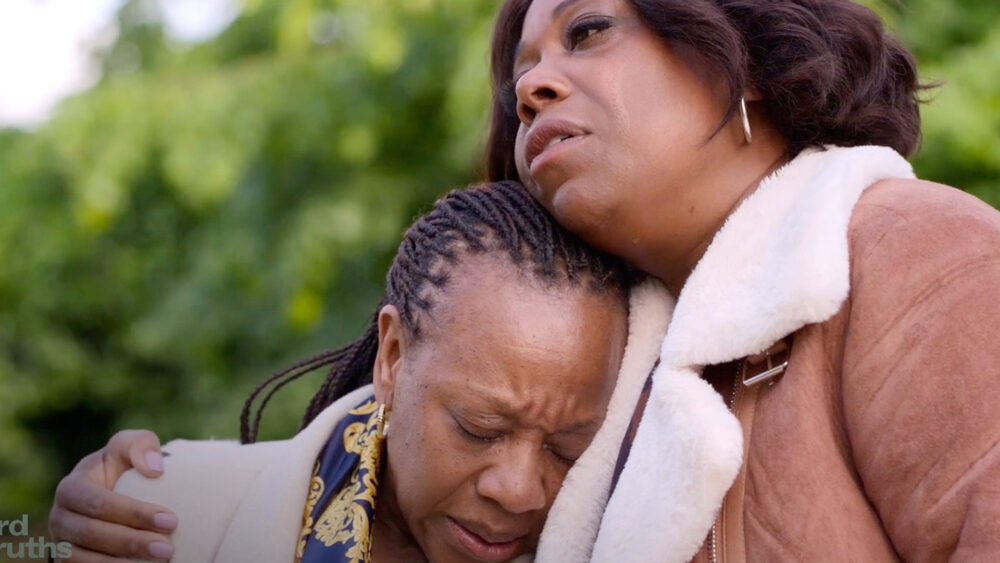
Jean-Baptiste is a force, her sensitive and live-wire Pansy so scorching that only Chantelle attempts to reach for her. On offense, Pansy is unstoppable, verging on violence but never quite threatening to go âFalling Downâ (1993). But when she picks the wrong battle, such as a scene in a parking lot when a man bangs on the hood of her car and insults her, Pansy backs into a corner, and stays there. Later, sheâll tell Curtley that she feared for her life, and itâs a rare moment of visible concern. After Chantelle encourages Pansy to leave him, she takes Curtleyâs clothes out of the closet and he throws her flowers into the backyard. The latter action is arguably the most vulgar moment in the film, and itâs a sad glimpse into the marriage that has been, and likely always will be.Â
From there, the film unwinds, and never fully resolves the intra-family conflict. And thatâs the most resonant feature of âHard Truths.â It wouldnât be possible for Pansy to change overnight, and this story doesnât belong to her alone. Leigh contrasts the dour circumstances of Pansy and her family with Chantelle, who chats up customers in her hair salon and jokes with her two young daughters. This suggests the potential for joy, which the film opens the door for at the end, when Moses chats up a stranger, smiles and accepts her offer of candy. We read his lips but canât hear the words, and the final shot literally closes where the film began, in front of the family house, credits then rolling to the delicate orchestral music (conducted by Terry Davies) endemic to a Mike Leigh joint. Somber yet hopeful, âHard Truthsâ fades from view with a shrug.Â
“Hard Truths” screened at the New York Film Festival, which concluded on October 14th. Follow us for wrap-up coverage.Â




