The âAlienâ franchise, in its solo incarnation (separated from the “Predator” films and the collaborations with such), is one of the best and most fascinating film series ever. Apart from its fantastic horror and sci-fi designs and creatures, each project has a different feel, both in terms of thematics and cinematics. The series began with a claustrophobic slasher, and many decades later, Ridley Scott took things to a whole other direction, crafting a psychological and multilayered exploration around god, its followers, and the creations he does not valueâor, as social media has perceived it as: âWhat if God was real and hated you?âÂ
Both âAlienâ and âPrometheusâ were related to one another via lore. But the two are independently vast and divergent. You couldnât have imagined they were connected if it wasnât for that central figure called the Xenomorph. It has been seven years since the last film in the franchise, âAlien: Covenant,” was released to a divisive crowd who wanted a back-to-the-basics thriller instead of the theological venture into the mind of a mad scientist. (In other terms, they wanted less âPrometheusâ and more âAlienâ or âAliensâ). Because of how “Covenant” was received, it has taken a while to concoct another installment, sequel, or prequel.Â
Fede Ãlvarez’s Rendition of ‘Alien’ and the Land of Lost Opportunities
The producers and money-men wanted to ensure that what came next attracted audiences to theaters. So, they hand the spaceship keys to Uruguayan filmmaker Fede Ãlvarez to guide the next âAlienâ film. Titled âAlien: Romulus,” he ventures into the void of space with significant heft and verve. He crafts many spectacle-worthy horror and sci-fi set pieces with excellent production design, animatronics, and visual effects. Ãlvarez captures the claustrophobia of “Donât Breatheâ with the madness of his âEvil Deadâ remake. But what ruins the film dramatically is its reliance on nostalgia, particularly the distracting and disheartening use of a legacy character.Â
âAlien: Romulusâ begins on a distant planet with zero hours of sunshine. The sun is a thing of myth there. The land is barren of a kiss of light and full of shadows. The setting ties in with the people living there. They are followers of a corrupt political system that provides false hopes. The company that manages this planet from head to toe promises freedom yet does not do so. These people are just looking for a ray of light, a metaphor for a better life. They want a life that is not controlled by an administration that enslaves them into a routine act of backbreaking work and wishful thinking.Â
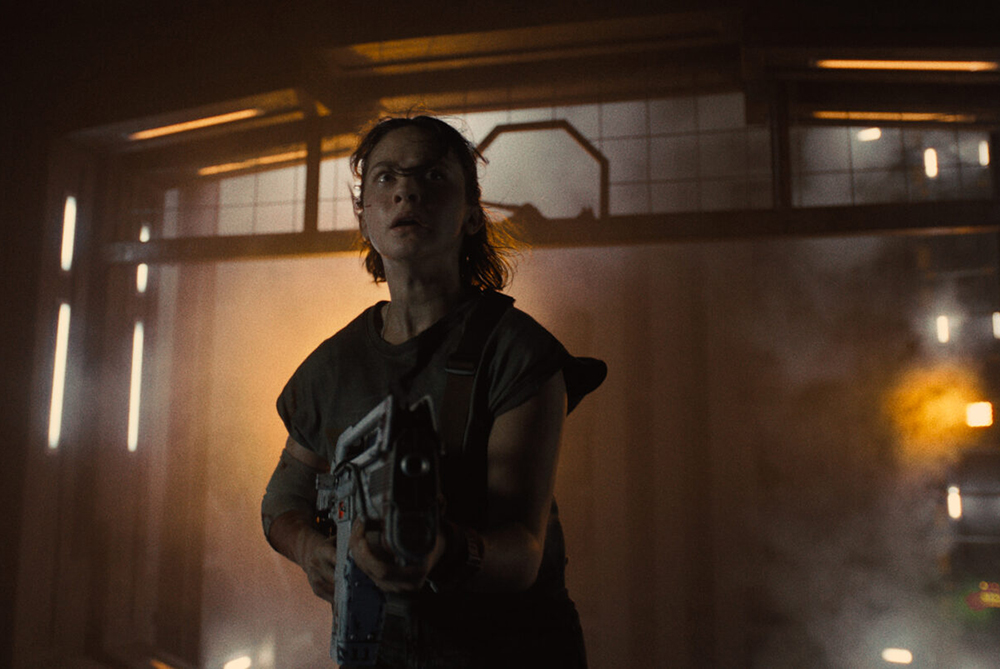
We see this dynamic in one of the filmâs first shots. The protagonist, Rain (played by the excellent Cailee Spaeny of âPriscillaâ) wakes up from her slumber; a spotlight lights her face on one half, and the penumbra covers the other. Rain has completed the scheduled hours for her release from the company. But she finds out that the demands have increased. This extends her miserable stay on this planet of shadows and living corpses. She is the emblem of perseverance amidst injustice. You feel the gloom behind each facial expression she makes throughout the movie.Â
No Other Choice But to Scavenge Through Space
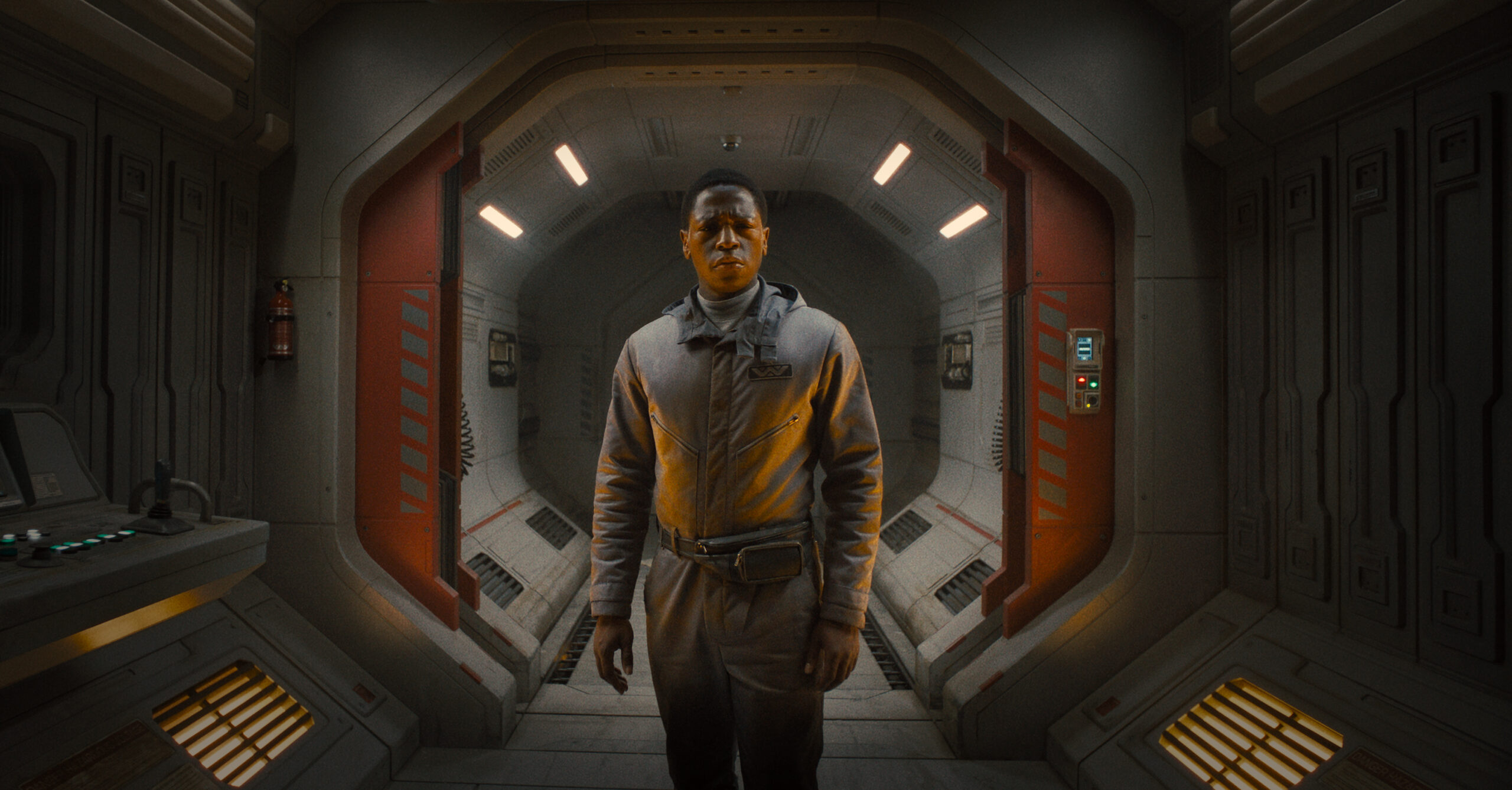
That guise is non-reliant on the horror that awaits Rain. Her aggravation by her inability to live in her wavelength and independence covers her face. In this introduction, Ãlvarez talks about third-world economic and governmental disparity, where the young, full of prosperity, are stripped of fruitful opportunities. This generation is hopeless and without a secure job after graduation. Without money to move around with, or at least enough to pay everything due or have liberty, they have only one choice. They must continue being at the wheel of companies unwilling to pay their employees properly and not care about them. Rainâs android companion, Andy (David Jonsson), wants to do everything in his will to make her life better.Â
Her father engraved this order into Andyâs core to keep her safe. There is nothing that he can do at the moment to help her. But when a crew of young scavengers asks for their help with a space venture that might get them a better life, Rain, at first reluctant to do so, goes along with the idea. If everything succeeds, they all head to another planet where the sun shines and the opportunities shine even more. What must they do? Check out an abandoned space outpost near their systemâs sun with cryosleep pods and steal them to make their nine-year journey to this desired destination feel like a joy ride. As youâd expect, problems arise immediately upon entering the outpost.Â
The pods do not have enough fuel for the entire trip. So, they must search the ship for it. A security malfunction triggers a defrost system as they head for the fuel tanks. This creates a chain reaction of face-hugger attacks, causing the supposedly abandoned outpost to become their nest for Xenomorph creations. They can run; they can hide. But none of them can escape these alien creatures. As the tagline for the original âAlienâ movie says: âIn space, nobody can hear you scream!â The scavengers beg for mercy and grow extremely worried about their chances of survival. The only way to escape with their âgoodsâ now is to face everything head-on. And so the slasher and sci-fi horror elements begin.Â
Excellent Techs Do Not Lift the Film Entirely
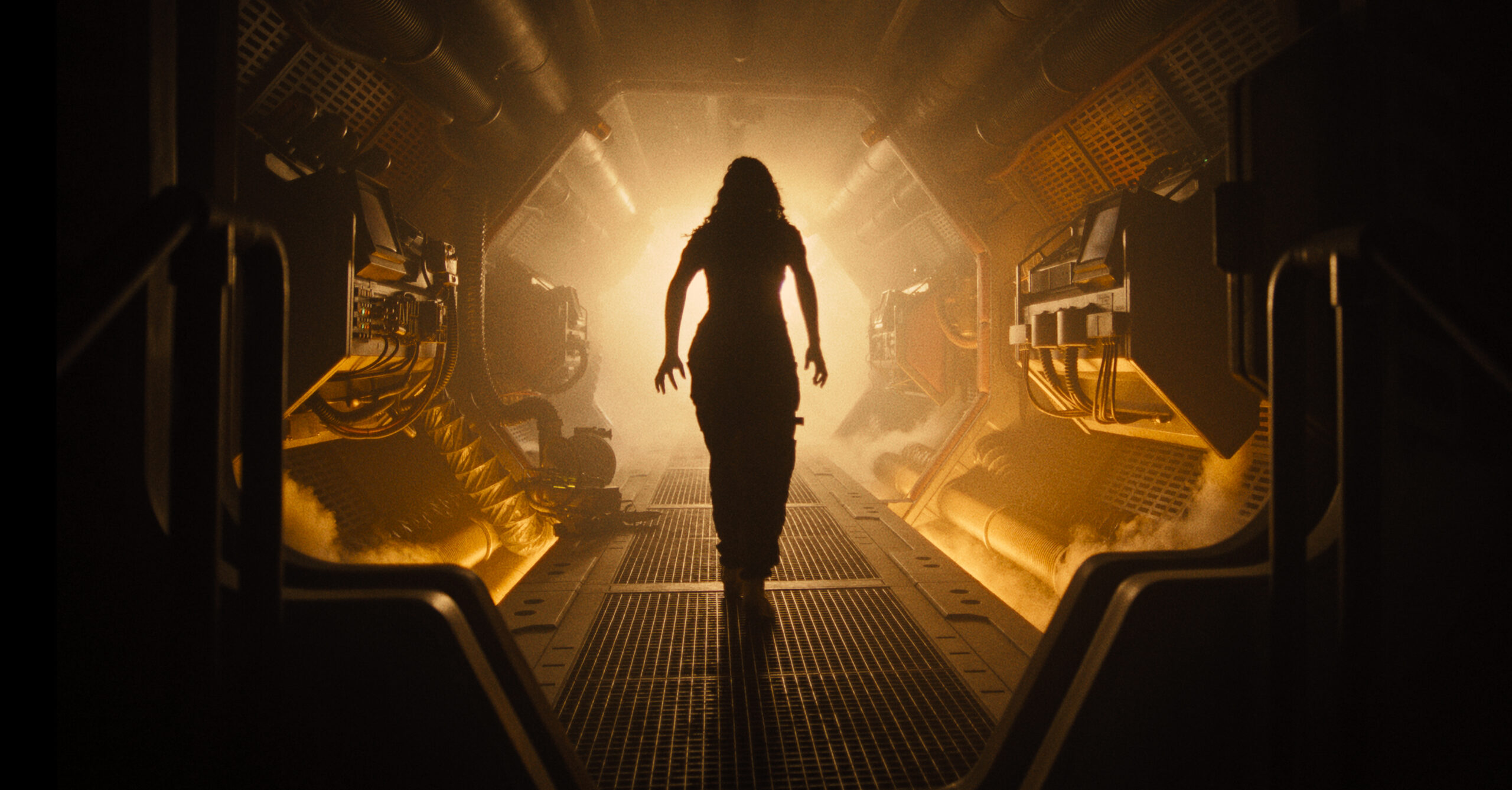
From a technical standpoint, âAlien: Romulusâ is an expertly crafted and truly admirable work. The team constructs the production design with precise attention to detail. It immediately immerses the viewer in each ship, terrain, planet, and confined space where the characters cram. With the help of visual effects and sound design, the film takes you back to the claustrophobic space slasher that we all fell in love with. You see solid set pieces that are both entertaining and thrilling. Ãlvarez uses elements not played with before in the franchise to create these slick set pieces, like zero gravity and the Xenomorphâs acid blood.
The crew behind each element of the production, whether the animatronics team or the ones handling the folly work for the various buttons, airlocks, and latches, deserve their many rounds of applause and bouquets. In a time where most big-budget productions feel extremely lazy, seeing this type of precision behind it genuinely lifts me up as a cinemagoer. In those terms, this franchise has never failed to meet expectations. However, âAlien: Romulusâ falters not because of Ãlvarez and companyâs popcorn entertainment; it does so due to the use of nostalgia and a shift in focus from an independent story to a âfan filmâ.Â
âAlien: Romulusâ suffers from the same mistakes that many legacy sequels or remakes contain. That is the urgency or ânecessityâ to remind the viewer that they are watching such a type of project by including more than a handful of nods and references to the previous installments. Some shots refer to David Fincherâs âAlien 3â and James Cameronâs âAliensâ. There is also the use of the classic Ripley line, âGet away from her, you b*tch!â which, in the way it was said, made me cringe greatly. However, those references were not the main culprit that took me out of the experience. It was the return of a legacy character.Â
The Dishnorable Use of a Legacy Character
In âAlien: Romulus,” an essential character from the original 1979 film returns via âthe magic of the moviesâ and A.I. to have a prominent role. A man who passed away not so long ago is resurrected through horrid CGIâbrought back from the dead via modern technologyâto be an exposition dump character. You look at the creation, and it is completely disheartening. There is no life between its eyes. Much like the androids in the franchise, the character is rid of all its human elements and vivacity. This becomes a haunting image for the future of Hollywoodâdisrespecting those who gave their heart and soul to the craft.Â
What was the necessity behind using the character? If you love the franchise, why would you do this? It sends more chills down your spine than the yearâs best horror flicks. You see how big production companies are beginning to use A.I. and the likeness of actors without integrity, responsibility, or respect. The film immerses you until this image appears before and after each solid set piece. It distracts the viewer. It made me think about how morbid it feels to look at a legendary actor being brought to life in the most dishonorable way. Your mind goes back to him, no matter how good the set piece is.Â
I read a few comments from critics on Twitter (X). One of them called the use of this character ânecrophilic nostalgia.” And although the term necrophilia relates to taboo, the critic who said such put the nail in the coffin. It is, in fact, necrophilic. Instead of placing a bouquet on a grave, they pull the body from where it rests like a hyper-connected Dr. Frankenstein creation. But in this case, the mad doctor is Ãlvarez, and the people who approve of this. Those who decided to maneuver the fascinating narrative and thrill ride that was âAlien: Romulusâ to a nostalgia fest, where everything is remembered but not honored, are at fault. In the last twenty minutes, you see the story unrelated to the legacy character.Â
Ãlvarez implements some âPrometheusâ and âAlien: Covenantââlike shifts in the story that take you off guard. It immediately gets your attention. He applies gene-splicing, maternity, and creation themes to a unique creature design. I loved that last strand and battle. It demonstrated that Ãlvarez did not need to use nostalgia all this time. He could have focused on what separated his rendition of an âAlienâ film instead of trying to please people and âplay the greatest hits.” âAlien: Romulusâ has many things in its favor, like the production design, score, and whatnot. But the lifeless vessel birthed by irresponsible visual effects stains the project entirely.Â


“Alien: Romulus” hit theaters across the U.S. on August 16th, 2024.