





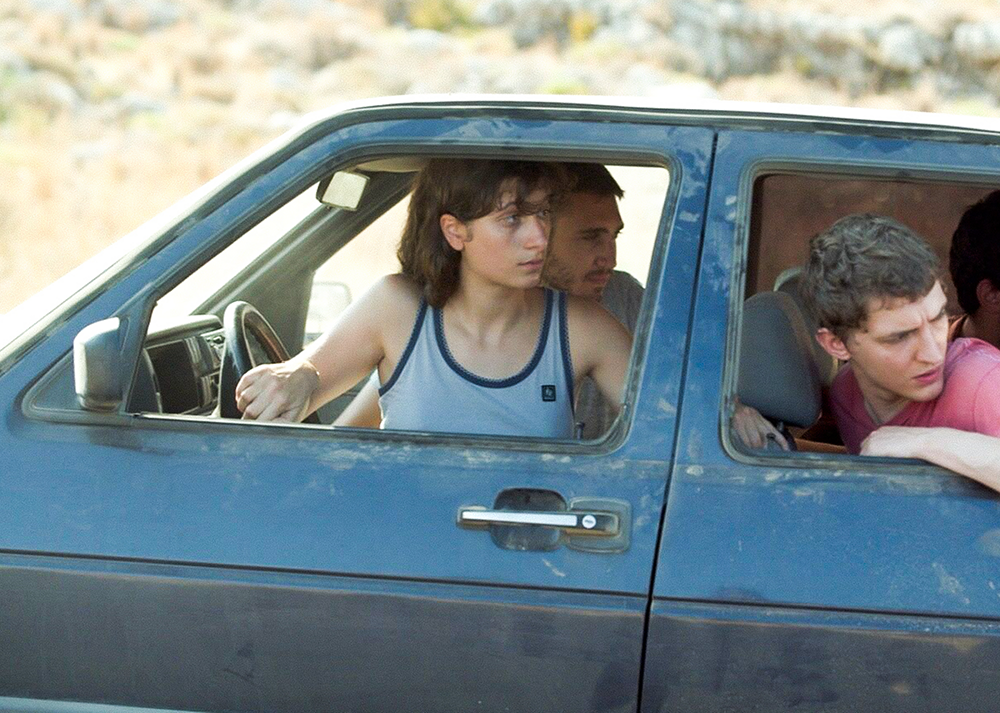
Silence reigns for so much of Angela Schanelecâs bold, brooding and stealthily uplifting âMusicâ that the title itself starts to feel like itâs an inside joke. Then again, the absence of lyrics could heighten a songâs impact, just as a lack of dialogue raises its importance in a film, and in this case, Schanelec (âI Was at Home, But â¦â) builds tension with whatâs not said, emphasizing whatâs sung, avoided entirely, or acted out on in its place. Itâs a challenging film, allergic to turnkey explanations. Best viewed not as a puzzle to solve, the pleasures of this fractured mosaic unfold only after the earthquake of unspeakable pain diminishes, permitting room for reflection and recovery.Â
Despite her stature as a founding member of the Berlin School, Schanelecâs films are often harder to find than peers Thomas Arslan (âGoldâ) and Christian Petzold (âAfire,â âBarbaraâ). By my count, none of her feature films are available to stream, leaving her (would-be or actual) fans at the mercy of international festivals and arthouse cinemas. Fortunately, Film at Lincoln Center has given âMusicâ a theatrical run in New Yorkâit did the same for âI Was at Home, But â¦ââand The Cinema Guild has planned a nationwide rollout. Far from a lark, this elliptical, understated film isnât trying to fool or jolt an audience. Schanelec shuffles the order of events, but as sheâs said, just because something is omitted, doesnât mean it didnât happen. So, a plot description or itemized list of what was elided couldnât possibly substitute for the effort of watching and witnessing.Â
Schanelec Doesn’t Linger
Still, some synopsis is in order. So, here goes. Jailed for what appears to be an accidental murder, Jon (Aliocha Schneider) catches the attention of Iro (Agathe Bonitzer), a generous prison guard whose impulse is to heal Jon, no questions asked. In customary Schanelec style, the action hops back and forth, then lurches forward to fill in any glaring narrative gaps. Itâs a controlled, meticulous film, only loose or abstract on the surface. The death we see first is only explained halfway through the film, and even then, the rationale is murky, almost inconsequential to the redemption story which takes over. Iro starts off buying cream and bandages for Jonâs badly bruised feet (an important body part in the film), and next, sheâs at a supermarket buying water (another ubiquitous metaphor) bottles for the children heâs teaching outdoors. Parked among those children is a stroller, holding Iro and Jonâs daughter.Â
No detail is too small, and yet, Schanelec doesnât linger (besides on the occasional hand, foot or body of water). She just goes, trusting that weâll catch up at our own pace. The grim materialâall physical violence happens offscreen, conjuring Michael Hanekeâcontrasts with the pursuit of joy, which for Jon is music. In his prison bed, Jon listens to classical music on cassette, rising up almost involuntarily to meet the operatic verse at its peak. Eyes closed, heâs performing for himself, willing out from his body the regret, fear and, deeper down, joy into the world. And later, when another tragedy renders him numb, Schanelec plants Jon in a studio to play guitar and croon (Doug Tielli wrote the songs), his wounded voice a mash-up of Michael Stipeâs and Jeff Buckleyâs, or just suggests to me the cruel fate of the latter musician. Â
A Voice that Stands Out
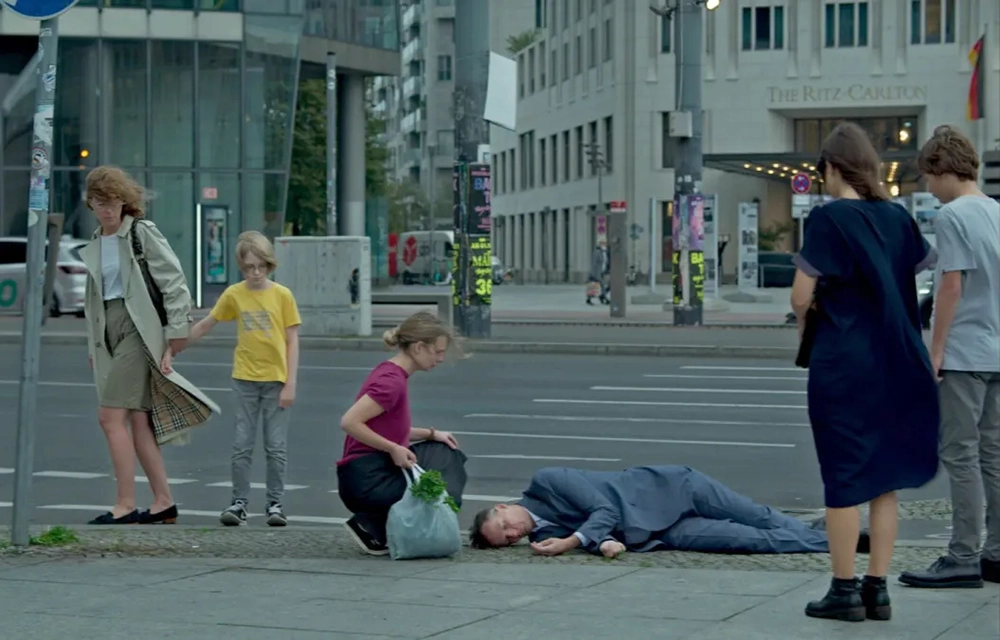
Similar to Robert Bressonâan avowed touchstone for Schanelecâthe actorsâ performances are of secondary importance to the authorâs vision. But, that isnât to say Bonitzer, Schneider, et al fail to leave their marks. Submitting to Schanelecâs scriptâbased on the Oedipus mythâthe models (to borrow Bressonâs preferred term) are challenged to withhold, to burrow so far inward, that the only way out is to embrace life or cede to death, although neither outcome is a cure-all. That a film containing so much agony and darkness could emerge hopeful might be up to the viewerâs particular background or interpretation, but Schanelec reminds us that a difficultâa slow-burning, non-linear narrative bathed in religious and mythical loreâfilm rewards patience, and Schanelecâs voice stands out for how it manages to be at its most searing and articulate when she holds down the mute button.Â
Angela Schanelecâs âMusic,â is playing in select theaters nationwide.Â




