





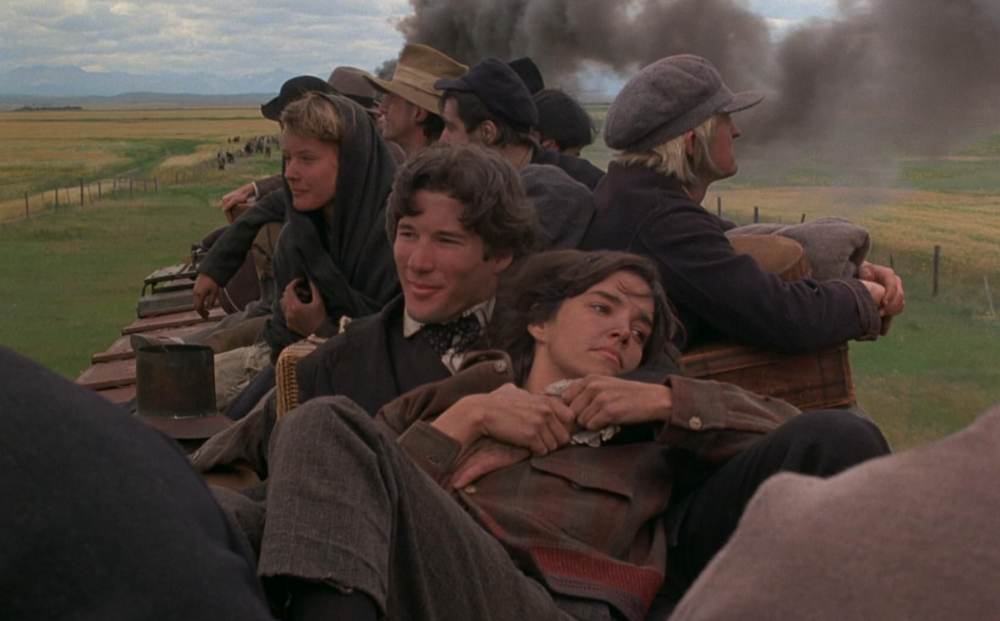
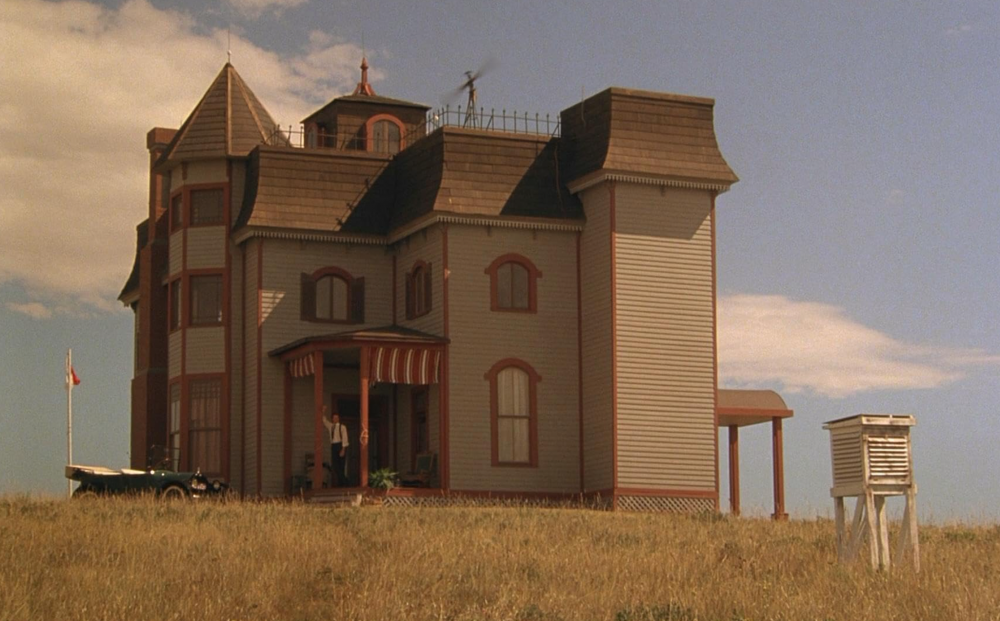
In a recent New York Times profile, Jack Fisk, ace art director for Terrance Malickâs “Days of Heaven” recalled the daunting effort to construct an early-twentieth century mansion on a strict time and monetary budget. Fisk was âtoo dumb to know it was all impossible;â and itâs that combination of stubbornness and raw creative talentâMalick and Fisk just two components of the wholeâwhich contributed to the dreamy texture of this meticulous masterpiece. Malickâs astonishing second film, gleaming in a new 4K restoration, made its New York premiere at Film Forum on December 8th, where it started its one-week run. A touchstone in technical precision, itâs appropriately lauded not just for its lyrical beauty but as a singular depiction of some lovable foolsâ dreams dashed. It launched careers, marked a high point in others, and, four decades removed, represents a swooning curtain call on the New Hollywood era.
The opening credit sequence suggests “Days of Heaven” is a story about America, with stock photos of hard-working families, patriotic landmarks, and President Woodrow Wilson. But the film shares both tone (melancholy, hopeful, then pessimistic) and genre (anti-Western) with Robert Altmanâs “McCabe & Mrs. Miller” (1971), presenting oddball schemers swallowed whole by a crooked, rule-lite micro-economy. Each film is gorgeous to look at, and the stunning photography is complemented by brooding, pitch-perfect scores, accentuating the mood with a light touch. Whereas “McCabe” had Leonard Cohenâs dreary poetics, “Days of Heaven” boasted the talents of Ennio Morricone, keeping the film on track and off-balanced. Far from manipulating emotions, Morriconeâs stringy, operatic score anticipates the various turns for the worst, looking back at the “Days of Heaven” era without rose-colored lenses.
An Ample Landscape for Malick’s Players to Shine
What an artistic collaboration, an assemblage of talent which seems unthinkable outside of that brief New Hollywood uprising. Malick, who wrote and directed, had caused a sensation five years earlier with his debut “Badlands” (1973), and Morricone was practically his own industry, so connected to the Western genre thanks to his most prolific co-conspirator Segio Leone (“Once Upon a Time in the West”). Then, thereâs the acting talent: a young Richard Gere, summoning Robert De Niroâs Johnny Boy (“Mean Streets”) as Bill, the petulant loose cannon whose angelic face wins the trust it doesnât deserve. Sam Shepard and Linda Manz were both making their feature film debuts, alongside the underrated Brooke Adams, whose vocal timbre is a cross between Debra Winger and Cathy Moriarty. Cinematographer Néstor Almendrosâwho won the filmâs only Oscarâwas actually going blind during the shoot, and so two-time Oscar-winner Haskell Wexler chipped in.
Far from having the feel of too many brilliant cooks in the kitchen, “Days of Heaven” provides ample landscape for the key players to shine. Itâs a feast for the eyes but never forgets the duty to entertain, and Fiskâs captivating art design is the ideal playground for the plot to expand and contract at all the right speeds. And the narrative starts at full sprint: on the run after murdering a colleague, Bill retrieves wife Abby (Adams) and sister Linda (Manz, who provides “Badlands-esque” voiceover) and finds work in a Texas wheatfield. Costuming as siblings (âDoes your sister keep you warm at night?â a nosy co-worker provokes Bill), Bill encourages Abby to invite the courtship of the farmer (Shepard), who had eyes on her from the first day on the job. What everyone knows is the farmer is sick and dying, but he doesnât know that they know.Â
Innocence Lacking Naïveté
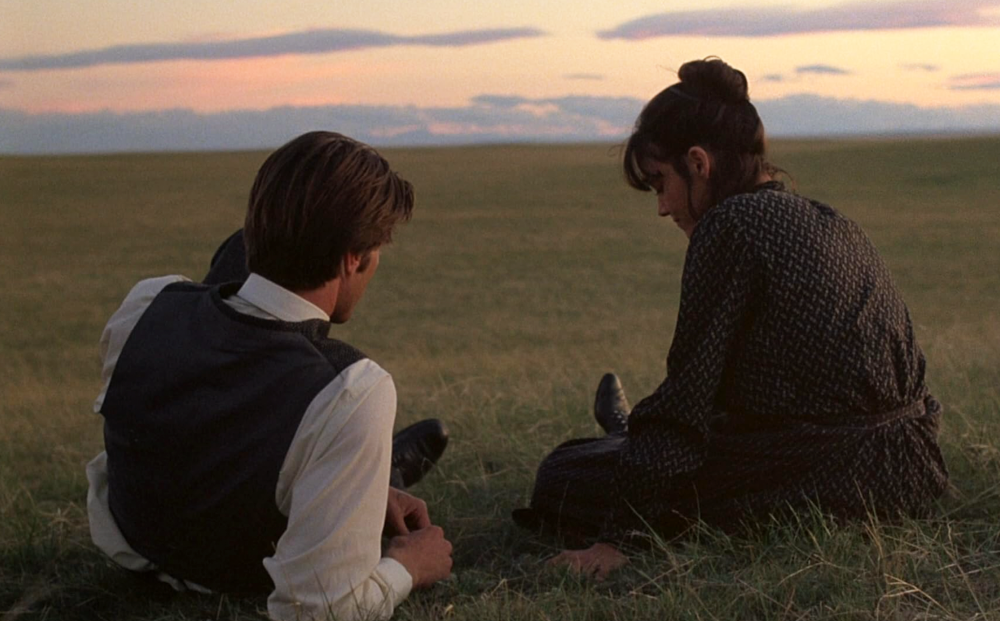
Broken hearts and betrayal ensue, but not in the standard melodramatic packaging. Linda talks us through the action with a childâs hard-earned wisdom (âThe rich really got it figured outâ), sharing the innocence of Holly (Sissy Spacek) in “Badlands,” but lacking that naïveté. The accent, too, is an unexpected pleasure, Corn Belt via Bensonhurst (Manz was from New York), and yet, the character inhabits the odd mashup as a playful quirk. To anyone who asks, theyâre from Chicag-ah, and coming from Linda, thereâs a wink implied: who, actually, are these people? Can they be trusted? Casting Shepard, a playwright, cowboy and consummate polymath, is another potential nudge towards the audience, since “Days of Heaven” is populated with the typesâlovesick, jealous and dangerousâShepard featured throughout his work as a playwright (“True West”), actor (“The Right Stuff”), and screenwriter (“Paris, Texas”).Â
Shepardâs farmer is a rich man, but lonely and ailing, so itâs hard to know that his pursuit of Abby is because heâs a fool for love (to filch a Shepard play/Altman film adaptation title), delusional, or a terminal case grasping at hope. Despite the warning of a foreman (Robert Wilke)âhis closest confidantâthe farmer shrugs off the warnings and warning signs, including the peculiar way Abby and Bill embrace each other (Abby: âHow would you know? You never had a sister!â). During an extraordinary sequence riddled with biblical themesâlocusts, fire, sacrificial cropsâthe farmer attacks Bill, and that helps fan the flames that send his farm and fortunes up into a blaze of sublime glory. The final act, an extended homage to the “Badlands” grifters surviving in the wilderness, borrows from that film but departs in handing out grim fates for the men.Â
A Chance to See a Masterpiece on the Big Screen
To say Malick was a private public figure would be an understatement, and that he wouldnât make another film for 20 years has only added to his allure. If Malickâs output was spare early on, heâs a veritable Joyce Carol Oates in the last two decades, winning the Palme dâOr for “Tree of Life” (2011), then churning out a number of elliptical star-studded curiosities (“Knight of Cups” in 2015, “Song to Song” in 2017). What all of his films have in common is an immaculate visual presence, the closest thing Malick has to a trademark, amid a career dabbling inâand upendingâgenres. No small part of that is Fisk, whose most recent work is now on view in Martin Scorseseâs “Killers of the Flower Moon,” a sprawling period piece which, like “Days of Heaven,” casts a cynical eye on Americaâs spotty track record helping its own people flourish.
Each frame of “Days of Heaven” belongs in a museum, and itâs no shock to learn Fisk was inspired by Edward Hopperâs restrained paintings, extraordinary visions of ordinary Americana. Lucky for us, Malickâs portraits move, and come alive, emerging from the screen with considerable elegance and grace. The restoration presents an opportunity to see an intimate, full-bodied work, begging for viewing on a big screen. Malickâs film is a history lesson, a late-1970s view of the world nearly a century before it. Equal parts audit of a time/place and a microscopic gaze at a group of impulsive, irrational few, “Days of Heaven” doesnât pass judgment, dishing out doses of pain equally among participants. These folks dared to challenge their standing in the world, so of course they ended up worse off in the end. At least little Linda escaped, skipping down railroad tracks towards the sunset.Â
“Days of Heaven” will be playing at Film Forum in NYC from December 8 – 17th. Visit FilmForum.org for ticketing and information.Â




