





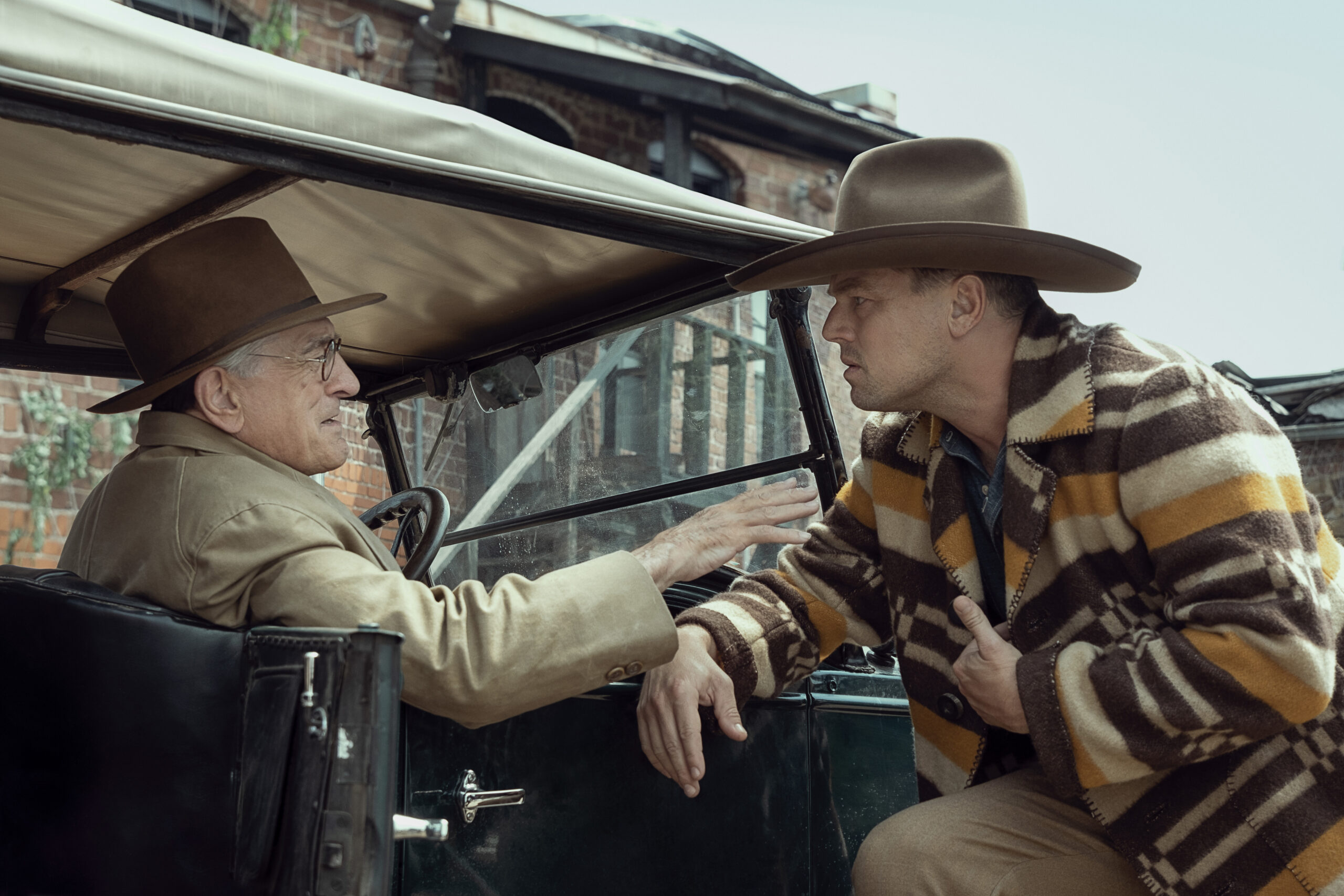
âKillers of the Flower Moonâ is a lavish-looking picture, stylishly shot by cinematographer Rodrigo Prieto, with an outstanding performance by Lily Gladstone leading the pack. However, Martin Scorsese holds the remnants of Michael Ciminoâs âHeavenâs Gateâ, creating a picture that needs some heavy trimming. Both repetitive and plodding in its orchestration, it leaves behind an array of fascinating assertions scattered across the beautiful cinematic landscape we are used to seeing from the veteran filmmaker.Â
Scorsese as a Cinematic Engineer and Tactitian
There are many ways to describe what many cinephiles and enthusiasts worldwide recognize as one of the best directors, not only living but of all time, Martin Scorsese. Some call him a maestro, as if every time Scorsese is at the helm, heâs conducting a cinematic orchestra. But I donât believe thatâs the adjective attire that suits him best. Iâd prefer to call him a tactician or an engineer-like filmmaker. He crafts his picture in a manner that nobody else does. Scorsese follows a set of parameters. But he uses his ingenuity and knowledge of the craft to concoct something special that, from the immediate moments, you know that his fingerprints are on it. While many recognize him for his crime dramas, that isnât the only type of picture he can concoct masterfully. Scorsese has demonstrated to us throughout his decade-long venture in the world of cinema.Â
From his underrated âAfter Hoursâ to âThe Last Waltzâ, there are many variations of genre play and techniques. Scorsese isn’t suited to be stuck on one particular genre or story type. âThe Irishmanâ felt like the proper film to close the final chapter on his cinematic journey. But the man has some projects in him left. He still has a few films in him. However, his latest one, an adaptation of David Grannâs novel of the same name, âKillers of the Flower Moonâ, doesnât strike a chord like his previous work. Instead, and in quite odd fashion, it feels repetitious, desperate for a trip to the editing room. With tastes of Michael Ciminoâs âHeavenâs Gateâ, both in its good and bad assets, Scorsese fails to make this film into an all-engrossing epic that warrants its extensiveness and slow-moving orchestration â lacks the ability to synthesize the story.Â
Containing The Same Crime-Drama Spark of Scorsese’s Pictures
“Killers of the Flower Moon” is set in early twentieth-century Oklahoma. Most specifically, we are headed to the land of the Osage Nation. It was rich in oil as well as money-hungry white folk who were on the prowl for riches. A man, Ernest Burkhart (Leonardo DiCaprio), returns from war to his uncleâs doorstep. His relative is William King Hale (Robert De Niro), a powerful man living on a faraway ranch. He basks in riches but doesnât want to hold back. Hale wants more, even if he canât handle it. Thatâs why he convinces Ernest to court Mollie Kyle (Lily Gladstone) in an effort to get some of the oil royalty fortunes from her family.Â
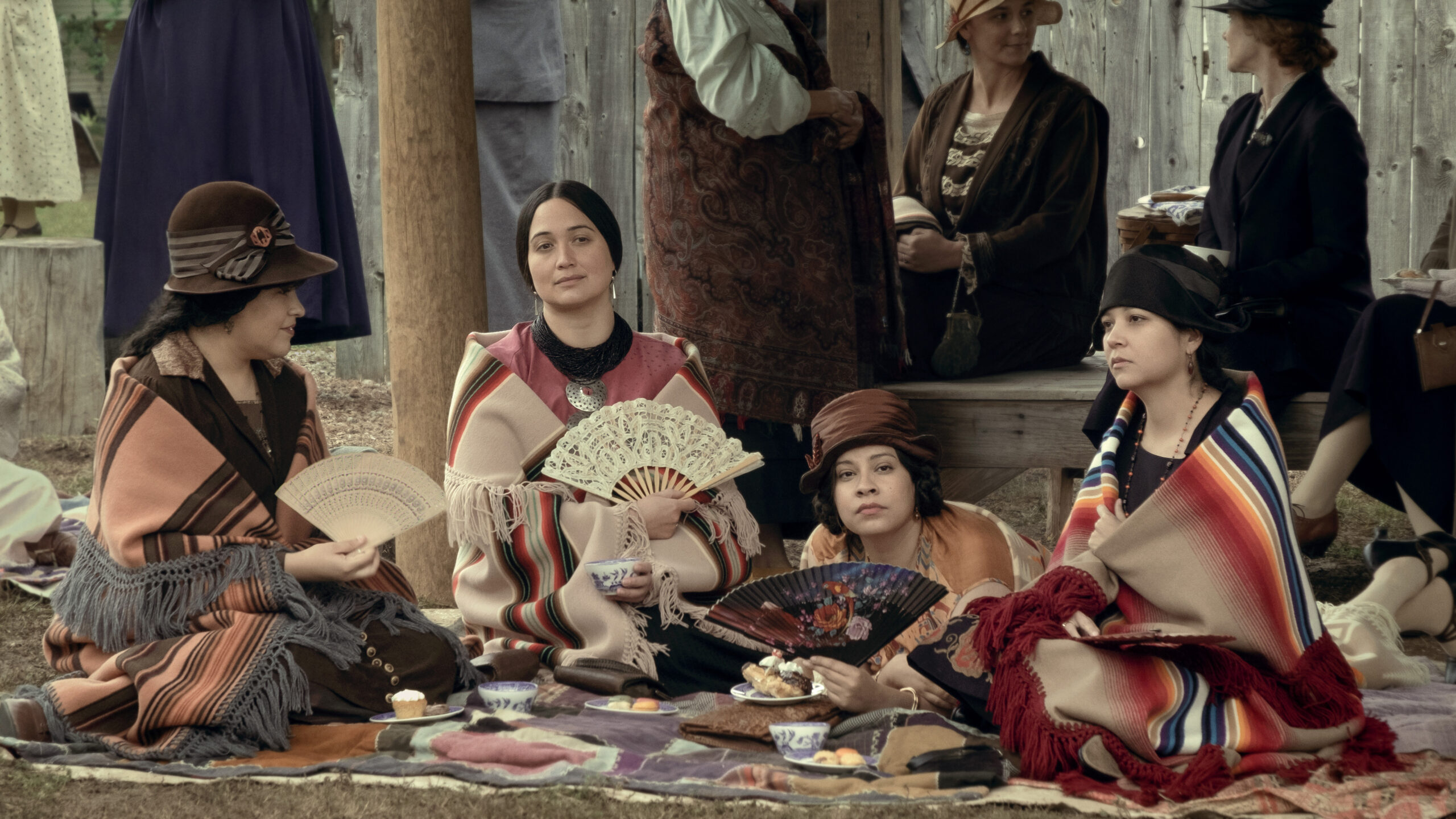
Although Ernest says he loves her, his intentions mainly focus on money. And Mollie knows it, as she quotes: âCoyote wants moneyâ. She already knows what he is aiming for. But Mollie states that âhe just wants to settle downâ. So, the two eventually marry. But what comes afterward is a tale about murder, greed, and racism â the manipulation and exploitation that the Osage Nation went through during that point in time.
The cinematic essence of âKillers of the Flower Moonâ, in terms of Scorseseâs filmography, revolves around the crime dramas that he has concocted before, such as âGoodfellasâ and âThe Irishmanâ (both of which are companion pieces to one another). But, regarding structure, it leans toward one of his less visited films, âGangs of New Yorkâ. In all three of those films, we see a group of slick crooks taking advantage of the opposition, whether in their crew or against them. Thereâs always this feeling of betrayal, ignorance, and corruption throughout each scene.Â
Reminiscent of Michael Cimino’s Heaven’s Gate, For Better or Worse
In Scorseseâs latest, you get that same sensation in each corner of the narrative. You feel that something or someone is lurking in the shadows, trying to get what they want, no matter the cost or repercussions. Unlike the aforementioned, this one is more horrific. The actions caused by DeNiroâs William King Hale and his henchmen are predatory and haunting. While it does resemble his previous work, the film âKillers of the Flower Moonâ can be compared with the most, for better or worse (yet mainly for the latter), is âHeavenâs Gateâ. Both of these films are detailed and expansive tales about the American West and the distasteful pasts that accompany it. They are primarily tragedies fuelled by the oppressorsâ evil doings and a âloveâ story bursting amidst the calamity.Â
Cimino and Scorsese set out to make a grand-scale epic that transcended the screen. It makes you feel the breadth and brio of their filmmaking and the impact of those events that transpired. Scorsese, unlike Cimino, manages to make the audience feel the anger and pain that the Osage people went through. Through powerful images, he wants us to see these events from its halfway point, as these murders were happening way before the film even starts, to the conclusion of the investigation in the way of a 1940s radio play. Visually, it is outstanding, as plenty of frames look like paintings. Whether it be a shot of the plains as the wind blows or a scene where a couple kisses in their car as it rains outside, you are blown away by the formatting of these scenes.Â
We know this after seeing most of Scorseseâs pictures. He continually experiments with the cinematography of his films so that they donât feel similar in their visual language. In that aspect, I appreciate both Cimino and Scorseseâs grand-scale works. However, they both suffer from their repetitiveness and unnecessary expansiveness, which doesnât make them feel like a throwback cinematic epic. Considering that both âHeavenâs Gateâ and âKillers of the Flower Moonâ last similar runtimes of three-and-a-half hours, in the first thirty minutes, you get the point and reasoning of the story. And it isnât until two hours later that another layer of the narrative is put into play. In this case, the investigation of the Osage murders arrives way too late in the film.Â
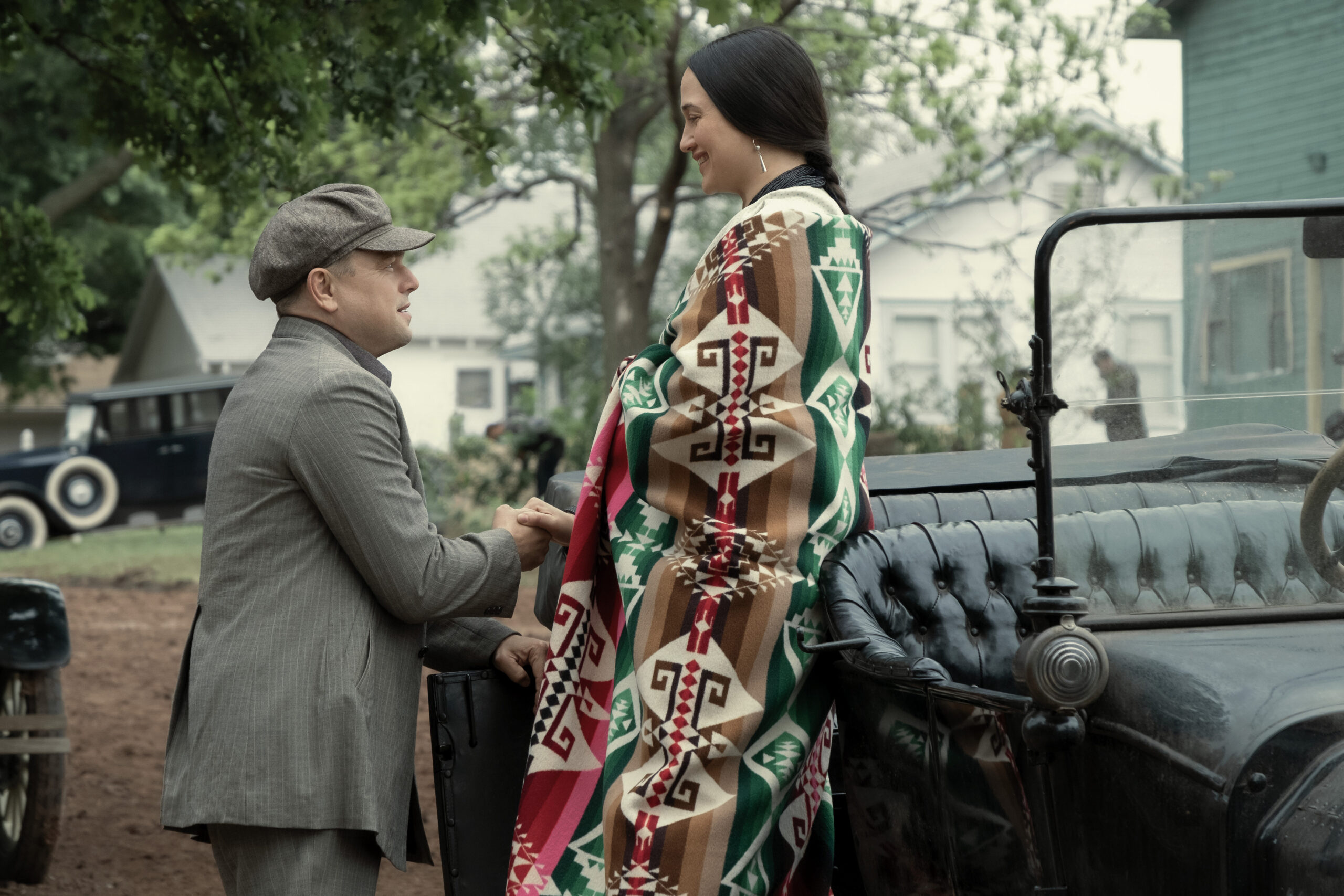
The Repetition in its Narrative Dynamics
Most of the runtime revolves around similar narrative dynamics that take away the story’s overall impact. It doesnât meander, as the sequences often relay the concepts of manipulation, greed, and cruelty for the sake of lineage erasure and capital. Scorsese offers a portrait of the envy people have when they need money or just want more without much necessity outside of the pleasures it might bring. He shows us how people are willing to kill and do abdominous actions just to take it away from the rightful owners. The actors playing these characters must have a double-sided nature to reflect their snake and coyote-like behavior. They need to intertwine their true intentions and the fake love they give to their wives.
Because of these character procedures, we get interesting performances by Leonardo DiCaprio and Scott Shepherd. Nevertheless, I feel the former of the two doesnât do as good of a job as he could have. The one who stands out the most is Lily Gladstone, whose minimal performance eats the rest of the cast alive. Besides these interesting assets that âKillers of the Flower Moonâ has, the film does grow weary instead of developing into an engrossing dissection of the American West set in the Osage lands. We see an array of scenes where characters plot their greedy and murderous misdeeds. Later we see that plan in play in great and bloody detail, as if the words alone, or at least the misdeed itself, wasnât enough.
It never dwells on some kind of exploitation. Yet, there are instances in which these scenes donât feel necessary to the story. In another instance, we get the description of an aftermath that he hints at beforehand. And then, we see the visualization of such. My point with this structure and unnecessary baggage is that Scorsese needs to put everything on-screen. He does not let the audience visualize such scenes in their head. Scorsese doesnât want anything to be up to interpretation.
It creates a plodding pattern that if it werenât for the third act, where all of the consequences come raining down one after the other, âKillers of the Flower Moonâ would have been a disaster that feels that its point goes missing, just like Michael Cimino and his box-office catastrophe. Thereâs plenty to admire from Scorseseâs latest. But, at least story-wise, it should have gone through another round of edits. Cuts can clearly focus on the two sides of this horrifying tale: the murders and the investigation that leads afterward.Â
“Killers of the Flower Moon” hits theaters worldwide on October 20th, 2023.




1 Comment
I am glad you haven’t drunk the Kool Aid ! And I love Heaven’s Gate ! Great review !