





Cinema possesses the power to transcend the boundaries of spoken language, employing the art of visual metaphor to convey profound human experiences. With Writer/Director Kasey Lumâs short film âBloom,â we see that very essence unfold on screen.
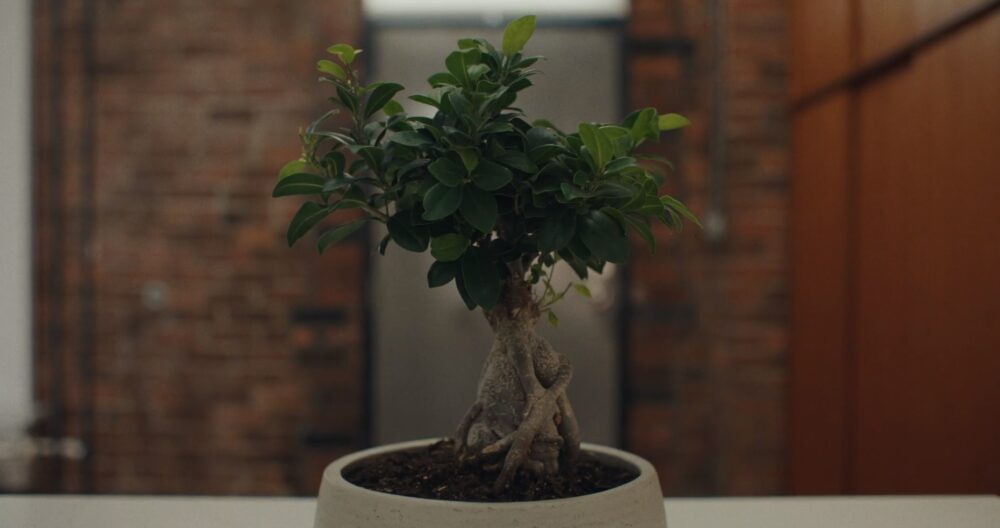
âBloomâ tells the story of Laurel (Jodi Balfour), a woman who undergoes a sudden breakup without any explanation. As she stumbles through heartbreak, one of her house plants provides some semblance of comfort, albeit initially unbeknownst to her. Eventually, both Laurel and the plant develop a strange connection that ranges from a state of wither to an eventual bloom.Â
At times creepy in its atmosphere and in silence, the film showcases Balfourâs commanding performance, using nuance and subtlety to speak to these larger themes â even (and especially) when not saying a word.
Of the Importance of Growth and HealingÂ
While on the surface the premise seems quite simple, âBloomâ is anything but. I find Lumâs decision to use a plant to connect with a person reeling from heartbreak a powerful and symbolic artistic choice that effectively conveys several emotional and thematic elements.
One of the themes that stuck with me is the symbolism of growth and healing. As the film shows the connection between Laurel and the plant become clearer, the audiences understand how the dynamic would work. Using a little house plant, Lum manages to create a film that serves as a macrocosm of a plantâs ability to shed leaves in winter only to grow them back in spring. This also includes the plant’s ability to bloom despite its initial withering state, something that represents resilience and the human capacity to bounce back from something as painful as a heartbreak.Â
Without spoiling anything, âBloomâ is a message of hope â a metaphor done right.Â
âBloomâ: A Metaphor for Natureâs Life-Sustaining Wisdom
On a larger scale, âBloomâ also works as a commentary on the complex, interconnected relationship between man and nature. Depending on how one looks at it, Lumâs film could serve as humansâ responsibility (or lack thereof) regarding safeguarding the environment. Long shots of the house plant would suggest that Laurel and her ex-partner may possess green thumbs. And yet, such talent doesn’t mean anything when the sense of responsibility isn’t there anymore.
Capturing themes of natureâs wisdom and lifeâs lessons and shot with visual flair and subtle imagery, âBloomâ works just fine as a short film. It doesnât overstay its welcome, and invites introspection once the credits roll.Â





