





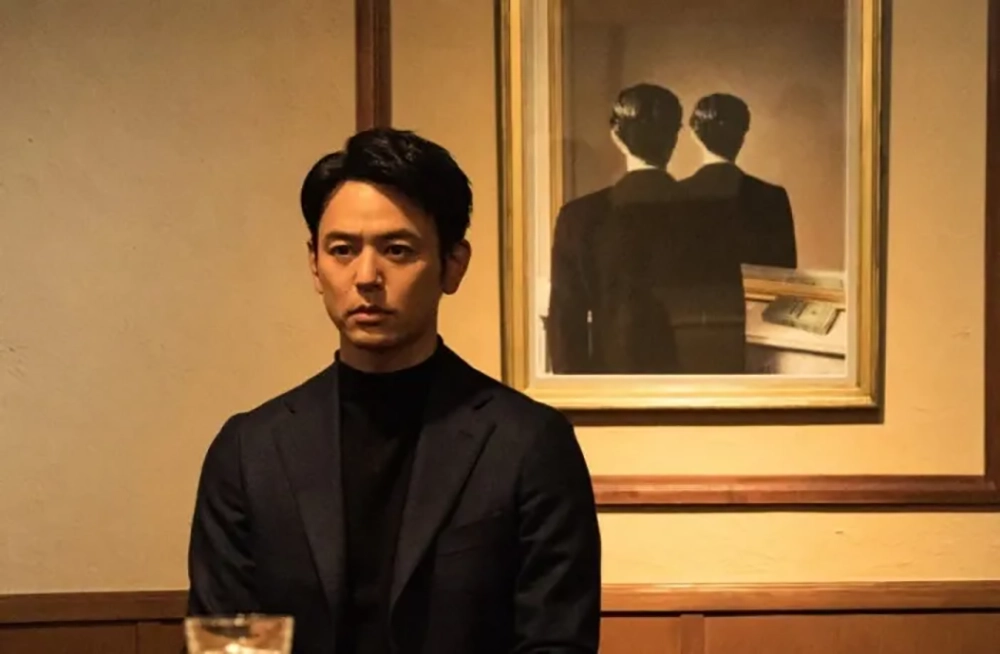
One of the theatrical posters for the Kei Ishikawaâs new film âA Manâ (Japanese: ããç·, “Aru otoko”) features a man turning his back from the painting by Belgian surrealist René Magritte. That painting, âNot to Be Reproduced,â provides a deeper subtext to the filmâs overall themes of perception, identity, and ultimately, obsession.
As the film that brings director Kei Ishikawa back to the festival circuits following his acclaimed movie âTraces of Sinâ, âA Manâ follows Rie (Sakura AndÅ), a divorcée who just moved back to her hometown. With her recent divorce along with another tragedy within her family, she has decided to guard her heart. So when Rie meets a charming man named Daisuke (Masataka Kubota) who woos her with art and an unassuming persona, she eventually decides to give romance another go.Â
Bliss in films, however, usually exists on borrowed time, and âA Manâ is no different. Daisuke dies in an accident, cutting Rieâs second chance at happiness short. As the family holds a memorial service for Daisuke, a man appears one day, announcing himself as the deceased’s estranged brother. However, when he takes a look at a photo of Daisuke, he drops the bomb.
âThis is not Daisuke.â
When the smoke clears and Rie realizes that her beloved husband of three years and nine months was in fact a totally different man, one question looms large.
Why did he do it?
A Man Who Claimed Who He Wasnât
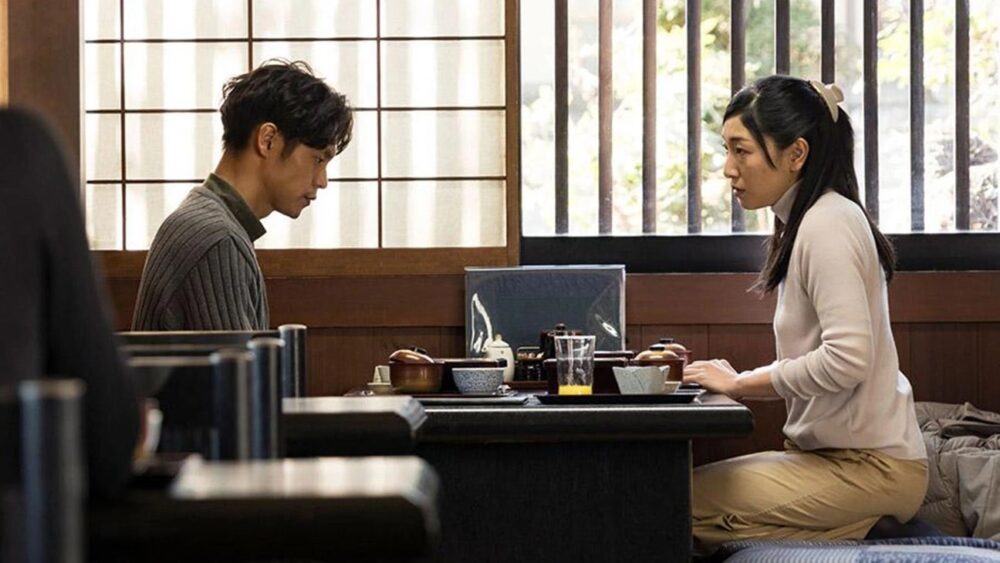
Based on the novel âAru Otokoâ by Keiichiro Hirano, âA Manâ actually tells the story of two people: that of Rie and attorney Akira Kido (Satoshi Tsumabuki). Rie approaches Kido, her former attorney, and asks him for a strange favor: she wants Kido to investigate Daisukeâs past. His job is to perform a background check on who Daisuke really wasâand why he did what he did.
As Kido proceeds with his investigation, Rie is left grappling with the aftermath of their discovery. Can her love conquer deception? When the truth finally comes to light, what will become of that love?
For his part, Kido encounters a number of characters in his efforts to uncover âDaisukeâsâ past, who lived his life as a different person. But the deeper he goes down the rabbit hole, Kido develops a strange understanding about a manâs concerted decision to assume another manâs identity. These mixed feelings become evident as he ruminates over his own place in the world.
Ishikawaâs Meditative Direction Makes Up for the Filmâs Deliberate, Languid Pace
Ishikawa makes an unconventional decision to switch the storyâs focus from the widow to the investigator. This allows for a more interesting examination of oneâs conscious, clinical efforts to hide his past and how they affect the two central characters. Ultimately, âA Manâ sees one whoâs trying to let love conquer the deception; and the other whoâs developed a somewhat-understandable fascination with his case.Â
Finally, whereas the filmâs slow-burning might prove challenging to those accustomed to a standard thriller featuring sleuthing and detective work; Ishikawaâs direction doesnât make it any better. On the contrary, âA Manâ opts to take the meditative path.Â
This brings me back to that Magritte painting. âNot to Be Reproducedâ highlighted the intrinsic nature of human beings to peer through the surface in search of details that they canât see. Consequently, this pursuit of the unknown informs the viewersâ perception of whatâs real to themâor, at the most basic level, what makes sense.
And for what itâs worth, for Ishikawaâs characters, that second part is all that matters.





