





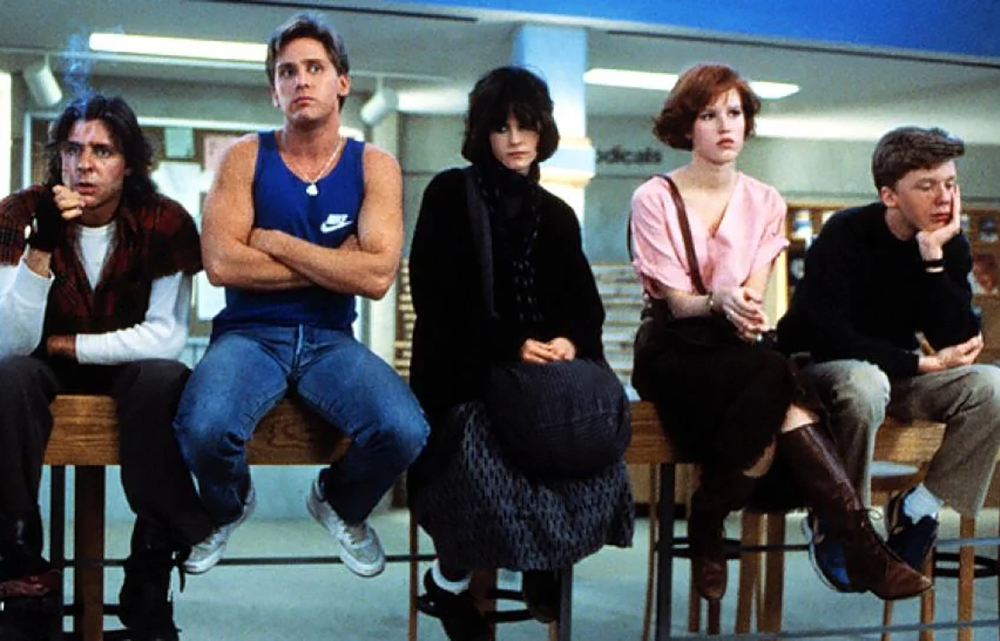
John Hughes’ ’80s classic, “The Breakfast Club” remains a masterpiece which shows a generational tradition of teenage archetypes, and that your passport to surviving high school is one thing â sticking to the status quo. Like oil and water, “The Breakfast Club” presents five high school students from worlds that simply donât mix.
The film gives a realistic taste of teenage experience, while showing us the sad transition from youth to adulthood, which Ally Sheedyâs character, Allison, tearfully ingrained into our minds with the words, âWhen you grow up, your heart dies.â
It also shows us that the catalyst to bonding is a common enemy and a confined space. It interestingly delves into many serious themes such as stereotyping, abuse, and mental illness, in the matter of 1 hour and 37 minutes. The film is so incredibly entertaining that if detention was this fun in real life, I probably wouldâve showed up for once!
Impressive Symbolism and Character Distinctions
What leaves me in awe is the mind-blowing use of symbolism that enforce the character distinctions. John Benderâs (Judd Nelson) layers of clothing, hide his fragility behind a rebellious exterior and Allison Reynoldsâs (Ally Sheedy) pitch-black outfit show her dark nature. How the film helped us understand a characterâs mental state through the use of a cloth amazes me. Similarly with their lunches, as Claire Standishâs (Molly Ringwald) fancy sushi and Brian Johnsonâs (Anthony Michael Hall) perfectly-represented lunch showed me enough about their family upbringing. Even their sitting positions on the tables symbolised their social power.
Nothing impressed me more than Judd Nelsonâs breath-taking performance as John Bender, as his flawless portrayal made his character one of the most well-known rebel figures in film history. How 25-year-old Judd Nelson played a 16-year-old high schooler, outshining the rest from the moment he struts into the library, is beyond me. I particularly adored his chemistry with Molly Ringwaldâs character, Claire, as he was almost like a âguilty pleasureâ for her. And based on how dreamy he is, itâs quite understandable on my behalf.
Also Read:Â TIFF 2022 Review: âCarmenâ Features More Dance Than Music, But Itâs Wholly Unique
Not to forget his moving performances with Principle Vernon (Paul Gleason), as they accurately demonstrated the ‘self-fulfilling prophecy,’ a sociological phenomenon for someone to live up to a prediction. I can definitely see Nelson pouring his heart and soul out on my TV screen.
An Iconic Film that Holds Up After 35+ Years
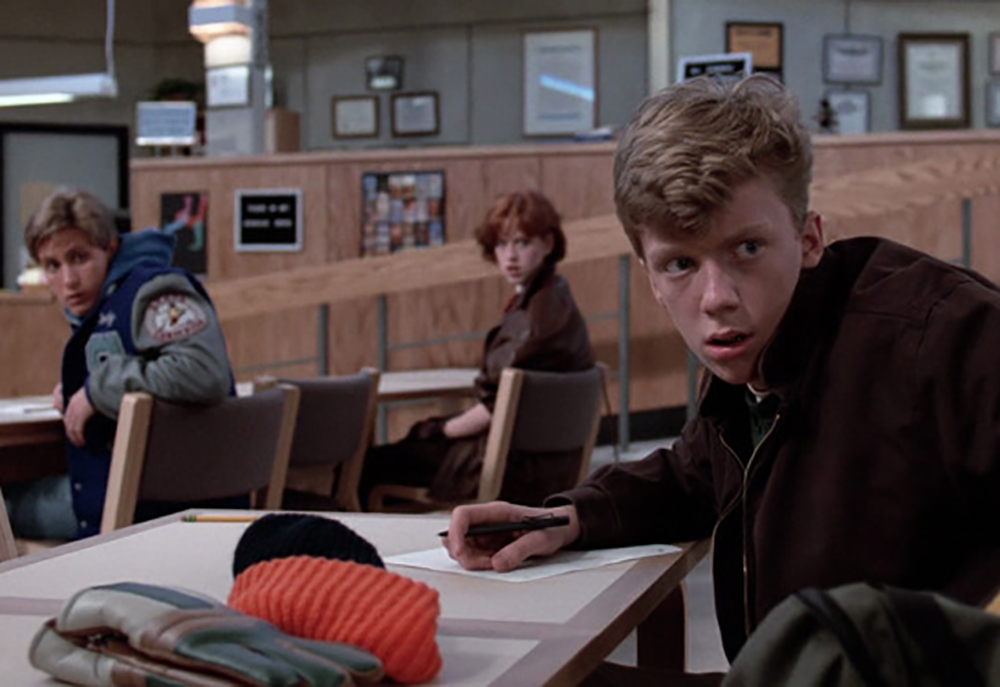
Despite re-watching it an infinite number of times, the improvised confession scene remains one of the most moving scenes Iâve seen in a teen movie, where the characters sit and share their emotional woes. John and Claireâs fiery dispute with a build-up of romantic tension, and Brian and Andrewâs heartfelt vent of parental pressure felt like an emotional rollercoaster.
The exhilarating scene in which theyâre running around the corridors to avoid getting caught by Principle Vernon also added an adventurous touch to the film. Finally, the most treasured scene is John and Claireâs intimate kiss at the end, as it finally relieved us from the will-they-wont-they tension. From my perspective, the film doesnât limit itself to a typical teen drama, and has a much bigger purpose, as teenagers model how youths are being moulded into broken adults.
Along with its iconic soundtrack, “(Dont You) Forget About Me” by Simple Minds, Hughes made the film so unique and memorable weâre still watching it in 2021. Even after 40 years, itâs lead to generations asking the same question. What happens on Monday?
Support the Site:Â Consider becoming a sponsor to unlock exclusive, member-only content and help support The Movie Buff!


