





Narrated by John Goodman, âTake Me to the River: New Orleansâ is a hard-hitting, inclusive documentary; it chronicles New Orleans’ history as seen through its musical talent and culture. The film, directed by Music Producer Martin Shore, is a trip through the vistas of the city through music. It has a way of at once educating you and moving you as you learn its musical history and culture. Those familiar with the genres of hip-hop, brass band, funk, blues, and more will watch this documentary and nod to its reverence for the art. But for the uninitiated, âTake Me to the Riverâ serves as initiation into a musical culture that transcends the NOLA borders and never dies.Â
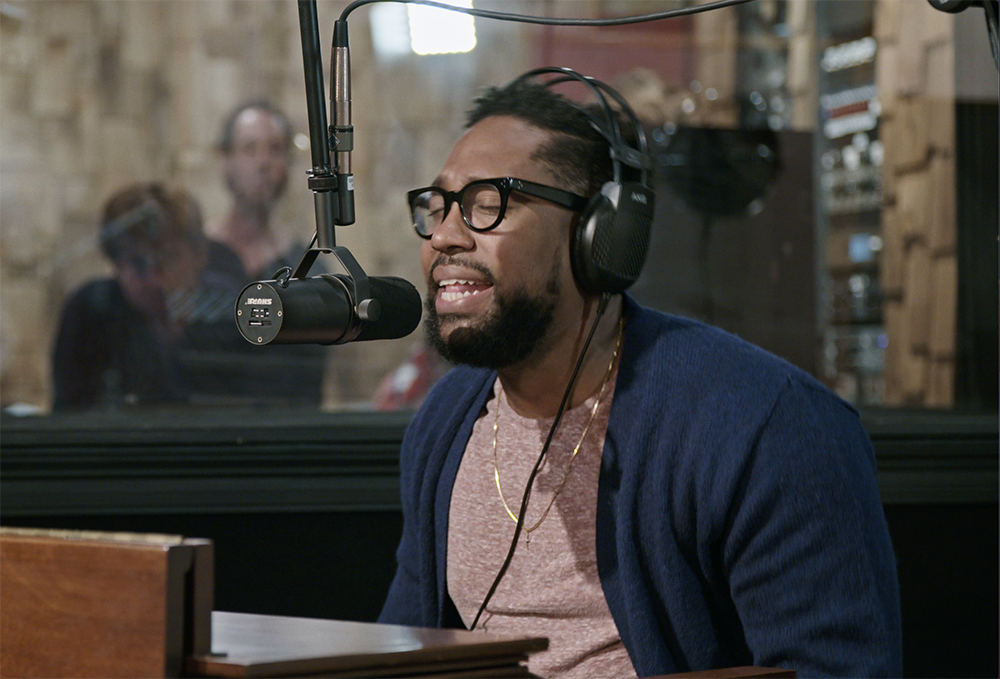
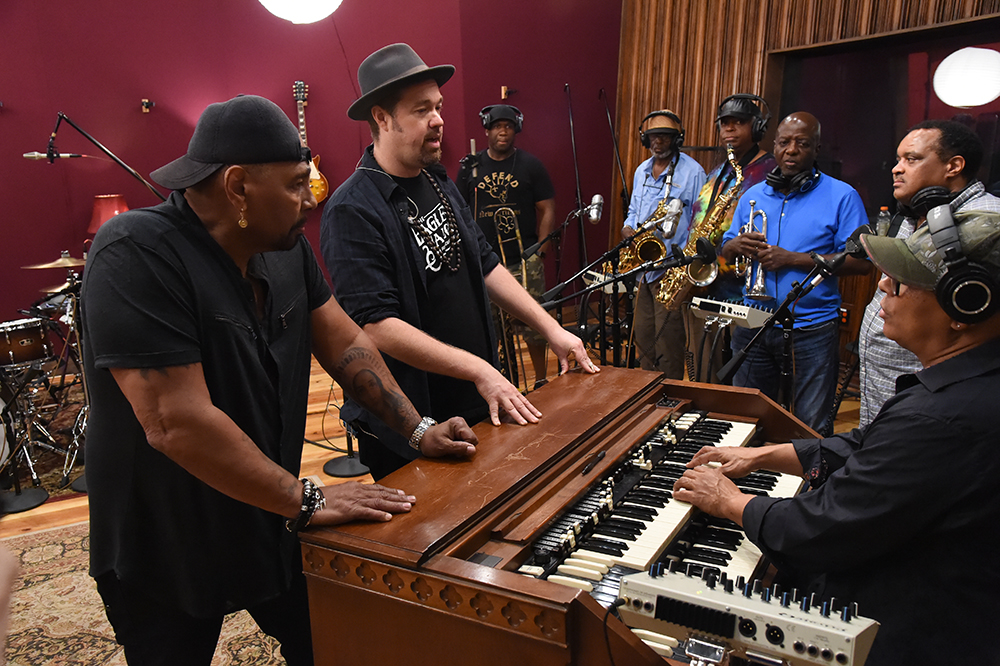
What is unique about âTake Me to the Riverâ is that it grabs you immediately; it pulls you into the world of not Mardi Gras parties and riverboats, but the recording studio. Right away, we meet George Porter Jr., legendary New Orleans musician and funk pioneer, recording artist Ledisi, and NOLA legend Irma Thomas. The documentary takes us through their respect for each otherâand for bridging the gap between the old and the newâbefore launching us into the recording collaboration between Ledisi, Porter, and Thomas, the catchy âWish Someone Would Care.â
Education and Music: New Orleans’ Unique Music Culture
The first part of the documentary is educational, introducing us to NOLA culture and music, and how the two intertwine. We learn about the different styles of music; there are drum bands, funk pioneers, hip hop collaborators, marching/brass bands, and solo acts.Â
We also learn of the history of âCongo Square,â a place where then-enslaved African Americans could conjugate to play their unique and ancestral drum rhythms. This infused with Indian culture to create what gave birth to the Mardi Gras Indians. While initially clashing and confrontational, the Mardi Gras Indiansâdressed in flamboyant and beautiful dress, which they sew themselvesâhave become an irreplaceable part of NOLA culture.Â
A Culture that Transcends Style: the Musical Genres of ‘Take Me to the River’
One of the finer points of âTake Me to the Riverâ is how Director Shore weaves the various vignettes together to make a larger cultural point. Shore, also a musician, knows the unique parts that make up New Orleans musicality, and injects that into his documentary with ease. What it does one the one hand is take the time to break down the various âpiecesâ of music that make up the New Orleans music scene. And, on the other, it shows how these come together to inject NOLA style into all types of music: from Jazz, to folk, to R&B, to Hip Hop, and more.Â
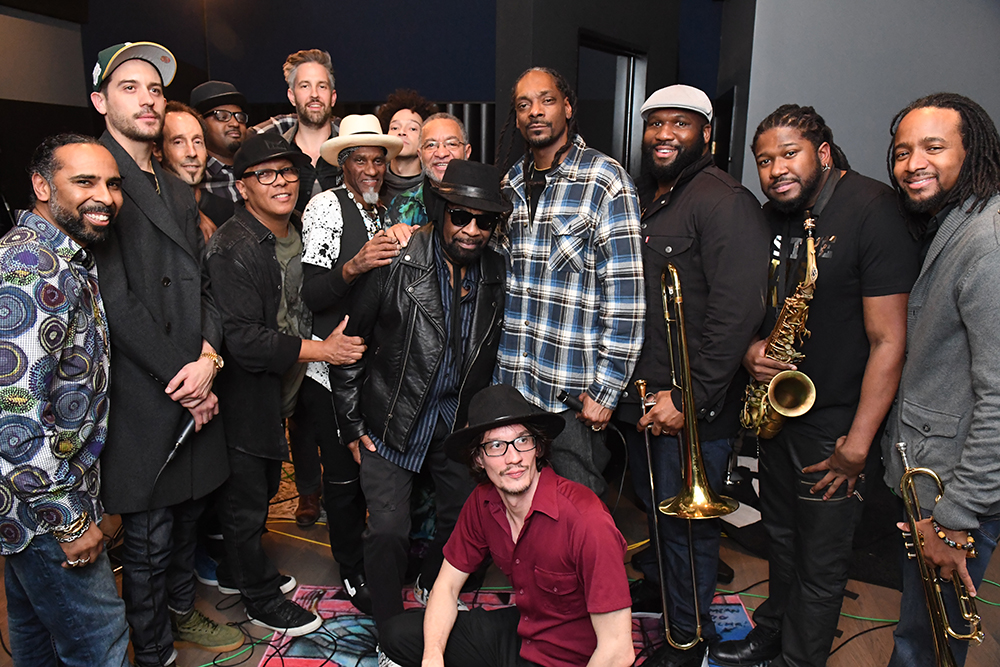
You can see this with some scenes toward the documentaryâs end, with artists like G-Easy and Snoop Dogg;Â they come to New Orleans to collaborate with each other, but also with the cityâs style. Snoop remarks on the various eclectic musicianship that defines the city, and how itâs âsaving lives.â Meanwhile, one canât help but notice the bridging of barriers here. A white rapper and a black rapper join together, backed up by drums, trumpets, saxophones, and NOLAâs unique style. These are the things we have already seen earlier, as the documentary explored hip hop and bounce artists like 5th Ward Weebie, Cheeky Blakk, Mannie Fresh, and Big Freedia. New Orleans truly is a melting pot of inclusivity; this is shown beautifully in the intimate and personal cinematography brought by Director Shore and company.Â
Hurricane Katrina’s Devastation; a Drive to Rebuild
âTake Me to the Riverâ also spends a necessary amount of time commenting on Hurricane Katrina and the devastation its immense flooding brought to the city. While the structural damage was massive, what really hurt New Orleans the most was the loss to the cityâs culture. We learn that prior to Katrina, African Americans had the highest rate of home ownershipâa statistic that suffered after the stormâs wake.Â
Also, since most of NOLAâs musicians lived in its neighborhoods, once these were flooded and destroyed, many musicians either had to leave the city and tour to make a living, while others had to the leave the city, not to return. However, as noted by the film, this was a chance to bring the music of New Orleans to the world. By spreading out to parts once unknown, the music scene redefined itself. The city would repair and keep its musical culture alive; and though things were different, they were still uniquely NOLA.Â
Truthfully, this is a great documentary. Thereâs simply too much wisdom, soul, and music contained within its confines to squeeze into one review of the film. And the movie itself is a testament to the undying greatness and soul of a city, and how its earlier, individual elements (brass bands, Mardi Gras Indians, R&B singing, etc.) would come together to make a culture that wouldnât die. Watching this film, I regretted personally never having been to New Orleans. I also questioned whether its tourists truly understand its heart and soul and what went into making it.Â
A Fitting Documentary with Much to Offer
Documentaries can be many things. They can be educative, they can be eye-opening, and they can be a catalyst for needed change. But âTake Me to the River: New Orleansâ feels more than that. It lets you into the cityâs soul and lets you stand alongside itâin its streets, in its neighborhoods, and in its recording studiosâand truly lets you know what it feels like to be a member. Shore has, with this documentary, created a sterling piece of remembrance. And, much like the cityâs Preservation Society, this writer hopes it will hold sacred the heart and soul that is New Orleans, and let the world experienceâjust for a momentâthose same feelings.Â
By spreading out to parts once unknown, the [NOLA] music scene redefined itself.”
âTake Me to the Riverâ premiered on 4/22/22 in New Orleans at The Broad Theater. The film opens in New York and Los Angeles theaters today, with a rollout to select theaters nationwide to follow.Â
You can view the trailer for the film below:Â

Support the Site:Â Consider becoming a sponsor to unlock exclusive, member-only content and help support The Movie Buff!


