Incorporating visual and auditory cues into a film can change it from good to great. Without all the flashing disturbing images, the haunting voice, the groaning music, and the increasingly burning color of the footage, âViolet,â which showed this week at SXSW, would be an extremely odd movie. Weâd just say a rather silent and awkward film executive talking to herself for 90 minutes. But by adding these intense moments of pure artistic glory, it turns into an extremely relatable journey of self-discovery.
The directorial debut from Justine Bateman follows a film executive named Violet as she realizes the voice in her head that has been plaguing her for years has been lying the whole time. This voice, that she calls âthe committee,â constantly overwhelms her with negative thoughts, calling her a baby, an idiot, saying that nobody will respect her, etc. Justin Therouxâs voice is truly haunting. Despite never showing up on-screen, the committee is certainly a main character. As the film progresses, Violet starts to triumph over her voice. By the end of the film, the voice is no longer present that often, but when it is, I found myself actively screaming for it to shut up. If thatâs not effective storytelling, I donât know what is.
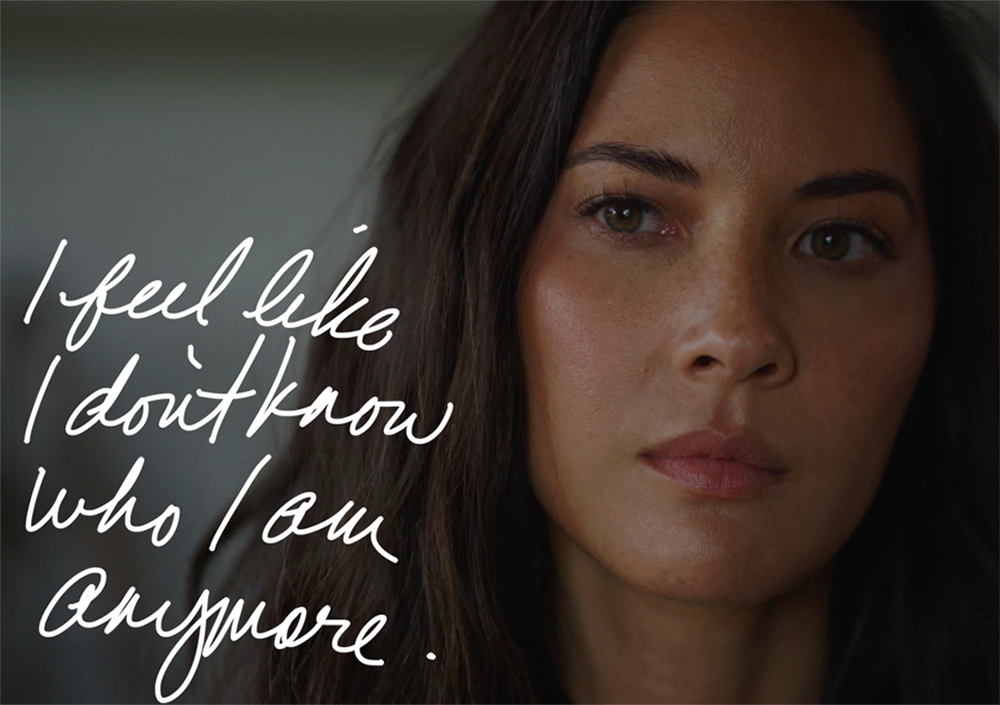
Although her committee is obviously front and center, nagging her persistently, thereâs a quieter voice present in the film as well. This acts as Violetâs innermost thoughts, displaying on the screen in white cursive handwritingâanother powerful use of visuals, displaying how much the committee overwhelms her true feelings. Along with the text, whenever Violetâs in a situation where her voice flares up, the screen burns to a solid orange-red while the music groans into a truly unsettling tone. Itâs suffocating to the audience, almost turning it into a psychological thriller rather than drama. Batemanâs use of these tools turned this film from average drama to a masterpiece.
Olivia Munn portrays the titular Violet. Sheâs best known for her role in the âX-Menâ films as Phylocke, and for her role in âRide Along 2.â Sheâs never been front and center, so it was good to finally see that. Violetâs character is a suppressed individual, constantly worrying about the committee. Sheâs supposed to be a little awkward and fumble a little. Olivia Munnâs natural charisma contradicts that completely. She has so much talent and humour that it doesnât really correspond with the writing of Violetâs character. She still delivered a great performance, but in terms of characters matching actors, it unfortunately fails.Â

Judging by the fact that this is both Justine Batemanâs directorial and screenwriting debut, itâs obvious that this subject is very personal to her. Myself, I can relate to feeling like negative thoughts are constantly hovering over you, so this film meant a lot to me. A big part of the film is also about how women can get pushed around in the workplace, something I cannot relate to. But it seemed very empowering and true without coming off as cheesy. She really does win in the end, against the committee, her boss, her coworkers, and even her family. It shows someone overcoming a problem that affects a lot of people, and that in and of itself is inspiring.Â
The pacing felt a little off in the beginning, however. I understand that it needed to establish all the ways that Violet is being pushed down, both from external and internal forces, but only at the 45 minute mark does she even START to overcome it. The first act just consists of Violet going from interaction to interaction, suffering the whole time. And it gets old pretty fast. However, it ultimately pays off beautifully at the end, so maybe it was all worth it.
âVioletâ is a beautiful display of the things you can add beyond just the footage. Despite dragging for a little while, Justine Batemanâs first film is a glorious experience that touched my heart, and can hopefully help others going through similar situations.