





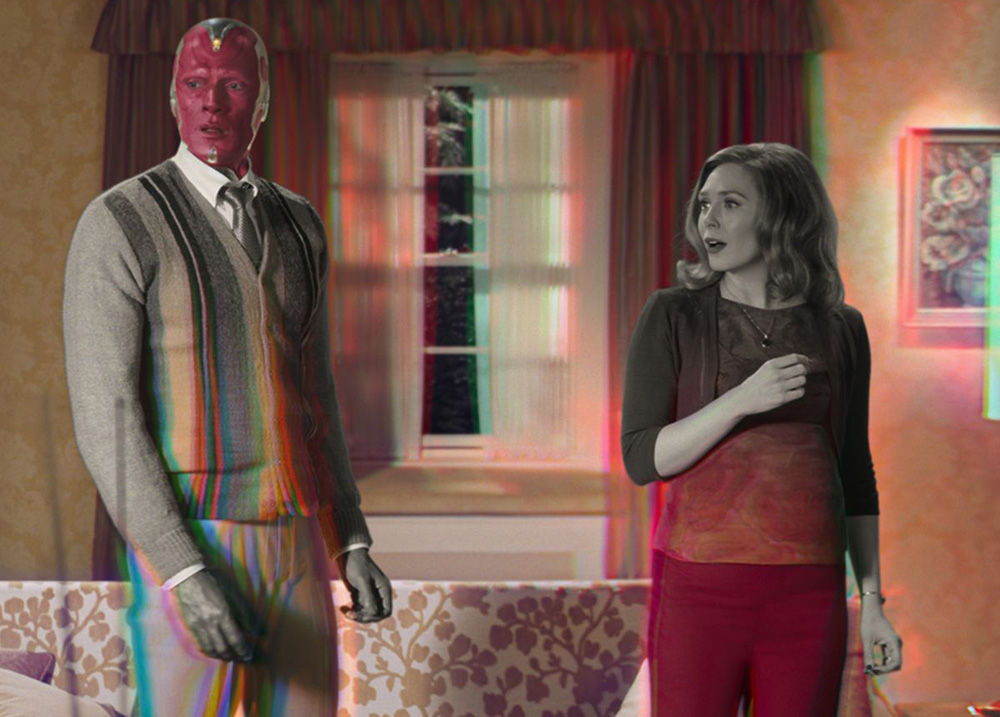
The first Marvel Studios?/Disney+ series âWandaVisionâ has taken the world by storm, making it the most popular television show in the world after only seven episodes. Itâs quite a hit, yet it does leave some fans jumping into the series without prior knowledge of the MCU a tad confused.Â
Wanda Maximoff (Scarlet Witch) has created a pocket dimension in which everything is perfect. Her husband is alive, she has two wonderful children, and it seems to be going great. Although it becomes apparently obvious to the viewers and to Wanda herself that things arenât what they seem. For one, each episode is portrayed as a different era of a sitcom, and as the episodes go by, so does the decade. This exemplifies Wandaâs deteriorating psyche.Â
Another staple of Wandaâs decade-bending show is the presence of commercials related to her past. These commercials are in direct correlation to the time period Wanda is paying homage to (i.e. if itâs the â50s sitcom episode, then the commercial will be similar to a â50s commercial). These commercials can be very subtle as to what they are trying to depict, and even the biggest fans might have trouble deciphering them. It seems that with âEpisode 7: Breaking the Fourth Wallâ portraying a mockumentary style sitcom (âThe Office,â âModern Familyâ), âWandaVisionâ has caught up with the present. With only two episodes left, it wouldnât make sense to continue this trope, considering the finale is so close and thereâs no other sitcoms to base Wandaâs show off of. With that mind, here are all the commercials in âWandaVision,â explained.
The â50s

The first episode of âWandaVisionâ depicting the â50s era of sitcoms was a great introduction of what was to come. The same can be said for its commercial. The commercial is centered around a toaster from Stark Industries with a bright red flashing light on the center of it. This clearly relates to Wandaâs childhood. In âAge of Ultron,â the Avengersâ second outing, it was revealed that Wanda and her brother Pietroâs parents were killed by a Stark Industry bomb, leading to their hatred of him. After killing their parents, a second shell landed right next to them, but didnât go off. It just kept blinking (like the toaster) and not going off. One false move and the twins were worried it would explode. A traumatic event for two kids. The toaster commercial is clearly a manifestation of that very bomb into her sitcom world.
Other fans speculate that not only do the commercials represent Wandaâs traumatic past, but they also represent an Infinity Stone, the gems Thanos collected to eliminate half the universe. The theory holds up surprisingly well. If itâs true, then the toaster represents the Mind Stone. The Mind Stone is the glistening gem in the center of Visionâs head, much like the blinking light of the toaster in the center of the appliance.Â
The â60s

The meaning behind the commercial of the ’60s episode is fairly straightforward. Itâs an ad for Strücker Watch, and it appears to have a Hydra logo on it. Strücker was the Hydra agent who experimented on Wanda and Pietro, and got them their powers in the first place. It definitely shaped her life, and without Strückerâs nefarious plans to use them for evil, she wouldâve never become an Avenger.Â
As for the Infinity Stone theory, this commercial would represent the Time Stone, because of the watch.Â
The â70s
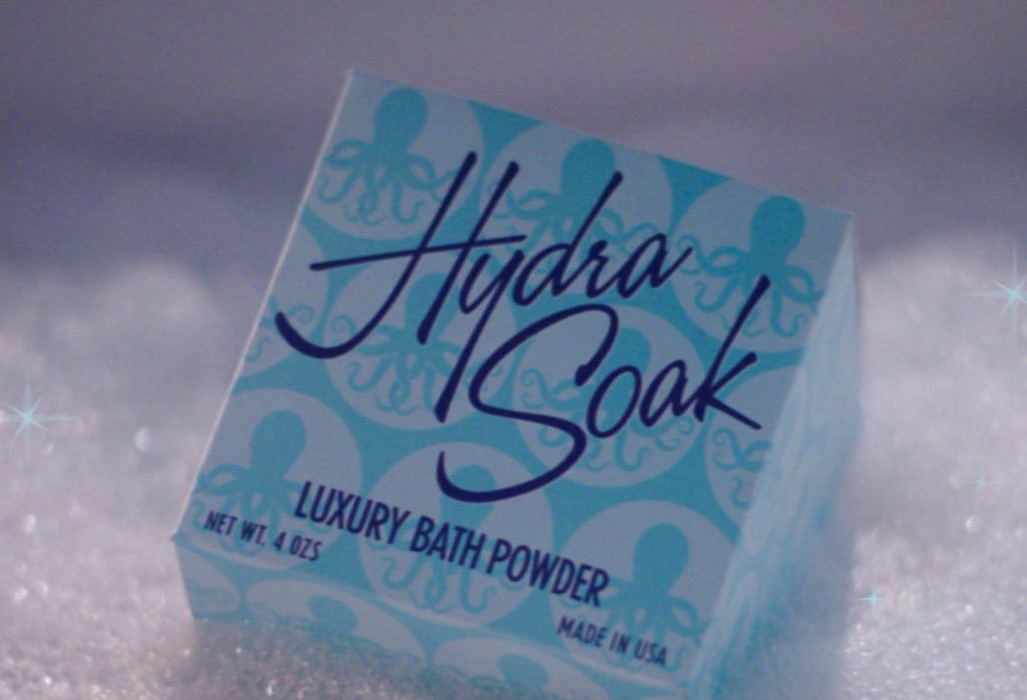
The commercial for the 3rd episode of the series is a little bit more open to interpretation. Itâs a commercial for Hydra Soak, a bath bomb that supposedly helps you âFind The Goddess Within!â This has a couple of meanings: in relation to Wanda, it could mean that Strücker didnât create her powers, but just activated them. Hence, Hydra helping Wanda find something within. It could also be a reference to the Marvel show âAgents of Shield,â in which one of the characters mentions that Hydra uses Mind-Control Soap. It was a throwaway line, but if the commercial is connected to it, it makes for a really good Easter Egg.
Continuing the trend of Infinity Stones, this one represents the Space Stone. The Space Stone was held inside a Blue cube called the Tesseract, and the logo of the Hydra Soak resembles just that.Â
The â80s and â90s
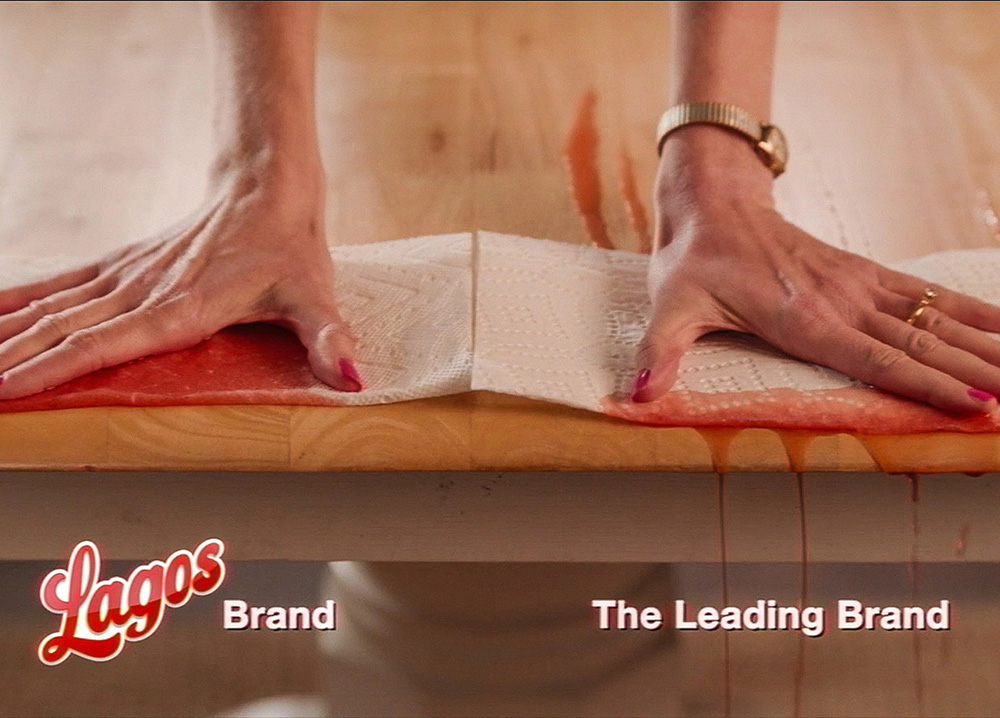
After âEpisode 4: We Interrupt this Program,â diverged from the sitcoms to give us a glimpse of what was going on from the outside, âEpisode 5: On a Very Special Episodeâ returned with all of itâs TV-loving glory. This 1980s-style commercial was advertising Lagos paper towels: âFor when you make a mess you didnât mean to.â This ominous commercial was a reference to when Wanda accidentally blew up a building in Lagos, Nigeria with her powers, causing her to go down a rabbit hole of guilt. Again, another extremely traumatic event in her life.
The paper towel clean up a kind of red liquid, which looks strikingly similar to the Aether, which holds the Reality Stone.
Late â90s/Early 2000s
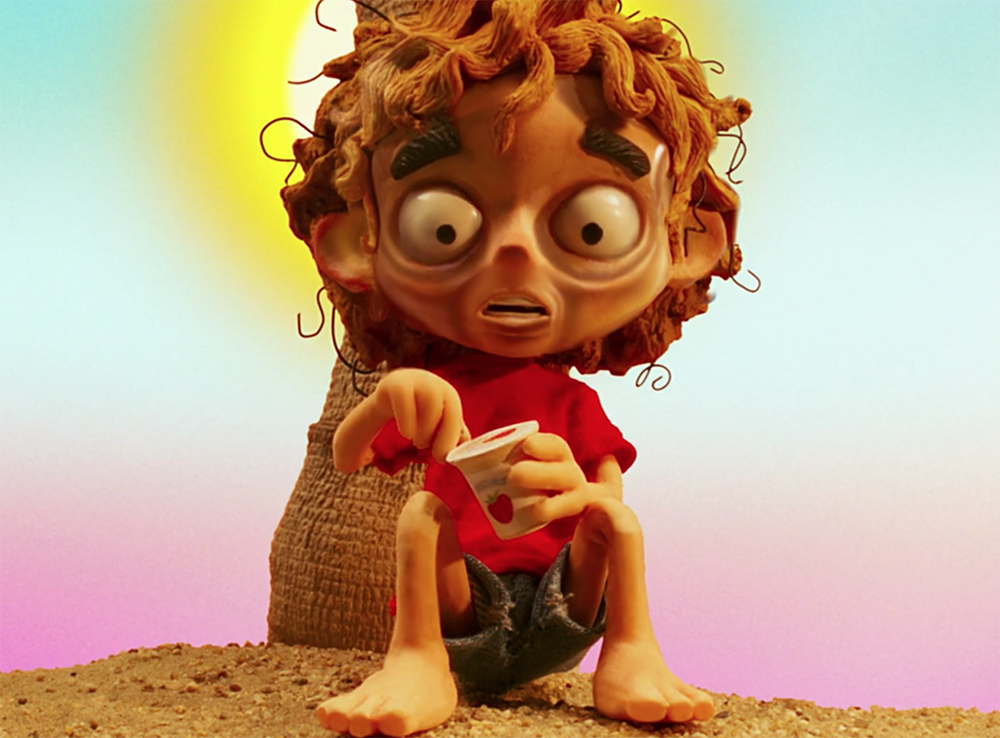
Probably my favorite episode of the series, the commercial in this episode was the most ominous and unclear of them all. In this stop motion advert, a starving boy is sitting on a deserted island, when a shark with sunglasses comes to shore and shows him Yo-Magic, a Go-Gurt inspired snack. The boy begs for it, and the shark tosses it to him: âHere you go, little dude!â The boy picks at the lid over and over again, but he still canât get his last chance of food open. He eventually withers into a skeleton.Â
Itâs eerily dark, and nobody is 100% sure on what it means. My theory is that the boy represents Wandaâs husband, Vision. Vision is supposed to be dead, until the shark (Wanda) tosses him Yo-Magic (Wandaâs actual magic). The boy thinks he has a second chance at life, until Wandaâs magic slowly withers him away into nothing, much like Vision actually did when he temporarily left Wandaâs world. The analogy isnât perfect, but itâs definitely the most probable answer.
This commercial represents the Soul Stone, as the island looks similar to Vormir, where the stone is exchanged. The boy is also dying, and the big thing about the Soul Stone is that it has to do with life and death. A soul for a soul.Â
Late 2000s/Early 2010s

The latest episode of âWandaVision,â âBreaking the Fourth Wall,â has a commercial for an antidepressant called Nexus. The lady in the commercial takes Nexus and then feels happier. In the comics, a Nexus is a portal between multiverses. Could this explain what the deal is with Evan Petersâ Quicksilver appearing in the show? He is the Quicksilver in the âX-Menâ universe, so perhaps Wanda was feeling upset and plucked him out of his universe to replace her dead brother in this one.Â
As for the Infinity Stone, this doesnât seem to represent any of them. Still, the only one missing is the Power Stone, so we can safely assume that Nexus relates to it in some way, shape, or form.Â
It seems that after six weeks of waiting, we are finally in the endgame of âWandaVision.” The villain is (seemingly) revealed, and everything is starting to add up. Iâm a little disappointed, as the commercials were a high point of the show, expanding on the Marvel lore and Wandaâs traumatic past. These Easter Eggs and references were a true reward to fans of the show. Although I know that when it comes down to it, âWandaVisionâ will far from disappoint.
*”WandaVision” is available to watch on Disney+ via subscription.Â


