âYou arenât taking me anywhere, ya dig? Youâre holding the wrong man!â
âWhat do you mean Iâm holding the wrong man?! I got the motive which is money and the body which is dead!âÂ
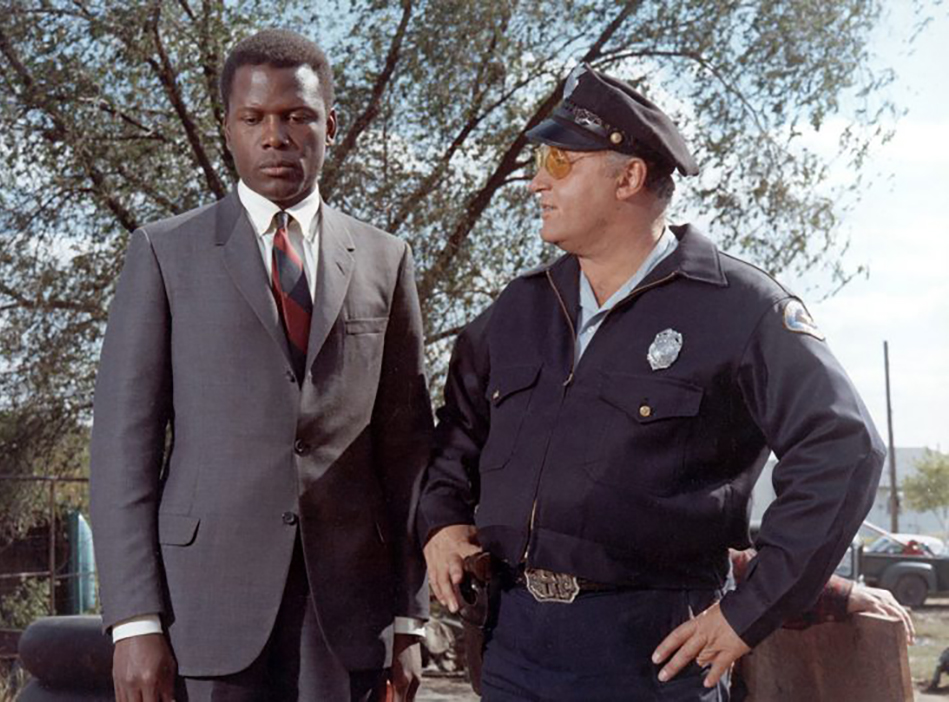
Sidney Poitier stars in âIn the Heat of the Night,â Norman Jewisonâs fiery murder mystery set against the backdrop of racial prejudice in the Southern United States.Â
To talk about this film is to talk about Poitier. Having shot to fame in 1963 as the first black man to win the Academy Award for âBest Actorâ for Ralph Nelsonâs âLilies of the Field,â Poitier starred in three films in 1967 that made him the top box-office star of the year. The third of these films was âIn the Heat of the Night,â in which Poitier plays Philadelphia homicide inspector Virgil Tibbs, who gets dragged into a murder case while passing through Mississippi on his way to Memphis. Poitier imbues Virgil (or Mr Tibbs, to you) with a radiant confidence and swagger that immediately riles up the prejudiced characters he meets in the small town of Sparta. His sharp suit, Holmesian skills of deduction, and quick wit elevate him above everyone he meets, which only angers them further.Â
Many have deemed this film to be about racism; and, while that may be an oversimplification, racial prejudice is undeniably the context for everything that takes place. Several characters are uncomfortable at Tibbsâ mere presence, others want him run out of town, and some even want him dead. Whatâs brilliant about Tibbsâ character is the way he responds, usually with an unflappable calmness and a steely glare, yet simultaneously unafraid to assert himself as (at least) an equal.Â
The scene of him returning a slap from the filmâs most insidious racist, Mr Endicott (Larry Gates), is still absolutely electric half a century on. One can only imagine the joy it wouldâve brought audiences at the time. For a film of its era, I think it handles racism in a very progressive way. There is no white saviour; there is no pandering. Tibbs is a force who cannot be intimidated or quieted.Â

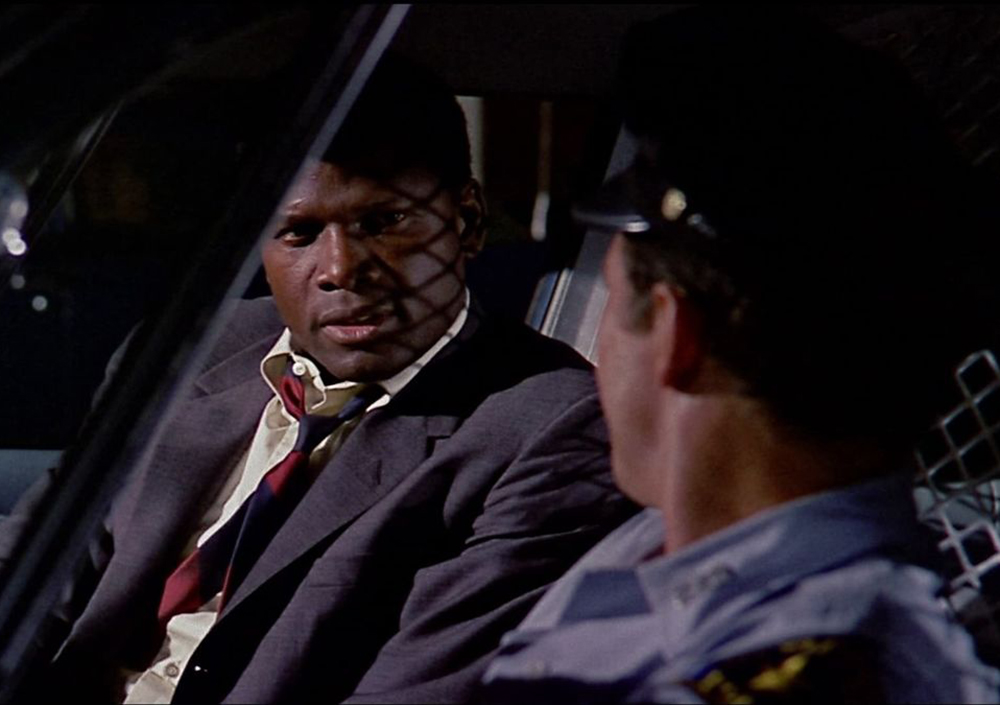
Racism is not the only topic discussed in Stirling Silliphantâs Academy Award winning screenplay; industrialisation, for instance, is also considered. The murder that kicks things into motion is of an industrialist who wishes to build a factory in Sparta, and one of the major suspects is a man who owns an enormous cotton plantation. Old vs. new, the city vs. the countryside, a classic theme in so many American films that is a natural fit for this story.Â
Back to the personnel; Poitier doesnât star alone as he is accompanied by Rod Steiger, who won his Academy Award for this film. Steiger plays the Chief of Police, a complex role that requires a lot from an actor, and he more than rises to the challenge. He has to demonstrate closed-mindedness, reluctant acceptance, and finally quiet respect in his on-screen relationship with Poitier, and these emotions are written across his face and in his delivery.Â
The technical elements are all more than competent, as Jewison captures intense dialogue-heavy scenes, but also a car chase and a number of stand-offs that feature violence, or threaten to. He also makes the heat of a Mississippi summer palpable, akin to Hitchcockâs efforts in âRear Window.â Haskell Wexler adapted the lighting to better suit a black leadâan industry-firstâand something that is still a topic of conversation today. The sound design is of a high standard; one thing I noticed is the occasional faint train-whistle heard in the background, especially at night, as if to remind Tibbs that he could leave this dangerous place at any moment, and to remind us that he is choosing not to.Â
This is a film that could be too easily dismissed as âimportant at the time,â or just remembered on a list of âBest Pictureâ winners. In fact, it remains a searing look at racial injustice in â60s America, features the introduction of a memorable and charismatic character, and still thrills today with its tale of murder on a hot Mississippi night.Â