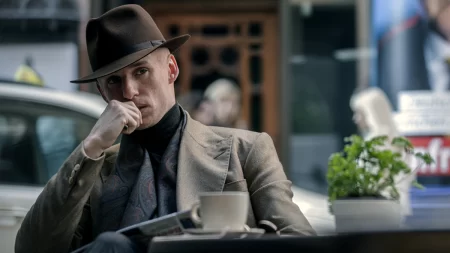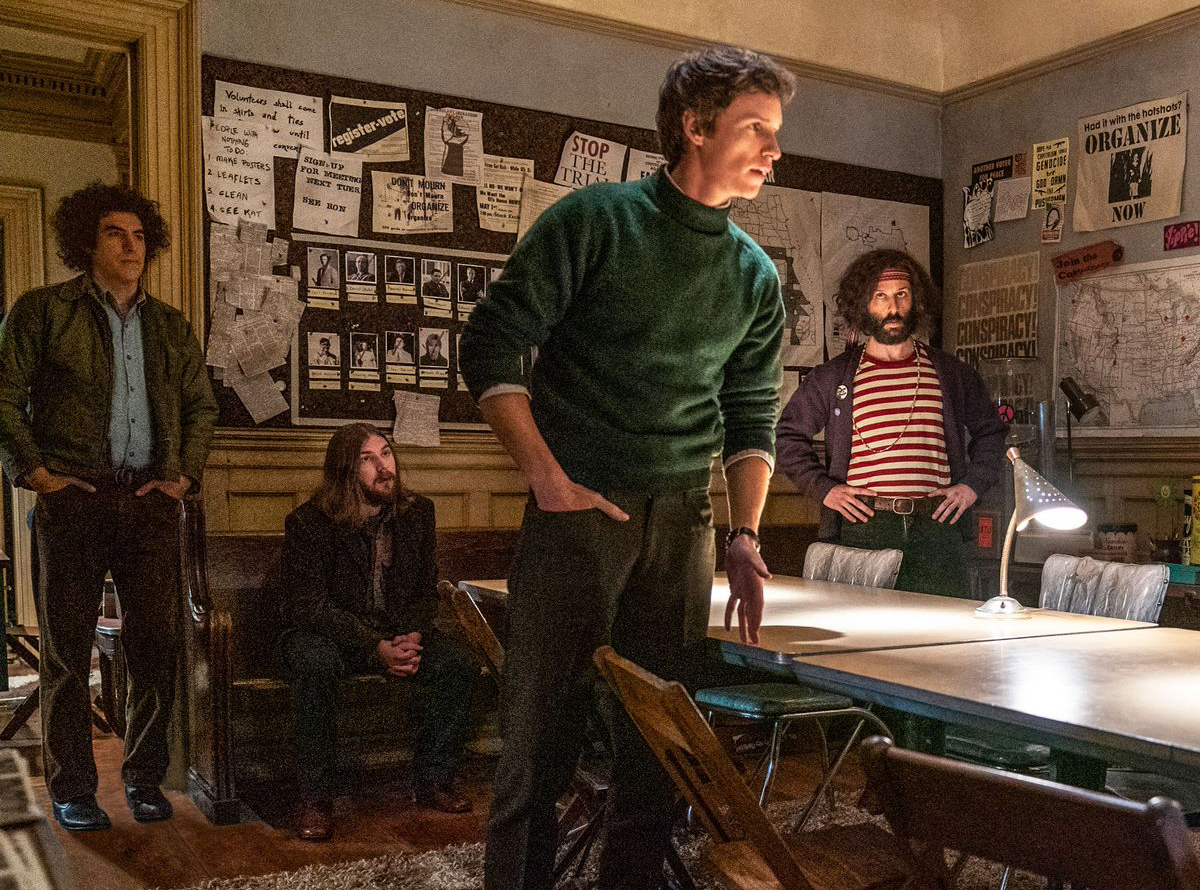
Thereâs a central theme that runs constant through Aaron Sorkinâs âThe Trial of the Chicago 7ââthat of a âpolitical trial.â His film, apropos for not only its time in the â60s but also todayâs political climate, sheds light on events and perspectives shared differently by not just its viewing audience, but its own players. 21 festival wins later, and âChicago 7â is perhaps a shoe-in for Oscar nods. But by analyzing one of its key scenesâwhereby Eddie Redmayne’s Tom Hayden realizes he is in over his head as he is relentlessly questioned by Mark Rylanceâs William Kunstlerâis a masterclass on connecting emotions through cinema, and filmmaking and scriptwriting at its best.Â
The stage is set: Hayden, the self-appointed âleaderâ of the seven (due to not only his squeaky-clean image, but also his own ego and set of principles) has come to heads with Sacha Baron Cohenâs Abbie Hoffman for most of the filmâs run. He accuses Hoffman of being a joke and a pariah: elections are lost because of the Hippie-like antics he brings to the table; they are won, he balks, by hard work and being able to work with others. He despises everything Hoffman stands for: his flamboyance, his bombastic nature, his disrespect for anything and everything authority.Â
Hoffman isnât as angry or defensive, but questions Haydenâs drive and his intentions. He accuses Hayden of sacrificing the integrity of the movement for the hopeful goals of the future; of wanting to put to the back-burner everything Hoffman cares for now for the hopes of crumbs of change decades down the road. They almost come to blows. And then comes the bomb: Kunstler walks in with damning evidence, an audio tape that incontrovertibly shows Hayden screaming the command: âIf bloodâs going to flow, let it flow all over City!â to a riled-up mob. His squeaky-clean image is gone, and maybe so is their whole defense.Â
That is, until a closer look.Â

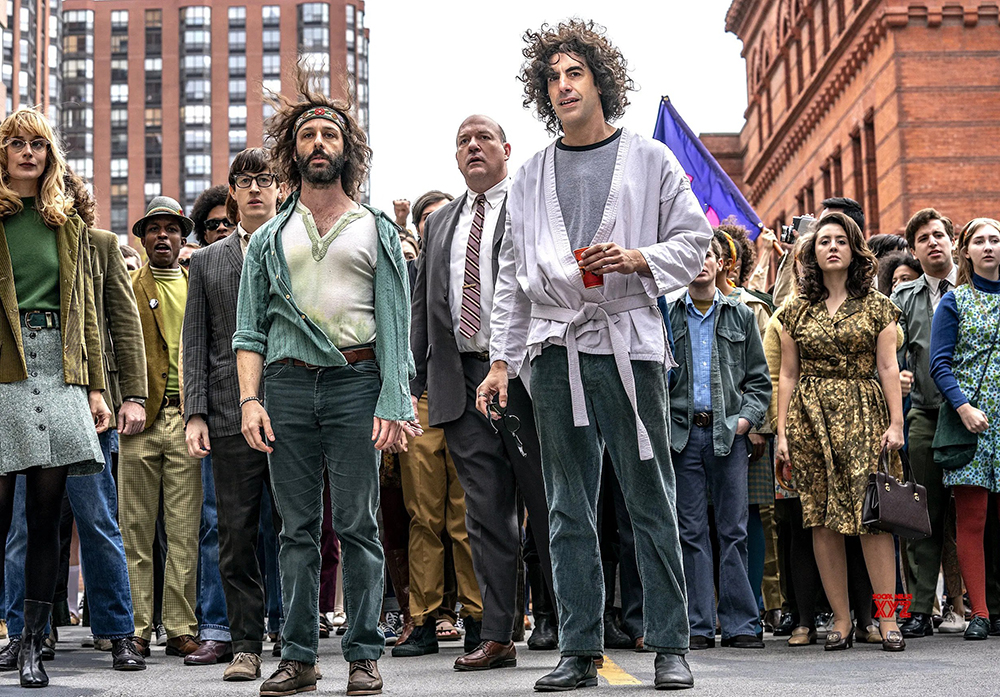
Sorkin arranges his characters carefully. Hayden insists he can still take the stand, and Kuntsler grills him like the prosecution will. And while Hayden cracks under pressure, his voice rising as the rest of the group simply watches on, itâs soon evident this isnât meant to be a preview to his testimony; itâs the on-screen trial of he and Hoffmanâs value systems, played out in real time. But then a surprising thing happens: Hayden lets it slip that by âblood,â he meanât âour bloodââsignifying the beating protesters were taking from the policeâand suddenly Kunstler gets it. And Hoffman does too.Â
Itâs at this moment the tide turns and the Hoffman/Hayden feud ends. Why does it end? Because, two thought-adversaries realize theyâre on the same side. No, not the same side of the defense stand, but the same side of the cause. Haydenâs the progressive liberal next door; Hoffman the in-your-face Hippie many Americans had grown to despise. But in this moment they realize that though they have different presentations, they have the same goal: stopping the war, having a voiceâand, as a byproduct, fighting the systemic police brutality that wants nothing more than to shut them up. Hoffman pontificates some flight of ideas and non sequiturs, but you canât mistake the inescapable grin on his face: Hayden gets it; maybe he always has. And Hoffmanâs entire being is aglow with that look one gets when they realize someone else not only feels, but shares the very thing that drives your being.
In a movie of powerful scenes and moments, this scene sticks out as one of its most poignant. Itâs perfected by the acting of its players, but designed to this effect by Sorkinâs near-perfect script. Show, donât tell. Sorkin, Baron Cohen, Rylance, and Redmayne donât force their values down our throatsâthey let us do one of the hardest things for films to do: they let us in and let us feel it.Â