As the adage goes, âThe flame that burns twice as bright burns half as long,” and the all too brief life of Jean-Michel Basquiat is an unfortunate testament to this. In âBasquiat,â we get a truncated look at the prolific Brooklyn artistâs meteoric rise to fame at the age of 20, becoming a phenomenon in the art world. This ascension saw him trade in his mythic status as an underground street artist for the international spotlight and the scrutiny that came with it. This film gives us a peek into the personal challenges he grappled with as his life transformed around him, but does so with little resolve. Despite showing occasional sparks of creativity, director Julian Schnabelâs biopic lacks the boldness or innovation demanded by its subject.
The opening minutes of âBasquiatâ promise something specialâa unique exploration of the life of a legend, with an almost fantastical lens. In this wordless and dreamlike scene, set in a coldly-hued and vacant art gallery, a young Jean-Michel Basquiat (Brian Wright) and his mother Matilde Basquiat (Hope Clarke) stand before Pablo Picassoâs âGuernica.â Suddenly breaking down into tears, Matilde turns towards her child only to be struck by a radiant lightâa luminous golden crown appears on the young boyâs head and a smile returns to both their faces as its glow ignites the screen.
This remarkable visual is accompanied by the initial verses of âFairytale of New Yorkâ by The Pogues, and this makes for an emotionally-rich scene as the visuals establish the birth of a truly important artist; yet the tone of the music is mournful like a funeral. Itâs painful foreshadowing for both the triumph and tragedy set to befall Basquiat, being blessed and burdened with his talent.Â

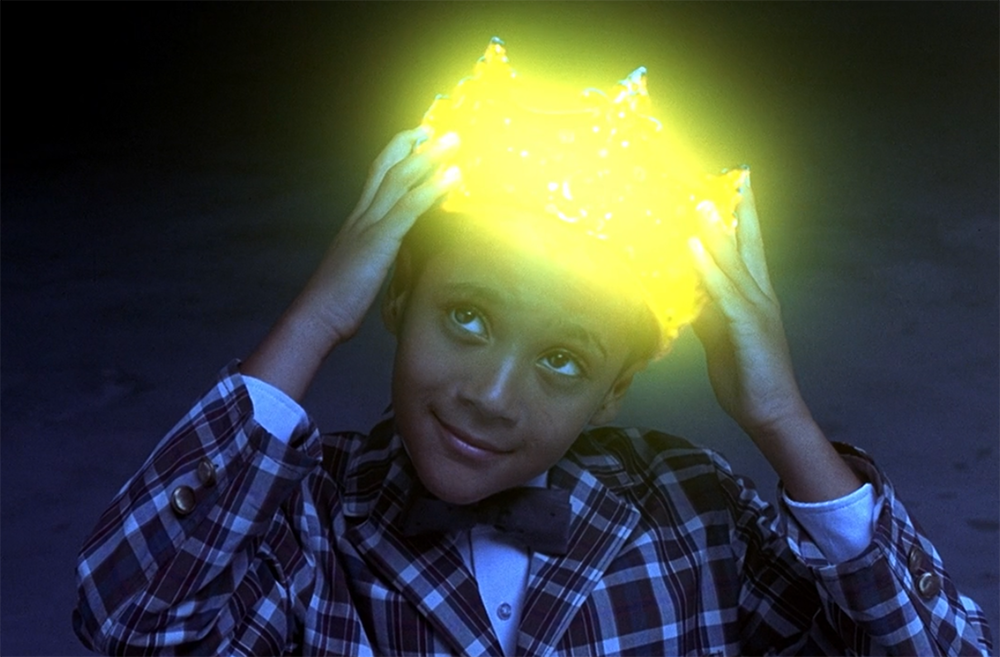
As much as I loved this scene, it made the plainness of the rest of the film even more disappointing. Only sporadically does the film even come close to being so arresting. The only similar case of surreal visuals being used so ambitiously is a recurring image of a surfer freely riding waves, that is projected into the sky in multiple scenes before its significance becomes apparent. It feels like a missed opportunity: as the film is pedestrian in most areas, making better use of art bleeding into reality in ways like these would have set it apart from other generic biopics and provide the means to infuse the film with more of Basquiatâs identity.
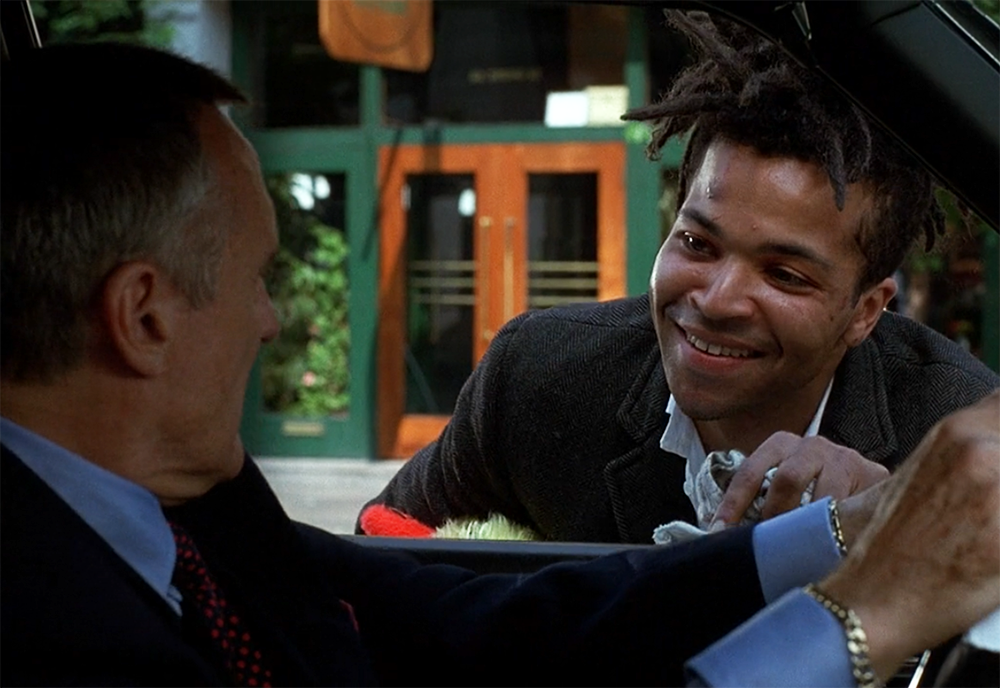
Perhaps the most make-or-break component of any biopic is the central performance, and this is one of the filmâs strongest merits. Jeffrey Wright rises to the challenge of embodying the eccentric and enigmatic figure as well as the human behind the persona. This is a translucent performance that is vulnerable enough to convey Basquiatâs troubles, but feels just elusive enough to maintain his aura of mystery that drew in so much intrigue from the public.Â
It is the simplest scenes of the filmâwith minimal characters or dialogueâthat are the highlights as Wright takes centre stage. Around the halfway point, an intoxicated Basquiat sits alone in his apartment and visualises himself making his next art piece as a tender piano track plays. This is a peaceful and sombre sequence that is a sample of the film at its most effective tonally. In scenes like this, we are able to marinate in the ambience achieved by Wrightâs performance. Itâs a shame that as watchable as he is, the material of the film doesnât allow us to get far enough beneath the skin of its subject to make the most of this.
Even though there are brief moments of poignancy and artistry that make their mark, âBasquiatâ often feels bereft of any distinct identity. The film promptly reaches a plateauâand seems content to meanderâuntil reaching a cut-off point that feels more abrupt than like a natural close. This may be down to the lack of consistent direction in the story it wishes to tell, robbing the film of any sense of progression.Â

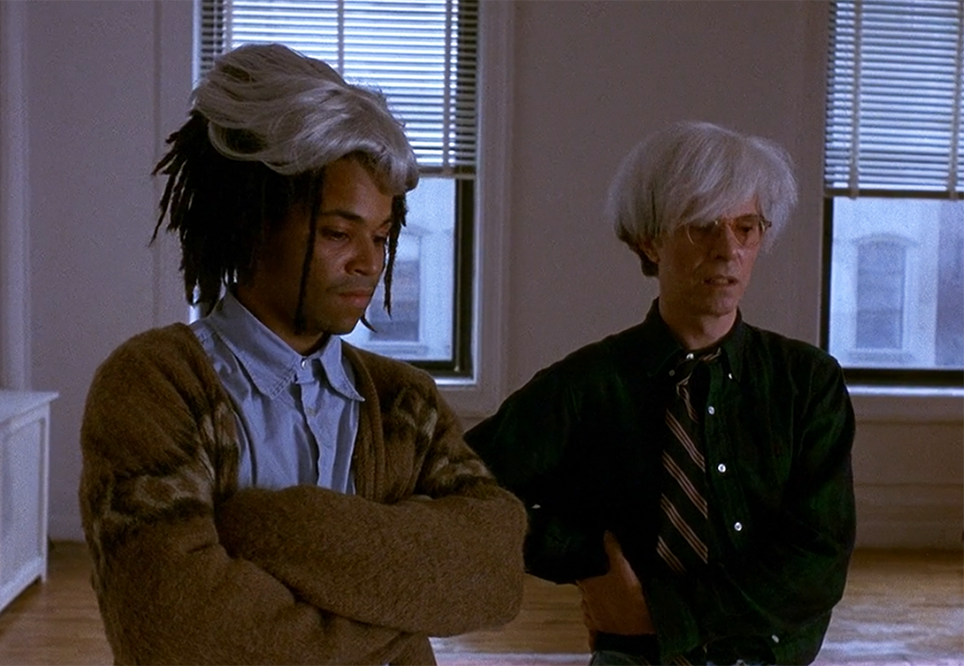
There are oddâand at times, even wasteful choicesâthat are thrown into the mix but not followed through on. One example is the dedication of the first act of the film to following a romance between Basquiat and fictitious love interest Gina (Claire Forlani). Although this was likely to show the loss of Basquiatâs old lifeâas he must trade in familiar faces from his old life for new elite peers, such as Andy Warhol (David Bowie)âthe payoff doesnât quite warrant this artistic liberty as the story fizzles out after diverting screen time that may have been better invested elsewhere. Given how much there was to work with, the film could have benefitted from diving into more factual events of Basquiatâs life that shaped, him either as an artist or on a personal level.
Director Schnabelâs efforts do come closer to meeting their mark when it comes to portraying Basquiatâs struggles in the lens of the art world and the costs of his overwhelming successâsuch as the isolation and scrutiny that came with his platform. Being thrust in front of the scrutinizing eyes of wealthy art elites, Basquiat, as a man of Haitian and Puerto Rican descent who was fresh off the streets of Brooklyn, he was immediately othered in the white gaze of this audience. This meant wrestling with the discomfort of his identity being fetishized and commodified for their consumption, almost to the point of losing his ownership of it.Â
We also get a glimpse at the pressure he faced from the media to justify his presence in the art scene as a Black artist as they assigned labels onto him based on their own notions of what he should be. All the while, weâre shown the parallel alienation Basquiat faced in his own roots, even facing hostility in the realm of street art where he began.
The romanticised plight of the struggling artist and the truth of the burden that is born from acclaim are touched upon gently in âBasquiat.â But with only fleeting moments when it comes into its own, this is a paint-by-numbers portrait of a celebrated artist that breaks no ground. Even with the charm awarded by its lead performance and quiet graveness, such a mundane portrait of a maverick can only feel unfitting. Fortunately, even these safe efforts make for a serviceable, and at times even affecting rags to riches biopic.