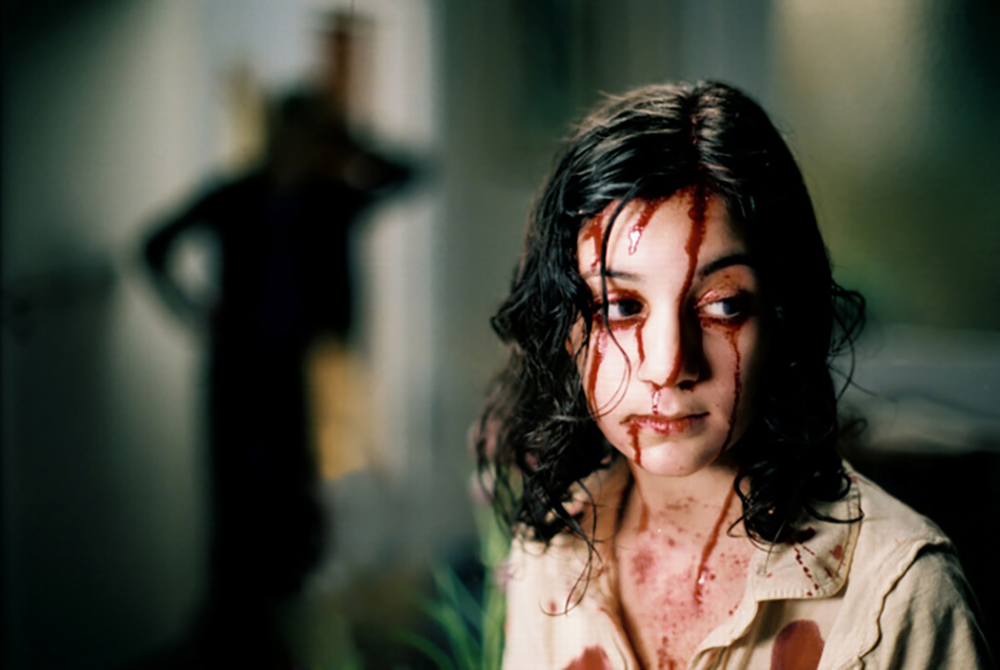
What is it that we look for in horror these days? Total and inexplicable butchery, with comically inappropriate levels of gore? Is it the latest and highest tech CGI? Or are we not satisfied until weâve jumped from our seat so many times we may as well join the the PMQs? John Ajvide Lindqvistâs 2008 âLet The Right One Inâ (original title, âLÃ¥t den rätte komma inâ) relies on none of these elements; it is a highly gratifying piece of filmmaking, refreshingly organic in its craft and beautiful in its storytellingâI recommend it to anyone who condemns the phrase âI donât want to read a movie.â Adapted from his own 2004 novel by the same title, this Swedish film is eerie and gothic, and completely welcome in its reminder that horror can be both subtle and born from raw idea.
The plot denotes a slow burning battle of a blossoming love affair between children and the screaming subtlety of its sinister nature. To the regular beat of footsteps crunching on snow, a desolate neighbourhood setting and the occasional sound of ripping fleshâapparently created by tearing into actual sausagesâtwo children try to navigate an isolated world where adults rarely meet their eyes and they are cold-shouldered by society.
The filmmakers expertly intertwine romance and horror. The soundtrack, courtesy of Johan Söderqvist, is purposely hopeful and idyllic in contrast to its accompanying visuals. With stark and brightly lit shots, often a backdrop of snow or white lighted lamps, the images are more vivid and imprinting than the usual dimly-lit horror scenes; the cinematography relies acutely on realism, and for this reason, some viewers might first expect to be underwhelmed. Given the time it deserves, and this movieâs chilling and unnerving themes will linger with you, not dissimilar to a persistent ache or that ex that still messages you every other year.
Cue Oskarâhis introductory shot: a lonely boy, dressed only in underpants and one hand pressed against a dark window pane. A later shot: he repeatedly stabs a tree and tells it to âsqueal like a pig.â Heâs probably not the most normal kid. A few hints dropped here and there, a few examples of his newspaper clippings collection, citing various murders⦠we know things are going to get weird. These small quirks are forgivable because he is plagued by bullies, amongst other hardships, and it is credit to Lindqvist that we still care earnestly for him despite his gently unhinged air. When Eli moves in as the new kid next door, she is the perfect vice to nurture Oskarâs malign impulses and invest in his confidence (the dark reality of her own secret is steadily unveiled); their relationship could be a tender narrative of childish romance, or a harrowing display of codependency. The beauty, perhaps, is it is both.

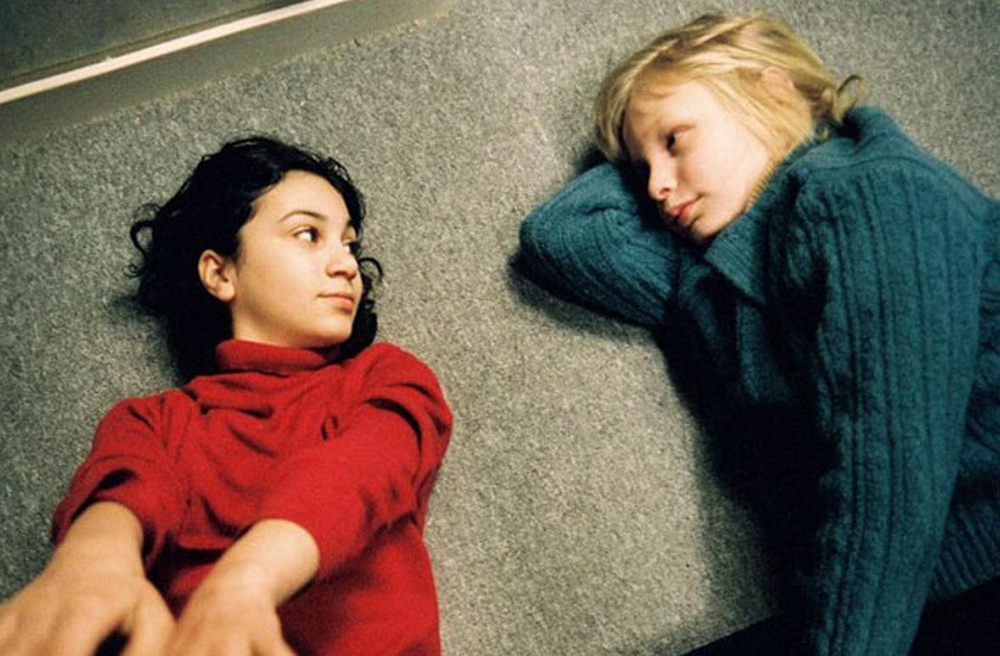
The actors are fantastic. KÃ¥re Hedebrant and Lina Leandersson playing Oskar and Eli respectively, are impressively mature in the execution of their roles and hugely complimentary to the simplistic and shrewd style chosen by director Tomas Alfredson. His technique whereby the actors would not read the script, and instead have their lines read to them before a scene must surely contribute to their naturalistic delivery. Both actors rose to prominence following the production of this film and were nominated for awards such as âBest Breakthrough Performance,â âYoung Artist Awards,â and âBest Actorââall three of which Lina Leandersson won.
The movie has abandoned a deeper inspection of the more controversial elements of the novel, meaning your 90 year old Gran can watch and say âwhat a nice man that little girl lives withâ (insert furtive looking emoji here). Ambiguity was chosen, rather than diving into these heavier topics, perhaps at risk of overshadowing the compelling Oskar-Eli equilibrium, or distracting from other significant elements in its 115 minute running time.
This movie is certainly a slow burner; self-assured in its steady pace and unafraid to leave things up to subtext. If you canât help but crave the Americanised, blood-loving melodrama associated with similar stories of the time, like âTrue Bloodâ and âTwilight,â you can check out Matt Reevesâ 2010 remake âLet Me In,â which is definitely adapted from the novel and not Alfredsonâs original *cough cough.* My advice remains, to slip on your reading glasses and kick back for this Swedish delight. You may feel more as though youâre on the Eurostar than The Knight Bus, but itâs the way itâs intended and itâs well worth the ride.