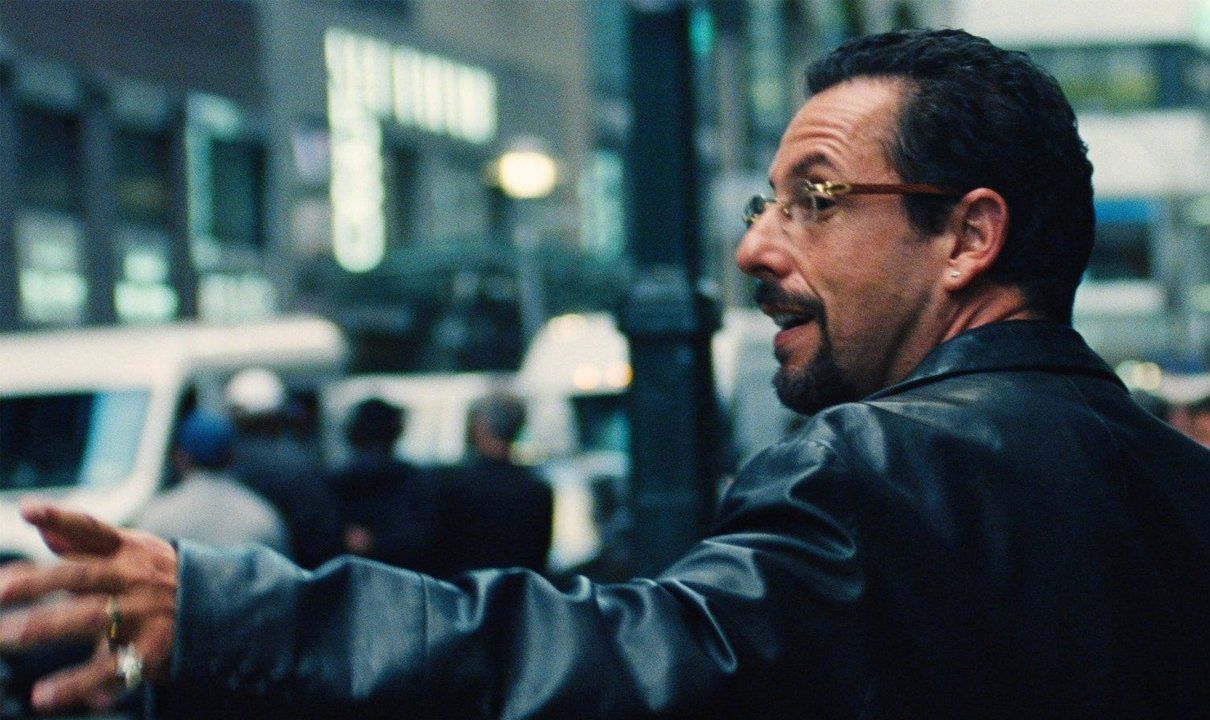
The Safdie brotherâs âUncut Gemsâ is fast-paced, anxiousâ¦a panic attack. We follow Howard (Adam Sandler), a jeweler and gambling addict, as he tries to pay off his gambling debts, ironically using the money he earns from placing precarious bets. Howardâs addiction stems so deep within him that despite anything he does, he always comes back to it. His decisions haunt him, maybe not consciously enough, but certainly externally. We watch as he pays his dues, attempting to fix the bridges he has burnt.
This is not a tale of warning, neither is it a fairy tale. Even though itâs fictional, it remains a reality, a compelling one. At the heart of it are the imperfect characters that engage us. Howard may have an annoying presence at times, but each decision he makes keeps us guessing.
Adam Sandlerâs performance is seamless as usual. He embodies Howard so succinctly, rising to each challenge accordingly. He balances elements of comedy and drama, doing the dramedy justice. In the past, Sandler has been victim to a lot of crass comedies, and although they have been entertaining, they have become gimmicky. Such comedies have stagnated to the point where we know what to expect from Sandler. The gold is in his more serious performances, where we donât know what to expect.
Sandler portrays Howard with conviction yet complete passion for what he does as a sneaky gambler, eating into his jeweler day job. It isnât exactly the addiction that is worth noting here, although it is excruciating and even nauseating to watch (itâs a lot of money!). It is Sandlerâs light-hearted approach to Howard that makes him stand out in contrast to the rest of the characters in the film.
Sandlerâs work in “Uncut Gemsâstill remains somewhat inferior to his work on Mike Binderâs âReign Over Meâ (2007) and Paul Thomas Andersonâs âPunch-Drunk Loveâ (2002). His attention to detail as an actor is evident here, everything down to his movements has been carefully studied, drawing us into his character to the point where we feel his pain and joy. Likewise, character study is Sandlerâs strength, and this is evident in the vast majority of his work, including comedies. In âUncut Gemsâ he takes a similar approach, building a wholesome character too. This comparison has its limits as the characters are complete opposites, but what remains is the depth and how it resonates. In âUncut Gemsâ Howard does not transform, whereas in âReign Over Meâ and âPunch-Drunk Love,â Sandlerâs character transforms. He is underrated as a serious actor, when in reality he pretty much masters the craft. He builds wholesome characters and can transform them. âUncut Gemsâ lacks in this, falling flat. Very flat.

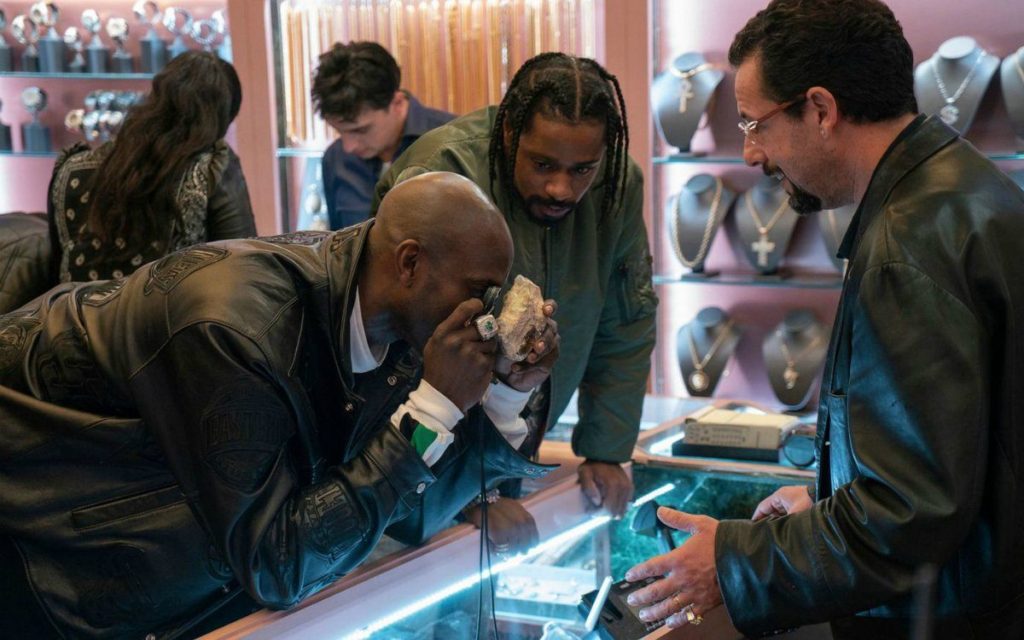
The Safdie brothers are able to capture NYC in such an intricate and expressive way, their previous âGood Timeâ (2017) and âHeaven Knows Whatâ (2014) show this. In the same vein, âUncut Gemsâ (2019) is different from these. The brothersâ style and approach remain bold and fresh, but in âUncut Gemsâ this has been taken to a new level. Perhaps this is due to their departure from their previous cinematographer to a new one, Darius Khondji. There is a sense of synchronicity, from the visuals to the characters and the visual attention to detail. The neon NYC lights compliment the dazzling jewels in Howardâs store alongside the celestial black opal, which is recurring throughout the film. Everything you see contributes to something greater. It feels like an extended âCurb Your Enthusiasmâ episode but dark and violent, repackaged into a different genre. The formatting and part of the vibe that âUncut Gemsâ gives off is generally a bit Martin Scorsese-esque, most of all in its concrete jungle landscapes and quirky secondary characters. Whether this is intentional or not, Scorsese is the executive producer.
There is not a moment throughout the film that is stagnant, it is a speedy run against time, a man against the world and against his lurking fate. This is gripping in that, we are invested in this story from beginning to end through each fast-paced shot and moment. We fear for Howard; but likewise, we admire his fearlessness which at the same time is his fault. The black opal may be part of his success, but it is also part of his downfall. The filmâs opening helps facilitate this by showing us the discovery of the black opal and then a colonoscopy of Howardâs colon, each transitioning into the other seamlessly. This is a deep-rooted metaphor for Howard and the direction the film takes in terms of this troubled character, although the direction doesnât go as far as we would hope in the long run. The film ends and youâre left thinking âis that it?â
There is a David Cronenberg influence present in the Safdieâs filmography that is interesting. Much like in his films such as âThe Flyâ (1986) and âVideodromeâ (1983) that are part of a genre of âbody,’ where itâs not the reaction but the action that drives the film. âUncut Gemsâ specifically showcases this in that the black opal is part of Howardâs body. Not literally, but metaphorically.
Sandlerâs portrayal of Howard is strong. We canât deny heâs an incredible actor, hence why âUncut Gemsâ feels underwhelming, especially when considering all the hype Sandlerâs performance has gained. He has other work worth celebrating first, this is limited, and I donât understand why as an actor he doesnât go for more ambitious roles more often. His transformations on screen set a high standard. Thatâs not to say âUncut Gemsâ loses value. Itâs a cinematic masterpiece, especially visually. There is so much to appreciate, and it leaves us wanting more from these young filmmakers. Their catalogue of work may not be super extensive, but it is certainly that of auteurs and has authorship. What they bring to the screen is new, original, and refreshing. Theyâre a duo to look out for.Â