I am not a sports fan. As such, icons like Babe Ruth, Ty Cobb, and the Eight Men Out mean little to me apart from a piece of history. I caught a Yankeeâs game on television when I was a teenager; they were down by many points, they somehow won, and for a minute I became enamored with the game but it didnât stick. That said, the 1989 film âField of Dreamsâ is the closest thing to pure belief in a sports film that I have ever seen. No, not the kind of belief in a sports team, in a pastime, or even in a way of life. But a belief in love, in the sublime, in the awesome power of believing in something greater than yourself. Itâs healing, restorative, and humorous all rolled into one, all while providing a reverence for the sport of baseball that is transcendent.Â
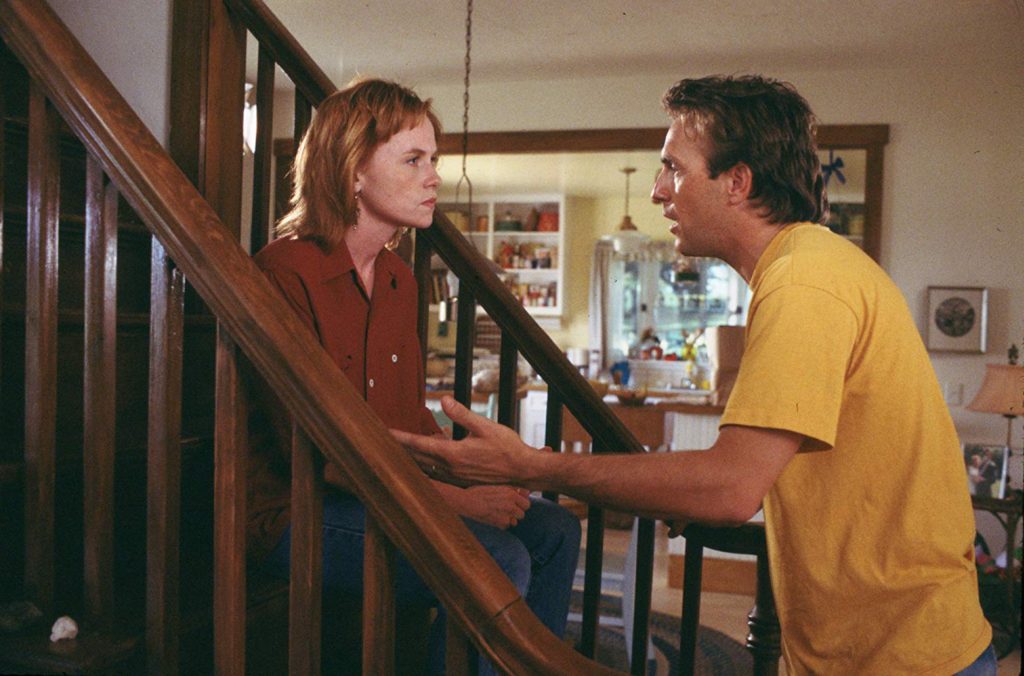
This wouldnât be the first time that film icon Kevin Costner would be tasked with a sports role, but âField of Dreamsâ is somehow his best. Sure, the humorous âTin Cupâ and âBull Durhamâ are entertaining if even a little bit irreverent, but in âDreams,â Costner brings to the table something this side of genius. Heâs a baseball lover, a farmer, and a simple man who is trying to take care of his family, comprised of wife Annie and daughter Karin (Amy Madigan and Gaby Hoffmann respectfully).Â
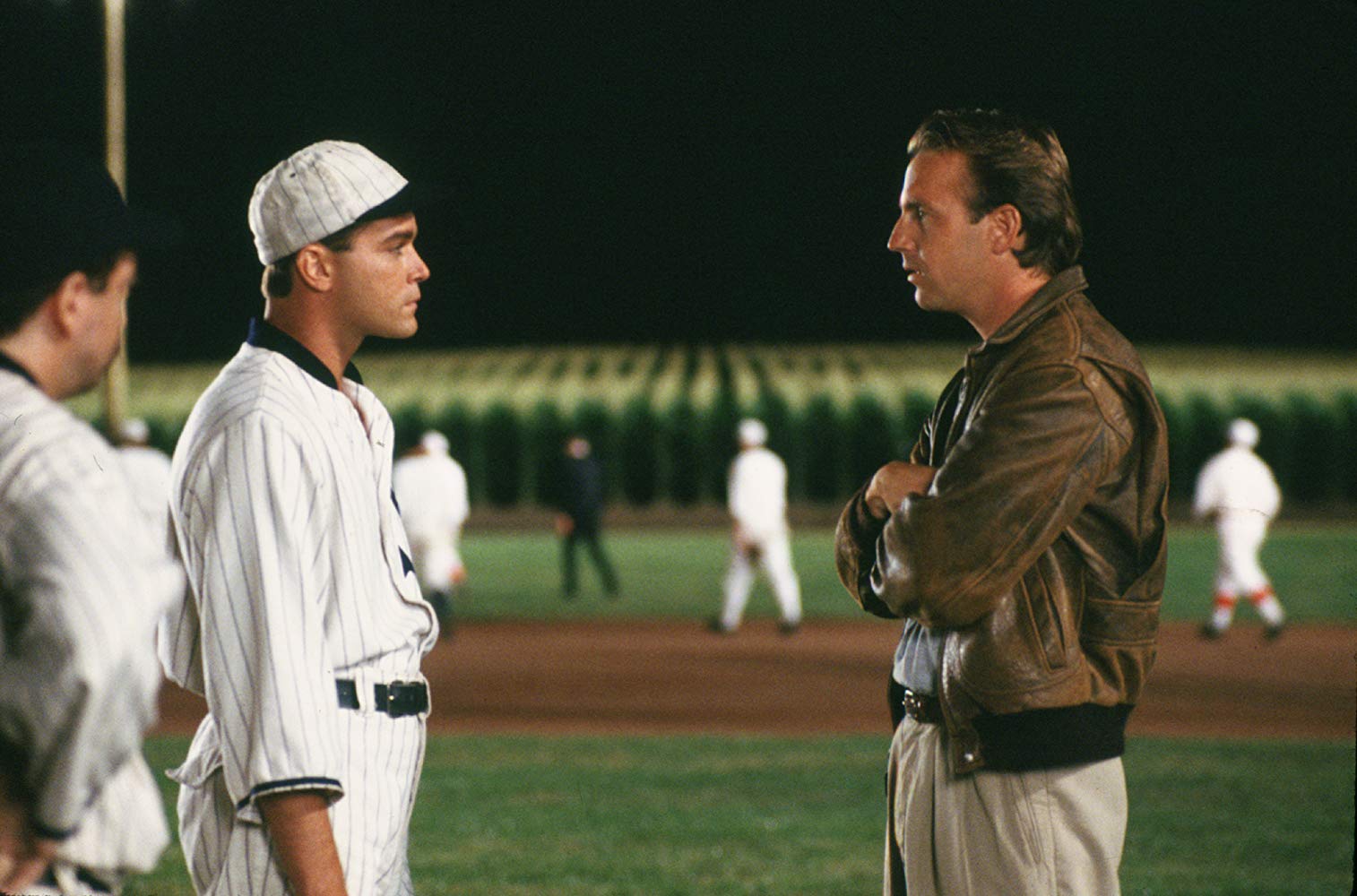
He hears a voice one night – âIf you build it, he will come,â becomes obsessed with what it means, and even as he figures out it means he should build a baseball diamond on his massive farm property so that Shoeless Joe Jackson will get one more chance to play ball, he doesnât believe it himself. Heâs ridiculed in town for hearing voices, and, once he begins his endeavor, is ridiculed for throwing his farm away as he shears a quarter of his corn crop to build the thing. Heâs supported by a feeling he has deep in his loins to build his diamond, and, to a lesser degree, by his wife and daughter. His wifeâs brother thinks heâs crazy; he very well may be, but damnit if it doesnât feel like heâs stumbled upon something bigger than himself, especially after the ghost of Joe Jackson (Ray Liotta in a very non-âGoodfellasâ role) comes to play on his field once it’s completed.Â
âField of Dreamsâ is less described by plot as it is by emotion. You donât watch this movie, you feel it, even as director Phil Alden Robinson takes a by the numbers approach to the filmâs happenings while checking off a list. Ray Kinsella (Costner) must build the baseball diamond, Joe Jackson must come to play, he must be joined by other members of his baseball past, and we, as an audience, must feel again what it felt like for these giants to play a game many, many years after their passing.Â

Itâs a credit to the film that the reunion of these players, and the games they play, arenât the highlight of the film, and happen as naturally and smoothly as butter. No, the real magic of the film is the way in which Kinsella, a simple baseball fan, becomes driven by something greater than himself to embark on a journey to create something not for his own personal enjoyment, but to touch the souls of others while healing something in himself he thought died long ago. It isnât long before heâs connected to the writer Terence Mann (James Earl Jones), and here the movie throws in some interesting fodder in terms of the manâs many books, what they mean for society, heralding such concepts as censorship, fascism, and Freedom of Speech – many concepts wholly apropos in our current political climate. When Kinsella finds Mann, the writer has long since given up on the â60s and what they represented; but âField of Dreamsâ has a way of reconnecting people to their long, forgotten dreams, and somehow does so in a way that isnât overt or in-your-face, but in a way that is subliminal and spiritual.Â
To say more about the plot, especially the filmâs keystone final scene, is to betray the memory of a movie that sadly won no Oscars, but won, interestingly, âBest Foreign Filmâ at the 1991 Awards of the Japanese Academy.Â
The acting is a marvel. Everyone from Costner, to Madigan, to James Earl Jones turn in exceptional performances; exceptional not because they are built of dynamism and scene stealing material, but because they are so common, so real, and so seamless. Kinsella, Mann, et al are real people; not real in the sense they actually exist, but real because they feel like they do, a credit to the script, written by Robinson, based off a book written by W.P. Kinsella. The film also captures a moment in time; that moment is not one of modernity, but one of a past that feels so modern only a day may have passed since these baseball icons graced the fields of Wrigley, Fenway, etc., and not realistically decades. âField of Dreamsâ feels like the dream that inhabits it, and makes non-believers believers and even casual sports fans enamored with what it brings to the table.Â
At the end of the day, âField of Dreamsâ is just a spectacular film. Watch it – not to witness the quintessential sports film (for that is not what you will find here), but to witness an emotional telling so apt it stays with you long after the credits. This is not a film of prowess and ability; of wins, losses, or even sports fans, but one of belief, humility, and the never-fading power of forgiveness. When you start watching the film, start watching Kinsella, youâll likely find him mad. But by the end, as he throws catch with a player that meant so much to him and more, youâll realize youâve watched something that transcends the sports picture and becomes, instead, a Norman Rockwell portrait of the undying human spirit.Â