





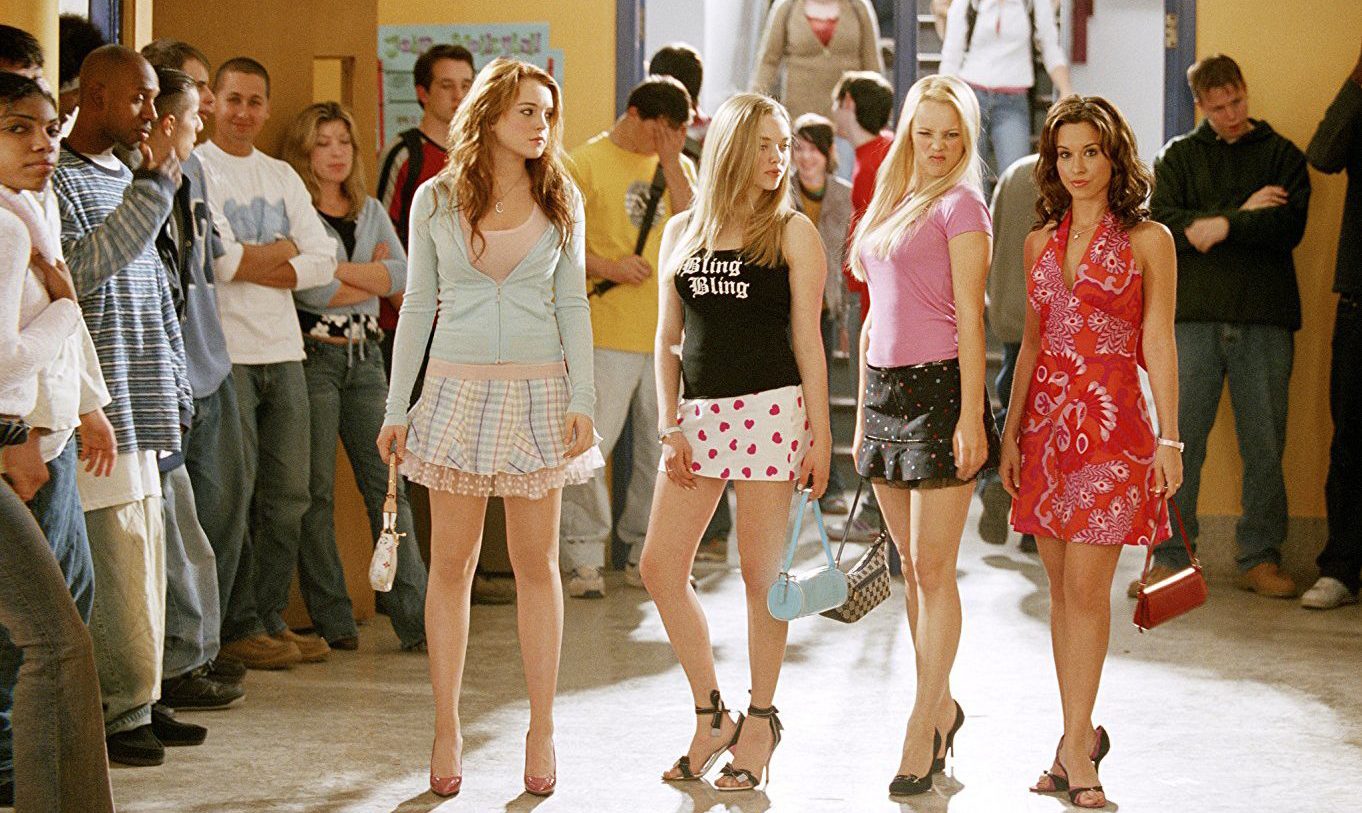
The popular clique from which this movie derives its title – âThe Plasticsâ – are really mean. Sure, theyâre mean to outsiders: you know, the other cliques who donât fit in, comprised of stereotypes like nerds, jocks, burnouts, band geeks, etc.; but they reserve their really biting, no holds barred aggressiveness for each other. You canât out-and-out fight, the filmâs heroine, Cady, observes. Attacks have to be clandestine, underhanded, unsuspected and invisible. The film, directed by Mark Walters and based on a book by Rosalind Wiseman, wants to observe Cady, observe this group, letting us laugh while making broad statements about high school popularity and its caste system in the process.
âMean Girlsâ positions itself as another ânew kid in schoolâ comedy/drama, but, with smart scriptwriting and performances, becomes something more. The filmâs lead, Cady (pronounced âKatieâ she tirelessly tells new classmates), is played by Lindsay Lohan. Lohan, who was sweet in 1999âs âThe Parent Trapâ redux as well as âFreaky Fridayâ alongside scream queen Jamie Lee Curtis, takes a difficult role and runs with it. Sheâs tasked with appearing at first a fish out of water at a new school, then a slow-to-make-friends shy girl, to one who is adopted by the schoolâs most popular clique, The Plastics. By the end Cady is no longer recognizable even to herself. Lohan makes us believe the transition, an act that could have fallen apart with a weaker actress.Â
I suppose âMean Girlsâ is almost a hyped up, overdramatized version of â10 Things I Hate About You.â Itâs as if the former took the latterâs opening sequence – where a key character explains the various cliques at the school – and decided to make an entire film about it. The various cliques are well represented, and, oddly, Cady doesnât want to be part of any of them. Sheâs spent a majority of her childhood being homeschooled by her parents in Africa on safari. She doesnât know popular songs or movies. She tells the girls incredible things about her life and they reply âshut up!,â the modern lingo for âoh my god!â or âget out!â Cady thinks theyâre telling her to stop talking. She doesnât understand.Â
The Plastics are played by actresses such as Lacey Chabert, Amanda Seyfried, and their self appointed leader, Rachel McAdams. Well, maybe sheâs not self appointed. During the filmâs run, when McAdamâs Regina is sidelined for a bit, they look to Cady to fill her shoes. The Plastics canât exist without a center, sharing common goals, desires, and personalities. Even when they hate each other, they still want to be liked. Cady observes with interest, âThe weird thing about hanging out with Regina was that I could hate her, and at the same time, I still wanted her to like me.â

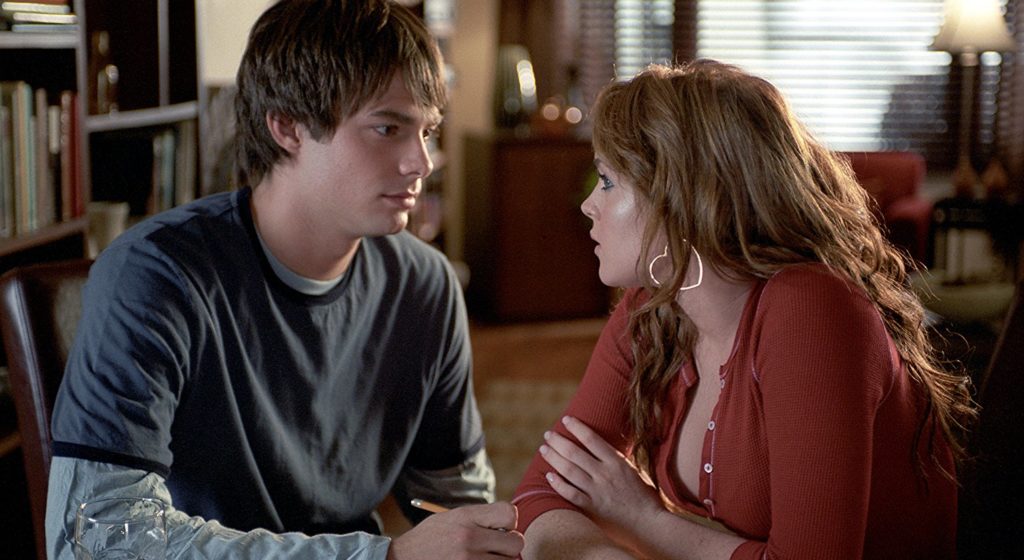
âMean Girlsâ hits the high notes of high school popularity, while breaking it up with humor in appropriate places. Certain scenes pack a humorous punch (such as conference calls between The Plastics where one or the other doesnât know theyâre on a conference call), while others between Cadyâs first friends (Lizzy Caplan and Daniel Franzese) contain witty dialogue. âDarianâs too gay to function,â Caplinâs Janis jokes of their friend. But as most inside jokes have the tendency to do, itâs not until later, when Cady is a full-fledged member of The Plastics and has forgotten her friends, that her utterance of this same joke is not endearing, but insulting.Â
The filmâs buffered with good supporting roles, from Cadyâs parents played by Neil Flynn and Ana Gasteyer, to the school principal (Tim Meadows) to Cadyâs math teacher, played warmly by Tina Fey. Fey, who has a talent for uproarious laughter surprised me; sheâs toned down and relatable, and turns in a rather serious performance here.Â
âMean Girls,â apart from its thorough analysis of clique culture, is also smart when it comes to touching on the parts of teenage psyche that often get overlooked. The quest for popularity that often brings mal-intentioned results, the sometimes soul crushing things we do to gain popularity that we later regret (the filmâs most poignant as Cady, a math whiz, purposefully becomes deficient in the class to gain the attraction of her crush, a boy named Aaron Samuels (Jonathan Bennett), who later resents her for it. These arenât one offs; weâve experienced these kinds of things in our own high school careers (or, if youâre there now, may strike a chord with current experiences).Â
The filmâs not perfect, and suffers from some cliché and standard tropes – but, as a high school film, isnât really a detriment. Itâs funny, and rather than labor over the usual points of romance, scholastics, and angst, takes the time to shine a hard light on creating an identity, and how trying to fit into predetermined cliques can derail this process. Its ending – involving prom kings, queens, and speeches rises to the peaks of cringe-worthiness, but somehow reigns it in before doing too much damage.Â
âMean Girlsâ covers familiar material but updates it for modern audiences. Itâs comedic, introspective, and watches well. Lohanâs its unsung gem; but the rest of the film is okay too. Â
– by Mark Ziobro


